Showing posts with label Tenkara. Show all posts

Load, Send and Bend; A Look at the Evolution of Tenkara


As an adult that enjoys catching fish, I have used many forms of fishing rods. From casting lures to casting lines, my specialty or chosen practice is fly fishing. As I advance in fly fishing, I study how fishing rods work which leads me to understand how they are built. In my experience, I have spent time with bamboo and composite craftsman learning their craft and ultimately choosing to make bamboo fly rods myself. As I have shared this before, all of this prior to my choosing to understand practice and study tenkara.

Now, as I return to fly fishing after fourteen years, I would like to share a little more of what I’ve learned about the business end and evolution of a tenkara rod.

Is Tenkara fly fishing?

I look at how a rod works, how it is constructed in order to understand each method.

In western fly fishing, the rod is variably loaded and released (casting) which dynamically sends the line and ultimately the fly to its target. The energy, or casting of the rod is transmitted to the line as it runs through guides along the length of the rod. This energy is transferred, dynamically. The variable length of the cast is described by the amount of force applied to the bending potential of the rod. The loading of the rod is released and energy of the bend is sent through the line, the cast length displaying how much force was applied to the rod. The amplitude from the cast and wavelength in the line is variable and dynamic in the potential length of the cast.

Tenkara is fly fishing, Japanese style fly fishing complete in its own form.

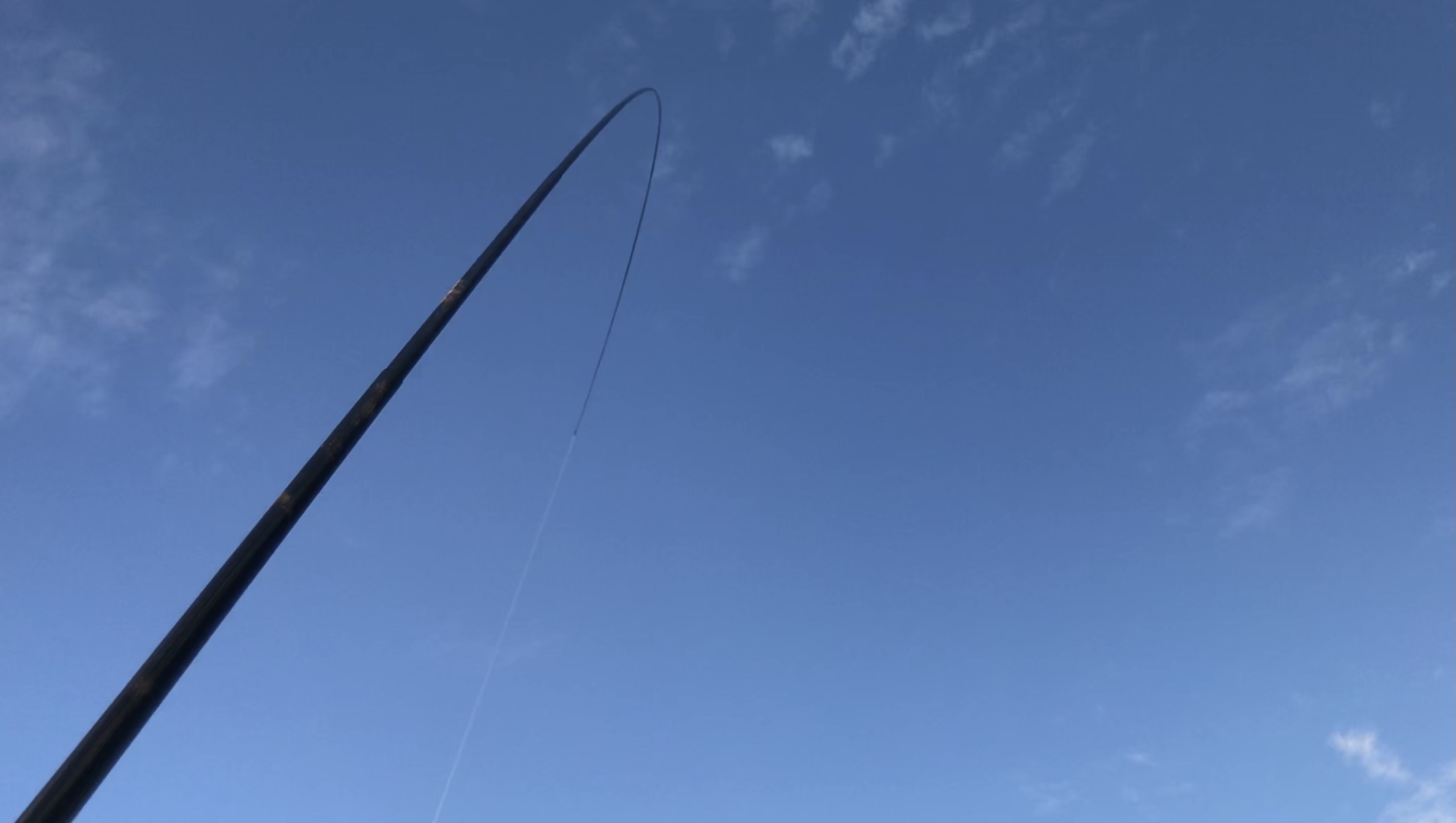
With tenkara, the line is attached to the tip of the rod and that connection seamlessly transmits the potential energy from the rod loading into the line. The amplitude and wavelength are essentially fixed by the chosen length of the line.

The technique of casting, imparting action into the rod, has an effect of how well the system transmits the energy to the fly. The results in technique are directly proportional to the understanding of how to balance the application of power through the casting stroke. The timing of casting stroke and the type of stop determines the efficiency of sending the energy to the fly and how the energy is dissipated at the fly.

The bend and resistance or potential energy of the rod is affected by the variations of construction techniques.

The type of material the rod is constructed of and the taper of the rod, thick at the handle, thin at the tip has an effect on the transfer of energy from the rod bend. The material has a speed which the energy of bending resists and wants to return to its resting state.

Carbon fiber cloth is pre-impregnated (pre-peg) with epoxy resin that is rendered stiff by the application of heat. The epoxy in this cloth contributes to the resistance of bending once the epoxy has been catalyzed by heat. The pre-peg composite fabric that modern tenkara rods are made of is often described by the term, modulus. The modulus in relation to the bending and recovery speed of the rod is described numerically. The shape of the cloth once cut and applied to the mandrel, higher modulus number describes a faster return to resting state or speed of elasticity. Carbon fiber cloth with a higher modulus number is denser and more compact with carbon fiber. The shape that the pre-peg cloth is cut into also affects the flex profile of the rod.

In constructing a western fly rod and or a tenkara rod, the material and the taper (how wide at the handle and thin at the tip) will affect the flex profile and the rate of return or speed of the rod. Typically, the faster the rod is, the bend is primarily focused in the tip yet you can create a fast-recovering full flexing rod or a slow recovering tip flexing rod using the variability of materials and taper described.

Joints are part of the rod construction and can be used in the design of the rod Joints affect the bend or flex profile of the rod. Lots of joints, double the material, stiffer and where are those joints placed in relation to the bend affect the speed and flex profile.

Rod design and manufacture consider each element when crafting rods for market, regarding the market, he evolution of a tenkara rod is also affected by the people who practice it.

The evolution of tenkara has a lot to do with how rods perform the way they do.

Born in Japan, tenkara fisherman of old made their own rods from bamboo, the lines from horsehair and the hooks from bent needles. There wasn’t much in the way of descriptions of how the rod performed or even communicated between tenkara fishermen. The method of tenkara was professional in nature and the trade secrets were not shared freely. The results that tenkara fisherman brought to market were much more important. Tenkara rods were the tools of professional fishermen and competition to bring fish to market isolated the descriptions of the tools to of the early tenkara fishermen.

Up until 1960s, rods were made of bamboo. During that time, rod makers offered their craft in small shops in the same villages and cities where the fish were sold. Wazao rod makers or traditional bamboo rod craftsmen made rods available for purchase and use. Making rods took time away from fishing, and fishermen worked with rod makers to produce rods with the desired qualities for their skill in catching fish. Aesthetically pleasing rods that performed well brought the highest prices yet the skill in presenting the fly far outweighed a beautifully crafted rod that was expensive to purchase. Skill was earned through experience and fishing an expensive rod was not the key to making money or feeding your family.

Other more popular forms of fishing rods were produced by larger manufacturing firms. The manufacturing of fishing rods already had progressed, and larger markets were served. Fishing companies such as Sakura was one of the earliest to commercially popularize tenkara to a broader audience. Technology from other forms of fishing rods were used in the production of tenkara rods and in the 1970’s the first composite (fiberglass and carbon graphite) tenkara rods were being produced and sold.

The largest companies that produce rods marketed their products by several means. Tenkara rod manufacture being a smaller portion of the larger market still grew with the advance of better materials and construction. Early tenkara rods were one piece bamboo or wood, the rods being long and the tips of the rods being somewhat fragile, those early rods were left near where the fisherman lived in the mountain streams where they fished.

As rods began to be manufactured in cities far from the streams they were used on, multi piece rods were produced for ease of travel. Some of the first multi piece rods being produced were called “in stick” as the smaller sections were stored inside the larger sections. In-stick configuration progressed to the telescoping or nesting rods as this configuration is far more efficient and compact.

Japanese fishing rod manufacturers marketed their goods by describing the performance and by the aesthetics of the rod. Books on tenkara were written, magazines included tenkara and there were films produced by production companies all which supported the small tenkara communities scattered across Japan. Analyzing what was being sold was part of production and the tenkara rod market was carried along by the broader market of other types of fishing rods but the manufacturing and performance qualities was shared with the tenkara rod manufacture and marketing.

Which brings us to modern times.

It is not widely known that Yuzo Sebata introduced tenkara to America in 1990. However, at that time, in Japan, rods were described by “tone” and by flex profile. A hard tone rod typically had a 7:3 profile. The business of tenkara was already established and reported on thoroughly. In 2009, tenkara was commercially introduced outside of Japan by the Internet and by the information stream from an American company. Marketing tenkara was outside of Japan for the first time and the early marketing was somewhat ackward and wandering as the allure of tenkara was accepted by a large consumer base for many reasons.

Beyond 2009 and the "Outside of Japanese Tenkara Influence" 

During this time, in America, tenkara was supported by one major rod seller. The information coming from this single company was honest and true however the growth of the community and the increased availablity of tenkara equipment from Japan and subsequent growth of the market caused growing pains and in-fighting within our community.

The method of tenkara was reported on and spread by many people that had not been to Japan. The research material was there however the language barrier still very significant and the cost and difficulty in importing Japanese products was not supported broadly. Tenkara, the method was readily adapted by many enthusiasts of simple fly fishing. The method was easy and lent itself to other types of fishing. 


The Japanese term, gyakuyunyu or to re-import became evident as tenkara began to grow in popularity inside of Japan because of the popularity outside of Japan.

Books on tenkara were written by authors outside of Japan, fanzines, Internet HP (home page) produced and the business of tenkara is established outside of Japan. "American tenkara" is now well established.

Tenkara, the method has grown from a small group of Japanese fly fishers bringing mountain stream trout to market. Their rods and methods are generally known throughout the world as Internet access displaces the media information once brought to the general populace through newspaper, books, magazines and film. The equipment and methods can be described and built by non-Japanese sources. It is no longer necessary by the public court to travel to Japan and bring forth the tenkara experience.

Epilogue

I find that tenkara is my connection to Japan and my practice of tenkara connects me to that small community where it all began. Tenkara Fisher is fashioned after Japanese tenkara communities home pages where many of the enthusiasts are shared within the content. I look at my writing here as a blog and nothing more than that. I am reflecting on my experience with it. I now have a history of practicing tenkara and am realizing how the rods were made, the evolution and construction by Japanese technicians in the rods that I use. Often it is cause for my time spent in sharing my experiences as an American tenkara fisher.

Interview with Eberhard Scheibe


I’ve been watching Eberhard through social media for some time. I like what he does and he is kind. Recently, I made another social media tenkara forum and chose an international team of administrators, young and old. Together we are building a fun place to gather and share our ideas and experiences on tenkara.

I do not know very much personally about Eberhard so I will get straight away into the Interview.

Adam Trahan: Welcome to Tenkara-Fisher Eberhard! I’ve been wanting to do this for a long time with you but it is difficult for me. I know very little about you personally and even less about where you practice your tenkara. But now I am reading more and more about you since we are administering the Tenkara Fisher forum.

“Please take this opportunity to introduce yourself.”

Eberhard Scheibe: Thank you! I’m 68 years old and I live in Jena - located in Thuringia Germany. Jena is the hometown of the world-famous company “Carl Zeiss”. My fly fishing has started with a rod of bamboo, a plastic- line and some very simple flies. I like to fly fish in each manner. That means classic fly fishing with rod and reel - single or double handed in lakes, rivers and small streams. All species of fish I could seduce with my flies were welcome. Over the time I have learned to love the shorter range of fly fishing. Watching some YT Movies from a few different Tenkara fishers with different methods by doing their fishing - that has infected me for all time. Creeping to reach a spot, scouting where the fish are and trying to do the “one” cast…. Becoming a bit older I don’t like to carry lots of gear with me. I love to enjoy a nice day outdoors in nature and on the water. It doesn’t matter how many fish I caught or how big the fish are - for me.


 Adam Trahan: I am 62 y/o, I’ve been fly fishing since I was a boy but really got into it in my 30’s. I love fishing this way and I find it quite rewarding to walk into the forest with a petite fly rod in hand. As I gained experience, I began to explore other forms of fly-fishing including rivers, the sea and using two hand rods. I’ve done some travel when I was in the Army and Japan really captured my attention. When I found out about tenkara, I dove headfirst in and studied it. I share my experiences and this spot on the Internet is filled with the work that I do.

“Do you write about tenkara? Where can I read more about your experiences doing tenkara?”

Eberhard Scheibe: I do some conversations about tenkara by using FB and Instagram. A good conversation is a give and a take at the same time. For my friends here in Jena I have written some posts about tenkara, my gear and a couple of tactics. If you want to read some articles in German, here is a link: https://saaletreff.de/. Write my name (Eberhard) in the search box and you can find a few. Some articles about tenkara fishing, fly casting with the youth and Microfishing you can find there. Furthermore, I have uploaded many videos on Youtube (look for: Eberhard Scheibe or Tenkara Ebs)

In Spring I was at a local fishing fair “Reiten Jagen Fischen” in Erfurt to introduce this fantastic method of fly fishing.

Adam Trahan: One of my favorite things to do is to travel. I do that a couple of ways. I either pick out a place I want to experience and fish or, I will figure out a place while I am traveling with family.

“Do you travel with your tenkara? Can you tell us about it?”

Eberhard Scheibe: I love to fish in new waters. Exploring my homeland at first is very important for me. Lots of people are driving around to reach some “secret” spots in the distance. The beauty of their own habitat will be overlooked. There are so many “diamonds” of small streams in a range of 250-300 km. So I don’t have to drive far. Mostly I fish in 2-3 federal states I can reach in 3-4 hours by car. My wife escorts me and she has her camera handy and so I can bring some pictures and videos for my friends and for me to remember. Driving for a long time makes me tired. This isn’t good by doing tenkara!

Adam Trahan: When I first learned about tenkara, I had some ideas about it that I had imagined yet those ideas were not true. I thought tenkara was very popular in Japan, nothing could have been farther from the truth. Tenkara was not “un-popular” but it just wasn’t known that well. I learned that from my first trip there in 2013. I have learned, whenever I wonder about something as it relates to tenkara, that I should reference the notion from my Japanese friends and in their media.

In my conversations, I will not write anything about it that I don’t absolutely know.

I don’t expect people to be like me however as fishermen, there are ways that we go about studying new fishing methods, one is to just use the tools and apply them to the discipline. I used my own skills to figure it out but when it came to studying the Japanese methods, I used books, videos and I learned from the Japanese.

“Eberhard, how do you learn more about tenkara?”

Eberhard Scheibe: I started to do tenkara 12 years ago. Unfortunately, there is no one I can ask questions directly in person. So, I have to read posts, watch videos and write to my contacts around the world. Discover Tenkara by Paul and John - these were the first real helpmates. As a further resource I can name Tenkara USA. Daniel's book of tenkara has given me lots of help. Going my hard way on the water as a lone tenkara-fisher, I have found many helpful posts and videos from the masters Masami Sakakibara and Hisao Ishigaki. It was and is a hard way by trial and error. I have to learn by doing - sometimes it is very frustrating - sometimes I smile a lot….

Adam Trahan: In my time of doing tenkara, which is 14+ years now, I have had time to learn, practice and I have been told by many people that they have learned very much from me about tenkara. This makes me strive to be even more accurate and purposeful in checking myself and what I write about.

I really enjoyed learning what I could from Tenkara USA and then participating in that community but at one point, I found out about a trip that Yuzo Sebata had done in America. In 1990, he came here and filmed his tour through the west fishing the great rivers and sharing his knowledge about tenkara. In the credits of his movie, there was a list of western fly fishermen that were involved with Sebata san in his tour of the United States.

NO ONE reported on Sebata san or tenkara, this was a big deal to me and the first time tenkara was introduced to America on a large scale. Sebata san is a humble fisherman, he did not tell me about his trip but he did it, filmed it and Toshiba distributed it.

I felt this event was part of tenkaras history and needed to be told. I simply wrote about it, no drama, just the facts. At the point where I started pushing this fact out there, the community outside of Japan really wasn’t concerned about all of that.

I am a historian type of person. I believe that the past is important to the future. No, I don’t live my life in the past, as a matter of fact, I live in the here and now preparing for the future. I believe that in order to not repeat mistakes and or waste time learning the same lessons, over and over, to keep the information from the past and apply it to the knowledge of my interest. For the lack of a better term, this is what I call a “knowledge base” and that is how I look at tenkara outside of Japan.

Unfortunately for me, this is not easy because not everyone operates from the same knowledge base.

“How do you look at tenkara when you practice it? Do you place any obligations on your own practice?”

Eberhard Scheibe: When I fish with a fly - there is one main thing: Respect! Respect for nature, the creature and the whole environment. Don’t forget - respect yourself by doing this wonderful fishing with an artificial fly. There is no need to use barbed hooks, to damage something, leaving your own trash and to be unfriendly to others.

I love to fish in places, where each fisherman is thinking “There is no fish in such a small riffle!” A smile if I had the right nose for a good spot - great. It is not important for me what type of fish I can catch and how big it is. In my opinion, finding a place where a fish lives, what it wants to eat and a clever or smart way to catch it is much more impressive for me and my friends who escort me. This is the way I love to fish and have fun at the same time.

Adam Trahan: From my experiences with reading about what you write on the subject, I see a wise fisherman that wants to share his knowledge of tenkara. That is absolutely important to what I enjoy sharing in a community of online tenkara fisher people. You are kind and unassuming in your approach and I appreciate that.

When I am sharing with someone, I do not operate from a deep knowledge base. There are very few people that have gone to the lengths of research that I have in order to learn about it. I have to be careful, no one likes to “know it all” and I do not profess in any way to know it all. I have learned and have done what I am interested in. For me, knowledge can sometimes get in the way of communicating with people. So I try very hard to shut off that part of my brain that judges. I replace it with that first day wonderment when I meet someone who also knows about tenkara. As I get to know them, that’s when I open that door and I get to share what I know.

At this time, there are English written books and media that are deeply focused on tenkara as it was developed in Japan. Those avenues are honest but there are only a couple that lead straight back to the watersheds of Japan, Kurobe and different areas and communities there that still practice tenkara. It’s not necessary to know but it is wonderful to understand the knowledge with other like minds.

“What do you think about tenkara knowledge and the sharing of it on the Internet?”


Eberhard Scheibe: As I have mentioned above I post, read and ask questions online. All of my videos on YT I have uploaded are for all people who want to see and or debate them. All of my posts and pictures on FB or Instagram are to show my way to do tenkara and some further trifles of me. It is very interesting that I can explore a lot of different meanings. All I have to do - sort out all the things that can be useful for me. This is not an easy job. If I share some experiences I hope some friends will find them as good as I think they are.

Adam Trahan: I’m not interested in a rod that has only a short time for development. My interest is in equipment developed from decades of experience from the country of origin. I want a rod that has been developed with as much experience as possible. That’s why I purchase from old Japanese companies, Nissin, Sakura, Gamakatsu and others.

I see you as a tenkara ambassador and that is the best compliment that I can give you. The equipment you use is really none of my business but as a tenkara fisher, I’m interested.

“What kind of equipment do you use to practice tenkara?”

Eberhard Scheibe: I’m a friend of Level Line Tenkara. In my arsenal are lines from #2 to #4. Their use depends on the type of Kebaris I have tied on. A bigger fly casts better with a heavier line for me.

My Flybox is very simple. A handful of unweighted Kebaris tied in size 8 to 14, a few small nymphs and Emergers, that's it.

In the case I need some specials, I have some bigger patterns like Oni Kebaris.

A hook remover and a net are always a need for me.

All of that I carry in a small pack or in my vest.

Adam Trahan: I have two approaches towards my equipment. As I have written above, I use old established Japanese company rods, I know they are performance minded from experience. Beyond that, I use a systematic approach toward tenkara.

I choose a quiver of rods based on the type of waters that I fish.

I have non zoom rods that are sharply focused on the types of streams or, chosen for a particular stream. For example, there is a stream that I fish that has very tight quarters, lots of trees, and technical casting. I use a 2.4m and a 3.2m rod for this type of stream. For larger streams, I use a 3.6m rod. This length rod is my all-around type of rod, without being focused, this is the chosen length for a “one rod.” For bigger water, large streams and rivers, I use a 4.5m rod.

My favorite rods are three zoom rods that cover the smallest of streams to the largest of rivers, the shortest 3m and longer to 3.5m and 4.2m. These rods zoom to 4m, 4.5m and 5m. These are the rods that I travel with unless I am going to a distant stream that I already know and would use a non-zoom length rod for.

And then I have my compact rod and a super minimalist little bag. That goes with me everywhere. When I get to use it on a trip where no fishing was planned? It has become my favorite rod. It’s my favorite rod, really, not really.

“What do you choose for your quiver? What rods do you choose and why?”


Eberhard Scheibe: Most of my rods are made in Japan - Nissin and Oni. One rod is from Paul Gaskell (Otaki) and a Tanuki 425.

I prefer single length rods from 3,00 to 4,25m - I have no zoom rods.

In my quiver I always carry mostly two rods. A short rod 3 to 3,20m and a 3,60m one. So I fish in small streams and there is no need to end the session if one rod is damaged.

Fishing medium waters with more room I have a 3,60 and a 4m rod in my quiver.

I like it light and soft and choose a 6:4 rod and a light line. In most situations I can have a nice time fishing.

In real open and or bigger waters I fish a long rod. If needed and there are some bigger fish in the area I choose a powerful rod like my Tanuki 425.

Adam Trahan: I’ve asked you some tough questions. You are good natured, and I appreciate that we have known about each other and now do a little work together. I want you to know that I appreciate you.

“Please ask any questions you may have of me.”


Eberhard Scheibe: I’d like to know how your fishing will be if more and more streams fall dry. At the time many streams were closed here. In future a further way of life in nature should be open if this trend will be continued.

The following question, please don't misunderstand:

Do you eat fish you have caught if this is allowed? I often hear “NO!” The main sense of fishing is catching food for life. This question doesn’t affect a stretch which is marked as “C&R” or “No Kill”. By the time some things have been developed I can’t understand right.

Adam Trahan: Good questions.

We have already had this happen in the 90's. It was a very hot and dry year and there were many forest fires. I just stopped fishing freshwater and did only saltwater fly fishing. I did not want to bother the trout while they were trying to live in the warm and low water.

I love fly fishing the Sea of Cortez and the Pacific Ocean. I like it more than freshwater fly fishing, but I live inland and it takes a lot of time, money and dedication to drive all that way. The homework involved because I am not attuned to the sea (tides, waves etc) isn't always cooperative with my schedule. But I do it regardless, I love the sea so much.

Catch and release is something that I do to preserve a stream. I love to eat fish and also red meat, I would like to be just a pescatarian. I mostly eat fish that are store bought or I get fish at a restaurant. 

Anglers that are strictly catch and release are not fishermen in my view. 

If you fish and don't eat your catch, well, you are just harassing fish, incidentally, killing them for your pleasure, that is not fishing. Catching and eating is a big part of fishing. That being said, I rarely take a fish for a meal these days. I catch a lot of fish and I pick and choose when I will take a fish. It has to be a healthy stream where my kill will not affect the ecosystem. There are years that go by, no eating my catch and then there are years where I might eat a dozen. The Japanese taught me to prepare trout in a easy way that is very tasty. Before that, I did not really like pan fried breaded trout, but now? Salt BBQ trout is a great meal while camping.

Adam Trahan: Eberhard, I don’t know about you, but tenkara almost replaced my freshwater fishing choices. I decided to return to fly fishing again and I am so glad that I did. I love casting and shooting line. Yes, there are places where I will no longer use a fly rod choosing to use a tenkara rod. But if I feel like threading a cast into the hole in the stream side cover, I can now choose between a fly rod or a tenkara rod. The same goes for rivers, I can shoot line or use a honryu tenkara rod.

“Do you do fly fishing? How do you choose between the two or do you even choose at all?”

Eberhard Scheibe: That is an interesting question! I like to do classic fly fishing with a rod and reel too. Euro Nymphing, Streamers, Dry- and mostly Wetfly fishing. In any streams and rivers tenkara is not allowed. So I can use my “old” techniques. It’s fun - real fun for me to do some spey casts with a very soft single handed bamboo rod. A 2,2m class 4 rod is loaded with a WF5 Line. So I do single- or double spey, circle and snake rolls and so on… Only a few folks on the banks have seen that before. ;-)

Adam Trahan: I hope I have covered enough for a nice interview or conversation.

“Please use this opportunity to write anything you want.”


Eberhard Scheibe: Many thanks to you for giving me the ability to write something unasked before.

Fishing, fly fishing or tenkara fishing is nice and important for me, but there are times I have to pass on that.

One thing is over all of them: my family. So I like to travel, dance and explore some “mysteries” with my wife. Sometimes my sons and the grandson or granddaughter will be in.

In April we were at the EWF (Experience the World of Fly Fishing) - the most important Fly Fishing fair in Europe. Some of my friends from Italy have built the “Tenkara Village”.

We met Masami Sakakibara and Tenkara Tanuki in person there. This was the absolute top highlight for me in my career as a tenkara fisher.

There are times I can’t fish for trout and grayling (out of season). Using my micro fishing gear I can still fish. Testing some ditches and brooks for some smallies can be an interesting alternative instead of staying at home…. I can tell my club what species I had caught on the very small hooks.

So, that's it! Many tanks to you and if you have any further questions - don’t hesitate - I will try to help.

Best regards

Eberhard


Simple Flies by Morgan Lyle


There are a few English language books on tenkara that I suggest to my friends and this is one of them. Morgan Lyle has written a great book on simple and effective flies that work for tenkara; and fly fisher for that matter.

I won't go into details, but I will say that this is not a simple as in dumb book, no, quite the opposite. Simple as in very effective but easy to tie. In addition to the patterns, there are stories that tie it all together.

I suggest this book for your library.


ジャパニーズスタイル・フライフィッシング


私は、日本の専門家からテンカラのことを学ぶ前に、何年もフライフィッシングをやっていたんです。

私がテンカラを知る何年も前から、藤岡美和さんを知っていました。私たちは1997年、スモールストリーム・フライフィッシングのウェブサイトを開発しているときにオンラインで出会いました。

ダニエル・ガルハルドから最初のロッドを手に入れるまで、私はこのメソッドが何であるかを理解していませんでした。彼は新しい会社であるテンカラUSAのロッドを販売していました。日本の古い本や雑誌、日本で長くテンカラをやっている人たちから、自分にとって一番勉強になるテンカラの歴史や文化があるとすぐに思いました。

というわけで、そのようにしました。

当時、私は竹製のフライロッドを素材から作るところまで進んでいました。釣りが大好きな私は、ロッドを作るよりも釣りをする方が好きだったのですが、ロッドを作ると釣りから遠ざかってしまうようです。

テンカラの存在を知ったことは、この日本古来の手法を知る上で、絶好のチャレンジでした。

だから、ロッドを作るのを辞めた。フライフィッシングもやめました。日本のテンカラ竿を買って、日本のテンカラを勉強し始めたんだ。


やがて私は日本で榊原正己氏と糸代川に立つことになった。彼は私がやっていた西洋式のキャスティングモーションを解き、テンカラ竿を優しくキャストする方法を教えてくれた。


帰国して、学んだことを自分のホームページで書き始めました。2015年にコロラドで開催されたアメリカの大きなテンカラ会で、ようやく藤岡美和さんにお会いすることができたんです。日本式のフライフィッシングがきっかけで、何年も経ってから会うことになるとは、面白いものですね。


親切な日本の源流漁師、大串圭一さんから声をかけられた。彼は私のウェブサイトを手伝ってくれると言ってくれた。彼の友人が瀬畑雄三さんで、お二人は私を只見の叶津番所に招待してくれたのです。

天野勝利さん、下田和也さん、石垣久男さんなど、多くの日本のテンカラ釣り師を取材していたのです。山本素石の本を読んでセバターさんのことは知っていましたし、日本式のフライフィッシングを深く学びたいという私の夢は実現しつつあると思いました 私は再び日本を訪れ、瀬畑さんと友人の家に滞在しました。キャンプをしながら、穏やかな源流アドベンチャーに連れて行ってもらいました。澤登が何を意味するのかがよくわかりました。私には少し難しかったのですが、この経験は私の夢でした。


テンカラについて啓蒙されて帰ってきた。2017年、またアメリカの大きなテンカラ会で、石垣久男さんとPatagonicイヴォン・シュイナードさんにお会いすることができたんです。質疑応答の時間に、彼らを紹介するように言われました。ビッグネームのたくさんの人たちの前に出るのは、ちょっと怖かったです。でも、もう二度とあんなに緊張しないようにしようと心に誓った。

今、2023年ですが、テンカラだけを14年間続けています。私は、テンカラは世界のフライフィッシングの歴史に日本が貢献したものだと考えています。テンカラは日本式のフライフィッシングであり、私はそれを実践できることをとても幸せに思っています。


今、私は以前と同じ西部の大きなコロラド川を釣っている。今回は5メートルのロッドと7メートルのクリアラインを使用していることを除いては。その差は歴然としているが、釣果は同等かそれ以上だ。最近、サンファン川を探索するようになった。本流テンカラは私の新たな挑戦であり、ラインの限界はあるものの、フライフィッシングと比べれば限界はない。

14年目を迎えた私は、テンカラがシンプルであるのと同様に、残りの人生をかけて人生の深い意味を学び、森や川に戻って再び若々しい自分を見つけることを追求する、シンプルかつ複雑な方法であると捉えています。

遠く離れた日本の友人たちが、自宅で自分のインナーチャイルドを見つける方法を教えてくれたことに感謝します。この日本式フライフィッシングのシンプルな方法は私の中に生きていて、私は森や川でそれを見つけ続けています。

Interview with Brent Auger


There are a couple of main reasons why I write interviews; I want to know more from the person, and I enjoy being a part of and contributing to a tenkara community. As the American tenkara community grows, I promised myself that I would devote some of my attention to key people that support it. Living in Phoenix, Arizona, there are limited opportunities for trout nearby so I must put forth quite a bit of effort in travel to get to good trout water. For this interview, I’m traveling by wire to Idaho and to Brent Auger of Dragontail Tenkara.

Like almost all of the tenkara fishers in America, I got my first rod from Daniel Galhardo of Tenkara USA. I ended up working for Daniel creating content for his company that sold tenkara equipment. My experience with Tenkara USA was fun but not always easy. Daniel and company helped develop and grow the community yet recently, he sold the company.

Dragontail Tenkara continues to increase its tenkara presence through great service and making available new equipment. Brent offers tenkara equipment at a reasonable price point. I want to find out more about the brand and more importantly, the person behind the company.

Without any more delay, let’s begin the interview.

Adam Trahan: Brent, I’m not sure if you read my interviews so I will detail the instructions here for yourself and anyone reading.

I write the interview as a whole while trying to make it flow as the main idea. I think about you, what an interesting interview looks like and I break it down into segments and further into questions. I try to imagine what you will answer and lead into the next question. Once the interview is written, I send it off to you for filing out and sending back with a few images. When I get it back, I post it at tenkara-fisher.com verbatim.

That’s the process.

My suggestion is to read the document first, then to help me to make it flow.

I often ask the same question two different ways, reading the interview first will help prevent repetition.

If you like, you can ask me questions in the same format, inserting them where you like.

“Please feel free to introduce yourself or open the interview any way you want.”

Brent Auger: I grew up in a small city in Southeast Idaho and am still here, big cities are not my favorite so that works out for me. I love that I can get away from the city life in a short drive and enjoy the outdoors. I have had so many fun carefree adventures in the outdoors throughout my childhood growing up here and I would not trade those experiences for anything.

I am a quiet person by nature, but I do love helping people, whether for our business or other things in life. I am not the kind of guy who likes to be in the spotlight at all, especially speaking live, but I do love to work in the background helping people do the things they love.

On any adventure I go on throughout my life I am always looking for somewhere I would love to fish, I just can't get enough. I started fishing tenkara gear back in 2012, I was enamored by the fishing style right away. I started our company DRAGONtail Tenkara in 2014 and we are still here and doing great. My focus with DRAGONtail Tenkara is to offer affordable rods that perform great, as well as giving people more options for lines and tenkara accessories so they can find everything they want in one place. It took a few years, but I think we really achieved my main goals, not that that will stop me from taking that process further.

I grew up as a kid thinking I would be an artist. I am far from being an artist now but my background in digital art has helped me many times in life. Nowadays I just like to enjoy other people's works of art and use my art skills for layouts and product design.

Adam Trahan: I only practice tenkara now. I choose it for my approach to my favorite type of fishing, trout in mountain streams. In the last few years, I’ve been working on my Honryu tenkara. Honryu being the mainstream or river fishing for trout. Before I found tenkara, I have a long history of fly fishing. I’ve focused on small stream fly fishing and that is where I meet my Japanese friends and started sharing our love of small stream fishing. Later, I learned to make bamboo fly rods and set up a rod making shop. I made some excellent rods for myself and my friends. All the while creating content at my web sites. Ultimately, I found Daniel Gahlardo from a bamboo rod maker introduction.

The collapse of the housing market and the beginning of his company lead me to my own introduction of tenkara. I lost my rod shop when we moved, and I was personally going through a sort of new start in my life. Tenkara was so focused on fishing and minimalism that it was perfect for me to dive in and basically put fly fishing on hold while I learned about the history and practiced tenkara.

More than a decade later, after visiting a Japanese fly-fishing friend and studying from the different tenkara experts there, it seems that the best tenkara fishers are also from a fly-fishing background or do both.

“If memory serves me well, you have fly fishing in your background, can you tell if fly fishing has helped your tenkara fishing and company?”

Brent Auger: Before I found tenkara, I was actually a spin fisherman who was interested in fly fishing but was intimidated by the cost and the complicated appearance of fly fishing as someone had no experience doing it. I learned about tenkara fishing from my friend Brandon Moon and instantly fell in love with the connection and control the tenkara gear gave me. I haven’t fished a spin rod since that first day of tenkara fishing.

A few years after I started fishing tenkara rods I decided to learn to fly fish with a rod and reel setup. To my surprise, it really was not that hard to get the hang of it. I think I have tenkara to thank for making it so much easier to pick up fly fishing so much faster. So much of the fly-fishing process was already learned with tenkara and I just had to focus on changing my cast and finding a rhythm.

I find that having an understanding of both tenkara fishing and fly fishing has helped me connect better with customers from different backgrounds. I also find that the two styles give me different advantages, approaches, types of enjoyment that I personally cannot get from one style alone. For me they are complementary, and I will probably never give up either style.

I am also part owner of the companies Moonlit Fly Fishing and NIRVANA On The Fly, which with the help of Brandon Moon we have developed some really great fly-fishing gear in those two brands. We are big suckers for fiberglass fly rods and our in-house furled leaders. I am in the business of both styles of fishing with a fly.

Although I fish both styles, I find that if I am fishing a creek or stream, I choose my tenkara rod everytime, for me there is no better way to pick apart small moving water. Now my business partner Brandon Moon has gone the other direction and he prefers a fly rod. We both catch lots of fish but we use different tactics and approaches due to our different gear. We are proof fly fishermen and tenkara anglers do get along just great.

Adam Trahan: It took me some years to divorce my approach of fly fishing a stream and to develop a tenkara approach. I had to remove muscle memory in my cast at the end of a long day. Tenkara rods are different from a technical standpoint and movement on the stream with a fixed line is too. The choices I made in techniques had to be developed and practiced. The fish didn’t change, my reach and stealth did so my approach changed. All the old and new Japanese tenkara books I bought were difficult for me to translate. A trip to Japan and another after that, being passed from one tenkara expert friend to another really helped me to compare and contrast approach and style. My experiences, the books, the different fishers there. It was good for me and has helped me to understand that the two techniques, fly fishing and tenkara are interrelated yet they are also separate and different.


“What is your view on the difference between fly fishing and tenkara?”

Brent Auger: I have not been to Japan but I have learned from Masami’s Oni Tenkara School and from others who have been to Japan. It has also been great to see more Youtube videos on tenkara come out of Japan over the years to learn from, I am hoping this trend continues.

Tenkara gear is obviously different of course, the long tenkara rod with a very light line gives you a deadly triangle keeping most of the line off the water for direct connection to the fly and for superb drifts.

For me what sets Tenkara apart the most from regular fly fishing is the focus on fly manipulation tactics more than having the right fly with the perfect drift. If a perfect drift doesn’t work, tenkara gear allows us to be so connected to the fly that we can bring it to life with the slightest movements of the rod tip, all while keeping our fly going through the perfect drift. Adding this controlled animating the fly allows you to induce strikes even when you have the wrong fly.

There are many other differences of course but a lot of what we do in one style can be applied and used in the other. Personally, I overlap tenkara techniques into my fly fishing and vice versa. Having said that, I still like to hear and learn from those who have made a specific style all they do.

Adam Trahan: I enjoy the variety of perspectives that people in tenkara have. By design, tenkara is simple in nature. Right from the beginning of “rod, line and fly” people begin to make choices in their interpretation of tenkara. My view is that tenkara is simple. It is easy to learn but it is somewhat difficult to master.

I’ve said it before, I look at tenkara much like looking at a sailplane or a surfboard. You look at a surfboard and it looks simple, a board with fins but that board has a lot of technical background in the shape and curve. Using one to ride a small gentle wave or a massive mountain of water can be easy or complex. A sailplane looks simple, with wings, fuselage and a tail but to use a sailplane to ride currents of air to the clouds and then cross-country hundreds of miles, it has so much potential, or it can be as simple as gliding to land.

A tenkara rod can be as easy as a child fishing for sunfish or in the hands of an expert, to dissect a stream looking for any particular trout.

Tenkara (for me) is using one rod on the stream or river, a single line and minimal fly choices. I try to do more with less. Most of my tenkara is about the skill in using the minimal equipment.

“Brent, why tenkara? What is it that attracts you to this simple fishing form?”

Brent Auger: I love that you said that tenkara is “easy to learn but it is somewhat difficult to master”. It is easy to get started with tenkara gear and start catching fish but what most people don’t understand is that this simple method goes so far beyond easy and simple.

Tenkara is a very interactive style of fishing. With most of your line off the water (if not all but the tippet) and a mostly tight line to the rod I feel like I am almost in total control of my fly. I can bring my fly to life with very little movements and tease the fish into biting. I feel like I am intimately interacting with the fish and water currents, and that is very enjoyable to me. I also love the amount of sensitivity you get when fighting fish on a tenkara rod, it doesn’t take much of a fish to make it exciting.

The Simplicity of the gear needed to actually fish is another thing that attracts me to tenkara. It is so easy for me to pack all I need to fish for a longer day hike, even two different rods if I want. Although if someone saw my collection rods and lines, they would not think I was simplifying, I love to use different things, I like to use lots of different rods and lines to change up my fishing experience as well as try everything out there.

Lastly, I love that tenkara is still somewhat new to the majority of tenkara anglers (or people who fly fish with a tenkara rod), at least here in the USA. This makes interacting in tenkara groups / social media so enjoyable as many people are experiencing something new to them and it is so fun to see their excitement and adventures.

Adam Trahan: Writing these interviews is fun. At one point, I was paid to do them and I thought that was just the coolest thing. But being involved with a new “industry” and the development of it was super hard on me on a professional level. Looking back, I weathered it well because I just made choices to be nice. And I have no regrets. I enjoy sharing my fishing experiences with the tenkara community. I help people, that’s what I do best and it's a good place.

You run a business, and it seems to be thriving.

I asked for you to send a couple of rods so that I may orient myself to them and be able to talk about their characteristics when suggesting equipment to new tenkara fishers. Your offerings are super nice at a great cost point! By far the best rods I’ve seen in the American market right now. Other American companies are very expensive in comparison.

Nice work Brent.

“How did you get to this point with your tenkara business?”

Brent Auger: When I started my DRAGONtail Tenkara back in 2014, I saw it as a solid side business doing something I love. That mentality quickly changed in the first year as I could see how this could become something big if I played my cards right.

I think staying true to our motto of “Providing Affordable Quality in Tenkara Gear” has really paid off in the long run. I have worked hard to increase our factories rod design abilities and to not be complacent with our current gear lineup, we always continue to improve and replace rods as we strive to make them even better. We are anything but stagnant.

I also buy and use a lot of different types of tenkara rods (and tenkara-like rods) from many different brands (especially Japanese brands) to find what I like and think about what I wish was different in each rod. I feel this has given me a lot of perspective in designing the rods we develop to make them better.

The other thing that sets us apart from the majority of other tenkara companies is that we offer everything they need or might want. I consider DRAGONtail “The Candy Shop of Tenkara”. You can get everything you need from us; we have larger fishing gear selection than some fly shops I have walked into. We got it all from the fishing gear to fly tying. We also develop our own tenkara accessories to fill the void of what many people are looking for, as well as bring in many lines and accessories from Japan.

Adam Trahan: Switching it up a little, I don’t want to be a fishing celebrity. I want to be a good husband, father and friend. That's all I want. Fishing and the web site is what I do for fun. Creating tenkara-fisher, traveling to see friends all over and fishing with them is a lot of fun.

I started sharing my enthusiasm of fishing small streams about 1995. There were no small stream fly fishing websites then. No blogs, nothing like what the internet and fishing has become now. I continue to this day doing the same thing as I did back then. I met Yoshikazu Fujioka back in 1997. He started his web site, “My Best Streams” back then and it’s just what we do to this day.

Recently I decided that I was going to make a fishing trip to the San Juan River an “open invite” that I announced on social media (Facebook) for about a year. I picked out a date and ran it down and ended up meeting exactly one person. It was an amazing experience. He ends up being quite talented, all-around fly fisher, traveled, older, mature. I’ve always said that I would rather meet one person one hundred times than one hundred people once. It wasn’t the best time of year to be fishing there, it was cold, there was ice and some wind, but I knew that would also weed out people. I think about twenty people expressed interest, but that one person showed up and it was so much fun. I’ll introduce him to Glen Canyon next year on a packraft adventure on the Colorado river.

“Has your company opened doors for you? Is Dragontail Tenkara what you do for a living?”

Brent Auger: It definitely has. I am not a social person by nature but tenkara and my tenkara company have pushed me out of that comfort zone to meet, fish with, and work with a lot of wonderful people I would have never met. There are so many good people in this industry that are doing really great things for others. It has really changed the way I view and understand the world and the people in it for the better.

It is also very rewarding to have so many customers that love a product(s) you worked hard on and to hear or read of their wonderful experiences with that product.

DRAGONtail Tenkara, and my other two fly fishing companies, are now what I do for a living. In 2022 I have phased out my web marketing business completely and it feels great. For many years my web marketing business paid my bills so we could put most of our money from DRAGONtail back into the business to help it grow. It was tiresome to work two full time businesses for years, but I love where we are at now.

Although owning a business commonly comes with working way more hours than I would normally work if I worked for someone else, it also comes with some great flexibility to be with my family when it is really important.

Adam Trahan: My own career is healthcare. I am a specialist, a heart electrophysiology technician and have been fortunate to help people live longer lives. I’ve had wonderful experiences at work treating homeless people to the biggest names in sports, but my favorite experiences are from normal, everyday people. A ninety-year-old oh so polite lady that appreciates my time when I call, that is what I enjoy. People that appreciate my time and what I do, it’s icing on the cake that is my life.

What I appreciate now hasn’t changed in the 20+ years of writing newsletters, web sites and interviews. I’m married to a wonderful woman, a beautiful soul, she is a hospice nurse, and she is my everything. My three boys are also my world.

“Brent, will you share any introspection on your home life?” I realize my questions might be invasive, but I am sure that there is an interesting perspective in who you are. Are you married? Kids? Who is Brent Auger?”

Brent Auger: I am married. My wife and I got engaged on a “Friday the 13th” before Valentine’s Day and luckily that didn’t curse our future, YET at least. We are going on 18+ years now and have two young teenagers, a boy and a girl.

My wife is very creative and artistic in a lot of ways, as of late she is working on breaking into acting and creating her own short movies. My daughter is also very artistic and creative, she gets more of that from my wife than from me.

My son has severe autism, and that has been both a wonderful and very challenging adventure for us to navigate. It is a big part of my life to help him have a happy productive life, luckily my business allows me to be flexible enough to be there when I need to be for him. It is emotionally hard for everyone involved but I have come to love having an autistic son now that he has learned to overcome most meltdowns, the highs far outweigh the lows nowadays.

I love the outdoors and fishing, but I also love basketball. I like to watch occasionally but mostly I like to play. I am getting a little too old for it these days but now I can still take my son to go shoot around, he loves it and it is great for his physical development.

My dad was a Volkswagen mechanic when I was growing up, he owned his own shop Gate City Repair. I had a beat-up VW bus in high school that I loved; I know many in the tenkara community love old VW buses. I miss all the carefree adventures I had with that bus with great friends. Wish I had one again, but it is not really practical for me to have one right now.

I am sure I could go on and on… but there’s a few tidbits for you.


Adam Trahan: You are no stranger to complimenting and commenting on Japanese developed tenkara rods. Besides your creating Dragontail, this is the second reason why I have asked you for this interview. Your understanding of what a good rod is. You have designed good rods and bring them to market.

I use the Suimu trio of rods for all of my tenkara from headwaters to rivers and everything in between.

For #untenkara, I use a Nissin Oni Honryu 450.

…and when it comes to my all-time favorite tenkara rod, I really enjoy the Nissin Tenkara Mini. Without going on and on about it, I use this rod as a rod that creates new tenkara adventures. I carry it with me on the plane or by car when I am not planning to do any fishing. It’s lost in my bag. But so many times, I’ve gone to weddings, other pursuits and other family trips and that rod has been my calling card to an unplanned fishing adventure. It is so compact and usable. It is not my first choice for a tenkara fishing trip, it’s a rod that creates adventures. Of course, that rod is nothing without the small kit that holds a couple of kebari, line and forceps.

“If you have seen the Tenkara Mini by Nissin, what do you think of pocket rods? Any plans to market a compact rod like the Tenkara Mini?”

Brent Auger: I love how a Nissin Pocket Mini casts, quite an achievement with so many rod sections. I love the idea of pocket rods making it so much easier to take a tenkara rod on literally any adventure.

What I don’t like is a heavy, stiff, or fragile rod due to design challenges of having so many sections to make it so short collapsed. While I love the idea of a pocket rod, I have always strayed away from producing pocket rods in the past due to design challenges. Having said that, we are currently working on a pocket rod design that is nearing completion. We are only working on one now because we finally feel comfortable about our ability to design a good one. More details to come…

Adam Trahan: I’ve been to Japan a couple of times and traveled around in that country fishing tenkara with many different experts. It was absolutely necessary for me to understand the people and the watersheds where it came to be. I don’t think it is necessary for others to travel to Japan in order to learn tenkara. As a matter of fact, I think tenkara is a personal choice and if someone wants to use a Mop Fly with their tenkara, that is simply none of my concern what they do.

People get to be who they are and use the language that they choose to describe what they do.

If anything, I identify with the Japanese community of tenkara anglers more than I do with the American community. But I am an American. It’s not because I don’t think the American community is not tenkara enough. It’s because of the culture in Japan. The way that they take care of each other, the nonjudgmental nature of Japanese culture.

I want to be more like that and it has very little to do with tenkara or does it?

There is tenkara in social media and then there are the tenkara people you meet while in the parking lot getting ready to hike upstream or out on the river.

“Recently I have started participating in the FaceBook group, American Tenkara Anglers. I appreciate it. It’s quiet and has a nice feel in the discussions. If I’m not mistaken, didn’t you create that group? What do you think about tenkara on social media?”

Brent Auger: I created the American Tenkara Anglers group years ago. Many people in the USA and surrounding countries do not always fish tenkara gear the same as many experts do in Japan. I created the American Tenkara Anglers group with that understanding in mind. I also created this group during a time when there was a lot of tension in other tenkara groups and I wanted a more positive group to send my customers to, most of those tensions have worked themselves out now and that does not seem to be an issue anymore.

I used to spend a lot of time posting and commenting in the American Tenkara Anglers group. I have since started a Facebook group “DRAGONtail Bunch” for mainly our DRAGONtail customers and that takes most of my social media time now. I am sure I will be back posting on American Tenkara Anglers group again once the spring and summer fishing season rolls around again and I have time to get out more often.

I definitely think there is something to experiencing the culture surrounding tenkara anglers in Japan and learning straight from them, I am sure it adds a lot to the enjoyment of it all. I would love to go to Japan someday but it is not in the cards right now, I think a lot of people are in that same boat. Because of that, we appreciate those of you who have gone and now share their experiences with us, as well as those Japanese tenkara anglers who have come to the USA to share.

Adam Trahan: A couple of years ago, I drove up to Idaho to meet some old friends that lived in Hailey and Ketchum. What an amazing experience! We rode the ski lifts to go hiking, played disc golf at a private course and did a little fishing! I was taken to some excellent small streams through small rivers. And I caught a lot of wild and beautiful fish. I used my biggest rod to catch a really big rainbow right off the road nearly under a bridge. I was not able to travel around much past that valley but what I have seen and read, Idaho rivals Colorado in quality water.


“Please tell us what it is like to fish in Idaho. How long have you been fishing there? What is your favorite area to fish?”

Brent Auger: I have lived in Southeast Idaho my whole life and have no plans to change that any time soon. There is not much right here in my city to fish but you go about two hours in almost any direction, and you can find some amazing fishing and wilderness to explore. There are many places you can hike up a mile or two and be all by yourself on an amazing creek, that is my preferred type of fishing trip.

There are also many small to medium sized rivers to fish as well with nice sized fish, if you follow me in any of the tenkara groups you know what I am talking about. Although I prefer to fish creeks in the mountains, I have found a lot of enjoyment fishing some of the rivers that are small enough I can wade across them. Also, the craziness of catching a 20 inch plus trout on a tenkara rod can be a lot of fun, once you figure out the landing of it.

Adam Trahan: I think Honryu is yet to be fully developed. It comprises the smallest portion of tenkara yet I believe it is a sleeper in the scheme of things. People like to catch big fish. Typically, bigger fish take more skill in catching and still, tenkara is relatively new outside of Japan. There has been time to develop the equipment but if you look at the big picture, even in Japan, the big rods only make up a small portion of the total. It seems to be changing in Japan with more and more bigger rods being made available.

“What are your views on Honryu? Not the marketing view but the fisherman’s view?”

Brent Auger: I use tenkara rods quite a bit for fishing for bigger fish on smaller to medium sized rivers. I am guessing what I do is probably not so much Honryu fishing but more fixed line fly fishing, I don’t know enough about Honryu fishing style specifics from Japan to define it.

After talking a bit to you about Honryu rods a few years ago, I went ahead and got the Gamakatsu Multiflex Suimu EX 500 Honryu rod. I was blown away that a rod that long could cast so nicely and while it is tip heavy it still has a very light swing weight compared to other rods in the same length range. I have only used it on about eight fishing trips, but I was very impressed. Normally I don’t fish rods over 400cm very much, but I like that rod. I also like the Tanuki 425 rod for a rod in the Honryu category of rod length.

I would really love to fish Honryu in Japan in the lower, wider rivers for medium sized salmon that I have seen in some Japanese social media and videos. Someday I plan to dive into learning about true Honryu fishing more and possibly make a rod for it but for now my plate is fairly full.

Adam Trahan: You know, I just may have made a gaff, but I’m going to leave it in place. As far as “selling rods” goes, the term marketing, in my view, is angling towards the consumer. Businesses market their goods; customers buy the goods. The marketing in tenkara has had a couple of prominent directions. From afar, it seems you have grown your company on good rods at a great price with availability and good customer service. And the most important aspect, anglers telling each other about their experiences with Dragontail. That’s my view.

“What is your marketing approach?”

Brent Auger: We definitely take more of the word-of-mouth marketing approach rather than the expensive heavy aggressive marketing approach. We find that if we can give customers a lot of value for their money, paired with over-the-top customer service, and a large product variety, customers will keep coming back to support us. What we save on high marketing costs we pass on in our prices, and what we lose on possible new customers from heavy marketing we gain back through loyal customers who also bring us new loyal customers.

I personally don’t want our company to be in everyone's face all the time. I market the way I would want a company to market to me, and that seems to work great for us right now.

I also spend a lot of time reading people’s posts on social media to understand their wants, needs, gear struggles, and their fishing styles using a tenkara rod. We keep all this in mind when deciding on and working on new products and designs. We want people to feel like we listen and deliver something that fits their needs or wants.


Adam Trahan: Brent, do you have any questions for me?

Brent Auger: I tend to favor longer rods if I can get away with it (380-400cm), even on smaller creeks. I just love the control I have over everything with a longer rod. If you didn’t have to worry about tree/brush canopy overhead, what is your preferred tenkara rod length to use on creeks?

Adam Trahan: Great question. Coming from a fly-fishing background, for streams, rods up to 8’9” were about as long as I went. Length is an attribute in my view. On rivers I used up to 11’ single hand rods, that’s my background before tenkara. When I bought my first rod, the Ebisu, I knew that length was going to be an attribute as well. I researched the Japanese market heavily. This was in early 2010. As a side note, I was also figuring out how to buy them either with help from a company to sell directly to us or through a friend. The Nissin Fuji rod at 410cn was an early rod of mine at 6:4. Really long and soft, that was my preferred length but more importantly, accuracy had to be there. Longer rods have more issues that impart unnecessary movement into the line so finding a rod that was accurate and long ruled my search.

To answer your question, 390 - 410 seems to be the sweet spot that I like. I use a plus 1.5m line length now so with that length line on a long rod? I’m standing back or casting a good distance upstream.

The most accurate long rod I’ve come across is the Discover Karasu 400. It is a mimic machine for sure. But I’m just not a fan of foam grips. The Suimu are awesome casting rods in their shortest length and feel great. The Suimu EX 400 zooms to 4m! But it’s a 3-meter rod! With this rod I can have my short AND long rod!

I’m really still discovering how to properly use a zoom rod. My tenkara is still evolving.

I actually like that short~long rod…

Adam Trahan: I really appreciate your time and kindness with me. It is refreshing and I appreciate you and your company.


“Please feel free to express anything you want in closing.”

Brent Auger: First, thanks for creating this platform for people to be interviewed for all of us to learn from others in the tenkara community. I love that they are longer conversations that allow people to say a lot.

I think I have talked about most everything I would like to talk about except I wanted to give a shout out to Jason Sparks. When I was first getting into tenkara he was so active in the online social media helping and inspiring people, including me. I can still remember as I was just starting to tie my own flies, he was very encouraging to me and helped me think very much outside the box. I can still remember when he went through that carpet fly phase, I also started experimenting with all kinds of different materials. I feel like I have become quite a good fly tyer at this point and although my style is different from Jason Sparks’ style, I feel like his early encouragement helped me along a lot early on. So thanks Jason, I am sure I am not the only one who feels like you helped them along in their tenkara journey.

Interview with Shouetsu Goto

Yoko and Shouetsu Goto

Thank you for taking the time for this interview. I was planning it, but I wanted to give you a little time between Yoko san interview. Now, I am able to introduce you with a unique introduction. I am so happy to be interviewing both of you now, especially since your new book is out.
First and foremost, thank you again for your time.

I have been to Japan three times, but last time I visited many friends at Tadami Bansho. I have been taken on several fishing trips in the valleys of Japanese mountains. We hiked long distances, not only eating at camp but also climbing and route finding. My backpack was unusually heavy, wading, hiking and climbing was a bit of a challenge. My friend said it was a little easier than their trips, but there was one time I was going up a vertical mud wall that was undercut at the bottom. Thirty feet up and it was vertical. The last ten feet I was skating, and I felt like I would get hurt if I slipped and fell. Luckily, I had a few friends who looked after me.

Anyway, no one in our group slipped and it turned out to be an epic trip that I still remember clearly. Your style of fishing is inspiring, and the effort and special equipment is required. I realized that your headwater fishing is on a different scale compared to fly fishing or tenkara in the US.

So, I appreciate what you do.

I watch all your videos! Several times! They are great, and I know in another life, I was one of you!


I bought your book Genryu Izakaya and I love it. I have already discovered a good knife, the G. Sakai, which I currently own and use in my camping kit and at home. We also found nesting wooden bowls from Vidahde. This is very convenient for hot food and very aesthetic. There are good things about your videos and books, like here in Tenkara Fisher's Origin Story.

Anyway, thanks for all the great resources.

First of all, I admire you both as a couple and as individuals. You are very resourceful. I'm glad your house is tidy and your pub is open!

"How did the idea for Genryu Izakaya start?"

Shouetsu Goto: My wife named it Genryu Izakaya because I cook food that looks like an izakaya. After that, I started making videos on YouTube because I felt that I couldn't convey the fun with just photos on social media.


Adam Trahan: Your YouTube compilation is a perfect blend of tenkara, genryu, backpacking, tenkara, temba and cooking!

I really like your channel.

"I heard that you are also in Japan's Headwaters magazine, can you tell us about some of the articles in the magazine?"

Shouetsu Goto: Before calling myself Genryu Izakaya, I have accompanied Shinichi Takakuwa, a famous mountain stream guide, on several occasions. Since I started Genryu Izakaya, I have only been out once, but since it also doubled as a book interview, it was mostly about introducing the original cuisine.

We do not introduce the name of the river to protect the fishing grounds of the important headwaters.

That's why I don't get many requests for magazine interviews.


Adam Trahan: There are a lot of big rivers here in America and many of us do mainstream tenkara.

“Do you practice Honryu?”

Shouetsu Goto: Unfortunately, many of Japan's mainstream rivers are man-made, such as dams, and the water is not very clean. I like fishing in the great outdoors, and I also want to go camping, so I often go deep into the mountains.

Adam Trahan: One of the things I do is packcraft and honryu fishing in the big canyon rivers. The water is cold! The canyon is beautiful, and I have continued to enjoy it over the years.


"Please tell me about one of your ideas for a perfect fishing trip?"

Shouetsu Goto: Our fishing trip includes fishing, wild vegetables, mushrooms, sake, bonfires, and camping.

There are so many things to enjoy, so even if fishing isn't your thing, you can still have fun.

We always look for new fishing spots, so it is not always possible to catch fish. That's why I started cooking delicious food and enjoying sake.


Adam Trahan: I really enjoy taking people to river canyons. Everyone says the same thing, "EPIC", laughing and enjoying the experiences and memories together.

"Do you like to bring new people on your trip to Genryu?"

Shouetsu Goto: I would like to introduce new people to the wonders of Genryu and the joy of fishing. However, headwater fishing requires "physical strength" and "mental strength" of course, but you also need knowledge and skills to protect your own life, such as climbing and sawanobori. Taking a beginner is very difficult.


Adam Trahan: I'm not a teacher, but I enjoy sharing the fun of tenkara with people. I will teach many people how to do it, but I do not consider myself a teacher or a guide. I was getting paid to write about tenkara for a while, but it wasn't the best time ever. The best time is being with other people I don't have to teach and enjoying the experience together.

I can't read Japanese, but I can understand picture books, and if I have any questions, I have friends who can read Japanese and help me.


"Can you tell me about your book? Is it an educational book, or is it just a recipe for what you do and what you experience?"

Shouetsu Goto: Genryu Izakaya is not an educational book. However, for those who want to go headwater fishing, there is information that is necessary for people who want to go, such as the know-how to transport food deep in the mountains without spoiling, and the introduction of special tools. Of course, there are nearly 150 recipes that anyone can easily make delicious meals.

"Are you planning to write any more books at this time?"

Shouetsu Goto: If the publisher requests it, I will. There are still things we haven't talked about with our original know-how and new recipes.


Adam Trahan: I started to write a book about tenkara but I decided against it. I think I would rather it be a sort of mystery, what my idea of tenkara is. There are a few books in the English language about tenkara. My favorites for gifts or suggestions to new tenkara anglers are one from Daniel Galhardo and the others are from John Pearson and Dr. Paul Gaskell. The other books which I have not listed, I have not read. I don't think I can do a better job than Daniel, Dr. Paul and John, mine would just be different so really no need or desire to write a book from an English language point of view.

What I enjoy most now is using my computer to create websites that reflect what I do and what I am interested in.

There are many tenkara books written by Japanese authors that would benefit the tenkara community outside of Japan if they were translated into English.

"Do you have any plans to translate your book into English?"

Shouetsu Goto: I think it will be up to the publisher, Yamato Keitanisha.


Adam Trahan: I use a Gamakatsu Suimu. Such a great rod. There are very few people outside of Japan that use them. I own all three sizes and each size is good for what it was designed for. The EX 400 is my mountain stream rod. It is my number one choice for tenkara. For Honryu, I choose the EX 450 and 500. I use these rods for their length and ability to fight big fish.

"Please tell me about your tenkara rod of choice. If you have anything to say about it, which one would you choose? Why?"

Shouetsu Goto: For tenkara I have about 10 rods, but I mainly use the Suimu EX400 and Keiho 3.3 (old type). Suimu has the advantages of being durable and hard to break, allowing for accurate casting because the shaking of the rod is quickly stopped, being powerful enough for long casting, and being able to quickly bring the fish to hand even if a large fish is hooked. I also use the Keiho. It is a rod with similar characteristics, and I have it for fishing narrow streams in Japan.


Adam Trahan: I met Yoshikazu Fujioka about 25 years ago. I started making a site for mountain stream fly fishing. I like the way Japanese people fish in mountain streams. Thank you to you and your wife for creating a YouTube channel "Genryu Izakaya" for those of us who love what you do.

Looking at your channel, I can see that the equipment you are using is working very well. I use some of it in my adventures. I just want to say thank you.

I enjoy sharing my interest in tenkara, which is why I make Tenkara Fisher available. I think that is the same reason for creating Genryu Izakaya.

"You have a website. I like your videos, magazine content, and books. What are you going to do with your it?"

Shouetsu Goto: I'm thinking about linking new YouTube videos, blogging about fishing trips, introducing the tools I use, and selling original goods.

The website is still incomplete.

Adam Trahan: It is late summer here, but our fishing season in Arizona is year-round. Many of our mountain streams get blanketed with snow and become unavailable due to road closures. This is the time of year we are looking to make our last great adventures of summer and then we get into fall which can be really good fishing but the snows of winter, it usually slows our fishing down.

I turn my attention to fishing in other directions. The rivers are farther down in warmer climates and the fishing there is good all winter. I used to do a lot of snowboarding and hiking in the lower mountains, but fishing mountain streams isn't really a wintertime activity for me. I tie kebari and think about and plan adventures for the new season. Here in town, they stock trout in our local ponds, so we go fishing and then cross the street and go to the bar!

Shouetsu Goto: I pick mushrooms and grapes in the mountains in autumn.

In winter, my wife and I go hunting. I often shoot ducks and wild birds. The feathers are available for tenkara kebari.


Adam Trahan: If you are ever in the area, please feel welcome at my home. We live in the desert Southwest, very different from your climate, however I have had Japanese friends who really like our desert vista. I would be happy to show you around.

I plan to visit your area with a friend that I introduced to tenkara. He has lived in Japan for thirty years so far. He is from Phoenix but married a Japanese gal and has a home in Tokyo. He now goes back and forth, and I will accompany him on a trip in the near future. He knows we have to visit your Izakaya when we go fishing in the Alps.

Sometimes I like to go to Hawaii and fish for trout on the island of Kauai. It reminds me a lot like Japan except there are no streams down past headwaters that hold trout. Kauai is too far South on the globe, only the streams that were stocked long ago near the top of the mountains in one specific area will sustain trout.

Besides travel, I don't do many other types of fishing. I used to do a lot of saltwater fly fishing and bass fishing when I was a young man. I might fish now and then in the sea or go bass fishing with my family, but it isn't my passion.

Recently, I have decided to start tanago (micro) fishing. There are places near my home where I can do that. I don't think it is anything like tenkara but it is something I have always wanted to do.


"Do you guys do any other kinds of fishing?"

Shouetsu Goto: Fishing for horse mackerel, kis and gobies in the ocean. In winter, I go smelt fishing.

Adam Trahan: Yuzo Sebata came to America in 1990 and toured the big Western Rivers with a camera crew from Toshiba. They documented his visit fishing the rivers with tenkara while interfacing with fly fishermen from the area. His tenkara is excellent as you know and even back then, he made it look like it was natural to be doing in the rivers.

Twenty years later, the company Tenkara USA was able to sell tenkara rods to the public. The company produced a lot of videos and marketed tenkara. I believe it was the combination of the Internet and the simplicity of this style of fishing that appealed to new fishing customers.

I don't think it was better than Sebata san's introduction, I believe it was different. The timing and the ease of use for people to use their computer's and pull up the content is what helped tenkara get started outside of Japan. Timing is everything, that's what they say and it's really true.

There is more about that but what is important, tenkara is now outside of Japan and it is growing.

"What do you think about that? What do you think about tenkara being practiced outside of Japan?"

Shouetsu Goto: I'm happy that tenkara is becoming popular outside of Japan. And I would like you to change freely without being bound by Japanese traditions and styles. I also want to try tenkara fishing abroad.


Adam Trahan: I like Ayu fishing! But we do not have Ayu here. I like Tanago fishing but we do not have Tanago here. We have species of fish that some of the equipment that was developed specifically for that can be used for our fishing here. But the keiryu equipment (mountain stream fishing) developed in Japan has had the luxury of much more experience and time and lots of resources to develop the best equipment.

Japanese engineering is a testament to improvement.

I like the philosophy that goes along with improvement, Kaizen being one example that can be used to help improve anything including one's own life.

"You have read here how much I like what you do, what the Japanese culture does that I like, is there anything that American tenkara people do that you like? Or is there something that we should be doing?"

Shouetsu Goto: I know Adam loves Japanese culture and tenkara.

Adam Trahan: I was taught to fish by my Grandfather. He did not even like to fish, my Grandmother loved to fish. My Grandfather likes to live by the lake and drive a boat. It was a good arraignment. Before my Grandfather passed away, he helped me develop a "fly" for the catfish in our pond. I was really proud that he was able to see my fly fishing.

"Please tell us who taught you to fish, also, who is influential to your fishing?"

Shouetsu Goto: My father taught me when I was little. At that time, when I was fishing. My father was working in the mountains, so we went fishing in the headwaters.

I started tenkara only 15 years ago, because I admired Yuzo Sebata's style of fishing when I saw the magazine "Keiryu."

After that, I had the chance to go fishing with Mr. Masami Sakakibara and Shinichi Takakuwa.

I saw Mr. Sakakibara fishing and learned the effectiveness of tenkara fishing. I accompanied Mr. Takakuwa and learned how to have fun in the valley.

Adam Trahan: Before I started tenkara, I was making bamboo fly rods. I was making a kind of secret website. We have gathered many great bamboo rod makers from around the world to talk about bamboo fly rod fishing and the secrets of making great rods. For me, I think the best tenkara fishers outside of Japan come from a background in fly fishing.

Occasionally, I pick up one of my self-made rods or a sweet graphite fly rod and toss it out in the garden. We haven't forgotten how to shoot the entire line.


"What do you think of fly fishing compared to Tenkara?"

Shouetsu Goto: I used to fly fish too. I think fishing is a lot of fun. I think it's wonderful that you can learn about aquatic insects and enjoy not only rivers but also lakes and seas.

Some people say that tenkara has an advantage over fly fishing in the Japanese climate, but that doesn't matter. You just have to do what makes you feel like having "fun."

My style of fishing is mountain climbing and sawanobori, so tenkara suits my style because it allows me to prepare and clean up quickly. The tools are also very light and good.

In Japan, there are many headwater anglers who enjoy fly fishing only with dry flies.

Adam Trahan: My first fishing trip to Japan was hosted by Satoshi Miwa, a Japanese biologist. I met Miwa san through my fly-fishing site, smallstreams.com It was shortly after I quit fly fishing to be very good at tenkara. It was a wonderful visit but sort of odd in that my Japanese friend fly fished with me and I did tenkara. He ended up writing a story about how we toured the alps, the Nagano area. He is from Mie prefecture, and it was quite a drive for him. I did visit his area and we went to Iga, the Ninja village as I have a fascination for Ninjutsu. Miwa san ended up doing some translation and hosting of other tenkara fishers. On our trip we also shared a day with Masami Sakakibara on the Itoshiro river. He really tuned the western fly fisher cast out of me and helped me develop my own technique.

On our trip, many new friends were made. I introduced Japanese friends to other Japanese friends not so much on purpose but because I was traveling and being hosted by friends in different areas.

Tenkara seems very special in Japan and I have noticed, it is not as popular as fly fishing.

"Can you tell me about the growth of tenkara in the last ten years and is it becoming more popular?"

Shouetsu Goto: I'm not in the position of a fishing tackle manufacturer or a mass media company such as a magazine, so I can't judge whether tenkara in Japan is becoming more popular or growing.

From the standpoint of a tenkara fan, I feel that the types of rods and tools are decreasing, and the number of shops where you can get them is also decreasing. The fishing magazine itself is getting more and more out of print.

Nowadays, we are in the age of getting goods and information on the Internet, but I don't feel that tenkara's information is increasing.

I'm happy to hear from time to time that they started playing tenkara after watching Genryu Izakaya on YouTube.


Adam Trahan: My visits to Japan are not fishing trips. They are cultural experiences with some fishing.

I understand from my friends in Japan that the old ways are being forgotten. Young people are moving to the cities and with that, the passage of the traditional crafts is being lost.

The bansho that I stayed at in Tadami was old and beautiful. The gasso style home I stayed at in Gokayama was old and very beautiful as well. The techniques that these houses are made with are quite special. The grass roofs need to be replaced and it cannot be done by one person.

In your videos, I see that you and your wife have purchased a home in the country.

"Can you tell us about your home? What are your plans with the Izakaya and anything else you can tell us?"

Shouetsu Goto: The house I bought after moving from Tokyo is located in Toga Village in Nanto City, Toyama Prefecture. Toga Village is part of the Five Mountains, and in the past, there were many Gassho-zukuri. My house is also an old private house that is more than 150 years old, and it used to be made of gassho.

With the help of fishing buddies and YouTube fans, we renovated over the course of a year, started living in April 2022, and were able to open as a tavern in June. All we asked the contractor to do was water and gas, and everything from the foundation under the floor to the floor, walls, and ceiling made it a house with a strong sense of affection that we created with our friends.

Many locals and people who come to fish come to drink.

You can eat dishes that we make on YouTube.

Adam Trahan: I am 61 years old. I enjoy shooting my guns at a target facility. I have some hunting friends that are teaching me about hunting but there is a lottery and I have not won my ticket yet. I can hunt with a bow but I have to learn the bow technique first.

I already do too many things so I will just stick to my guns.

I see that Yoko san hunts.

"Can you tell us about hunting in Japan?"

Shouetsu Goto: Yoko and I hunt. The animals that live here are different depending on the region, and like tenkara, there are various hunting styles. Some people hunt in groups using dogs.

Some people use traps.

We like walking in the mountains, so we like to follow the tracks of beasts, approach them, and confront our prey. I think it's similar to tenkara.

Adam Trahan: The first time I came to Japan was when I was in the Army. We drove the caravan from Yokohama to Camp Fuji Marine Base. I practiced live fire with the Japanese army there. I am very proud to have trained with your military personnel. I am very honored. After living at the foot of Mt. Fuji for about a month, I learned about the weather and atmosphere of Mt. Fuji. I understand that it is a very special place for Japanese people.

"Is there a special tenkara place in Japan? I hear a lot about Kurobe. Can you tell me a special tenkara place?

Shouetsu Goto: I go fishing by myself, so I don't often go to famous places.

Kurobe and Okutone are famous in magazines, and we used to go there a lot, but we lost interest because of the crowds.

Now I'm wandering around looking for the source where no one comes.


Adam Trahan: Shouetsu-san, thank you for helping spread the word of tenkara through my interview readers. Thank you. I first learned about the historical tenkara from Soseki Yamamoto's book. His writings included many tenkara fishermen. Like Mr. Yamamoto, I try to involve as many people as possible in my tenkara coverage.

Shouetsu Goto: I have friends outside of Japan who are interested in tenkara and who understand it. I am very happy to be here. I think they are learning more about Japanese and tenkara culture than us Japanese.

Please continue to do your best to disseminate information overseas.

Thank you very much for this time.