
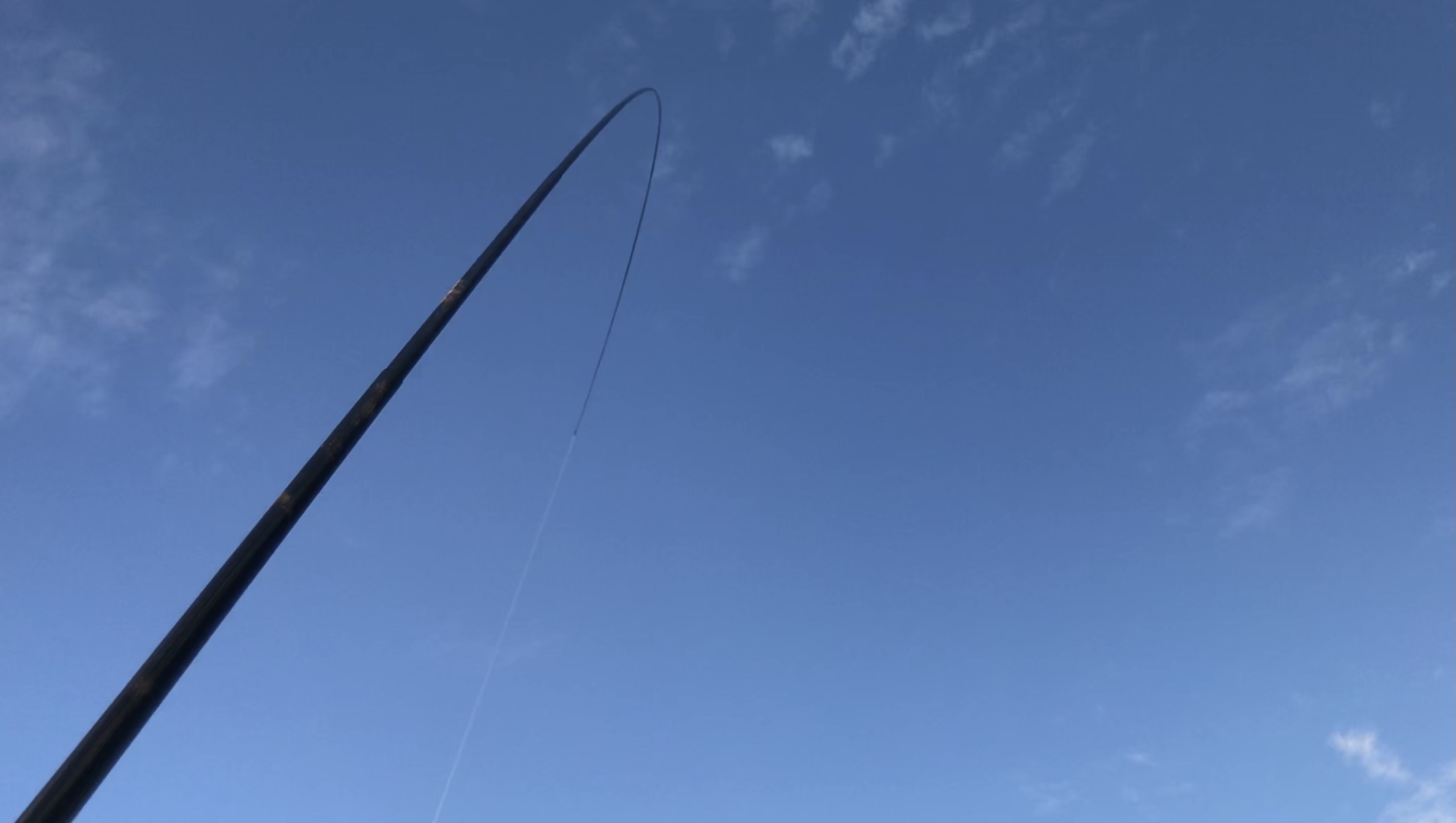
As an adult that enjoys catching fish, I have used many forms of fishing rods. From casting lures to casting lines, my specialty or chosen practice is fly fishing. As I advance in fly fishing, I study how fishing rods work which leads me to understand how they are built. In my experience, I have spent time with bamboo and composite craftsman learning their craft and ultimately choosing to make bamboo fly rods myself. As I have shared this before, all of this prior to my choosing to understand practice and study tenkara.
Now, as I return to fly fishing after fourteen years, I would like to share a little more of what I’ve learned about the business end and evolution of a tenkara rod.
Is Tenkara fly fishing?
I look at how a rod works, how it is constructed in order to understand each method.
In western fly fishing, the rod is variably loaded and released (casting) which dynamically sends the line and ultimately the fly to its target. The energy, or casting of the rod is transmitted to the line as it runs through guides along the length of the rod. This energy is transferred, dynamically. The variable length of the cast is described by the amount of force applied to the bending potential of the rod. The loading of the rod is released and energy of the bend is sent through the line, the cast length displaying how much force was applied to the rod. The amplitude from the cast and wavelength in the line is variable and dynamic in the potential length of the cast.
Tenkara is fly fishing, Japanese style fly fishing complete in its own form.
With tenkara, the line is attached to the tip of the rod and that connection seamlessly transmits the potential energy from the rod loading into the line. The amplitude and wavelength are essentially fixed by the chosen length of the line.
The technique of casting, imparting action into the rod, has an effect of how well the system transmits the energy to the fly. The results in technique are directly proportional to the understanding of how to balance the application of power through the casting stroke. The timing of casting stroke and the type of stop determines the efficiency of sending the energy to the fly and how the energy is dissipated at the fly.
The bend and resistance or potential energy of the rod is affected by the variations of construction techniques.
Tenkara is fly fishing, Japanese style fly fishing complete in its own form.
With tenkara, the line is attached to the tip of the rod and that connection seamlessly transmits the potential energy from the rod loading into the line. The amplitude and wavelength are essentially fixed by the chosen length of the line.
The technique of casting, imparting action into the rod, has an effect of how well the system transmits the energy to the fly. The results in technique are directly proportional to the understanding of how to balance the application of power through the casting stroke. The timing of casting stroke and the type of stop determines the efficiency of sending the energy to the fly and how the energy is dissipated at the fly.
The bend and resistance or potential energy of the rod is affected by the variations of construction techniques.
The type of material the rod is constructed of and the taper of the rod, thick at the handle, thin at the tip has an effect on the transfer of energy from the rod bend. The material has a speed which the energy of bending resists and wants to return to its resting state.
Carbon fiber cloth is pre-impregnated (pre-peg) with epoxy resin that is rendered stiff by the application of heat. The epoxy in this cloth contributes to the resistance of bending once the epoxy has been catalyzed by heat. The pre-peg composite fabric that modern tenkara rods are made of is often described by the term, modulus. The modulus in relation to the bending and recovery speed of the rod is described numerically. The shape of the cloth once cut and applied to the mandrel, higher modulus number describes a faster return to resting state or speed of elasticity. Carbon fiber cloth with a higher modulus number is denser and more compact with carbon fiber. The shape that the pre-peg cloth is cut into also affects the flex profile of the rod.
In constructing a western fly rod and or a tenkara rod, the material and the taper (how wide at the handle and thin at the tip) will affect the flex profile and the rate of return or speed of the rod. Typically, the faster the rod is, the bend is primarily focused in the tip yet you can create a fast-recovering full flexing rod or a slow recovering tip flexing rod using the variability of materials and taper described.
Joints are part of the rod construction and can be used in the design of the rod Joints affect the bend or flex profile of the rod. Lots of joints, double the material, stiffer and where are those joints placed in relation to the bend affect the speed and flex profile.
Rod design and manufacture consider each element when crafting rods for market, regarding the market, he evolution of a tenkara rod is also affected by the people who practice it.
In constructing a western fly rod and or a tenkara rod, the material and the taper (how wide at the handle and thin at the tip) will affect the flex profile and the rate of return or speed of the rod. Typically, the faster the rod is, the bend is primarily focused in the tip yet you can create a fast-recovering full flexing rod or a slow recovering tip flexing rod using the variability of materials and taper described.
Joints are part of the rod construction and can be used in the design of the rod Joints affect the bend or flex profile of the rod. Lots of joints, double the material, stiffer and where are those joints placed in relation to the bend affect the speed and flex profile.
Rod design and manufacture consider each element when crafting rods for market, regarding the market, he evolution of a tenkara rod is also affected by the people who practice it.
The evolution of tenkara has a lot to do with how rods perform the way they do.
Born in Japan, tenkara fisherman of old made their own rods from bamboo, the lines from horsehair and the hooks from bent needles. There wasn’t much in the way of descriptions of how the rod performed or even communicated between tenkara fishermen. The method of tenkara was professional in nature and the trade secrets were not shared freely. The results that tenkara fisherman brought to market were much more important. Tenkara rods were the tools of professional fishermen and competition to bring fish to market isolated the descriptions of the tools to of the early tenkara fishermen.
Up until 1960s, rods were made of bamboo. During that time, rod makers offered their craft in small shops in the same villages and cities where the fish were sold. Wazao rod makers or traditional bamboo rod craftsmen made rods available for purchase and use. Making rods took time away from fishing, and fishermen worked with rod makers to produce rods with the desired qualities for their skill in catching fish. Aesthetically pleasing rods that performed well brought the highest prices yet the skill in presenting the fly far outweighed a beautifully crafted rod that was expensive to purchase. Skill was earned through experience and fishing an expensive rod was not the key to making money or feeding your family.
Other more popular forms of fishing rods were produced by larger manufacturing firms. The manufacturing of fishing rods already had progressed, and larger markets were served. Fishing companies such as Sakura was one of the earliest to commercially popularize tenkara to a broader audience. Technology from other forms of fishing rods were used in the production of tenkara rods and in the 1970’s the first composite (fiberglass and carbon graphite) tenkara rods were being produced and sold.
The largest companies that produce rods marketed their products by several means. Tenkara rod manufacture being a smaller portion of the larger market still grew with the advance of better materials and construction. Early tenkara rods were one piece bamboo or wood, the rods being long and the tips of the rods being somewhat fragile, those early rods were left near where the fisherman lived in the mountain streams where they fished.
As rods began to be manufactured in cities far from the streams they were used on, multi piece rods were produced for ease of travel. Some of the first multi piece rods being produced were called “in stick” as the smaller sections were stored inside the larger sections. In-stick configuration progressed to the telescoping or nesting rods as this configuration is far more efficient and compact.
Japanese fishing rod manufacturers marketed their goods by describing the performance and by the aesthetics of the rod. Books on tenkara were written, magazines included tenkara and there were films produced by production companies all which supported the small tenkara communities scattered across Japan. Analyzing what was being sold was part of production and the tenkara rod market was carried along by the broader market of other types of fishing rods but the manufacturing and performance qualities was shared with the tenkara rod manufacture and marketing.
Which brings us to modern times.
It is not widely known that Yuzo Sebata introduced tenkara to America in 1990. However, at that time, in Japan, rods were described by “tone” and by flex profile. A hard tone rod typically had a 7:3 profile. The business of tenkara was already established and reported on thoroughly. In 2009, tenkara was commercially introduced outside of Japan by the Internet and by the information stream from an American company. Marketing tenkara was outside of Japan for the first time and the early marketing was somewhat ackward and wandering as the allure of tenkara was accepted by a large consumer base for many reasons.
Born in Japan, tenkara fisherman of old made their own rods from bamboo, the lines from horsehair and the hooks from bent needles. There wasn’t much in the way of descriptions of how the rod performed or even communicated between tenkara fishermen. The method of tenkara was professional in nature and the trade secrets were not shared freely. The results that tenkara fisherman brought to market were much more important. Tenkara rods were the tools of professional fishermen and competition to bring fish to market isolated the descriptions of the tools to of the early tenkara fishermen.
Up until 1960s, rods were made of bamboo. During that time, rod makers offered their craft in small shops in the same villages and cities where the fish were sold. Wazao rod makers or traditional bamboo rod craftsmen made rods available for purchase and use. Making rods took time away from fishing, and fishermen worked with rod makers to produce rods with the desired qualities for their skill in catching fish. Aesthetically pleasing rods that performed well brought the highest prices yet the skill in presenting the fly far outweighed a beautifully crafted rod that was expensive to purchase. Skill was earned through experience and fishing an expensive rod was not the key to making money or feeding your family.
Other more popular forms of fishing rods were produced by larger manufacturing firms. The manufacturing of fishing rods already had progressed, and larger markets were served. Fishing companies such as Sakura was one of the earliest to commercially popularize tenkara to a broader audience. Technology from other forms of fishing rods were used in the production of tenkara rods and in the 1970’s the first composite (fiberglass and carbon graphite) tenkara rods were being produced and sold.
The largest companies that produce rods marketed their products by several means. Tenkara rod manufacture being a smaller portion of the larger market still grew with the advance of better materials and construction. Early tenkara rods were one piece bamboo or wood, the rods being long and the tips of the rods being somewhat fragile, those early rods were left near where the fisherman lived in the mountain streams where they fished.
As rods began to be manufactured in cities far from the streams they were used on, multi piece rods were produced for ease of travel. Some of the first multi piece rods being produced were called “in stick” as the smaller sections were stored inside the larger sections. In-stick configuration progressed to the telescoping or nesting rods as this configuration is far more efficient and compact.
Japanese fishing rod manufacturers marketed their goods by describing the performance and by the aesthetics of the rod. Books on tenkara were written, magazines included tenkara and there were films produced by production companies all which supported the small tenkara communities scattered across Japan. Analyzing what was being sold was part of production and the tenkara rod market was carried along by the broader market of other types of fishing rods but the manufacturing and performance qualities was shared with the tenkara rod manufacture and marketing.
Which brings us to modern times.
It is not widely known that Yuzo Sebata introduced tenkara to America in 1990. However, at that time, in Japan, rods were described by “tone” and by flex profile. A hard tone rod typically had a 7:3 profile. The business of tenkara was already established and reported on thoroughly. In 2009, tenkara was commercially introduced outside of Japan by the Internet and by the information stream from an American company. Marketing tenkara was outside of Japan for the first time and the early marketing was somewhat ackward and wandering as the allure of tenkara was accepted by a large consumer base for many reasons.
Beyond 2009 and the "Outside of Japanese Tenkara Influence"
During this time, in America, tenkara was supported by one major rod seller. The information coming from this single company was honest and true however the growth of the community and the increased availablity of tenkara equipment from Japan and subsequent growth of the market caused growing pains and in-fighting within our community.
During this time, in America, tenkara was supported by one major rod seller. The information coming from this single company was honest and true however the growth of the community and the increased availablity of tenkara equipment from Japan and subsequent growth of the market caused growing pains and in-fighting within our community.
The method of tenkara was reported on and spread by many people that had not been to Japan. The research material was there however the language barrier still very significant and the cost and difficulty in importing Japanese products was not supported broadly. Tenkara, the method was readily adapted by many enthusiasts of simple fly fishing. The method was easy and lent itself to other types of fishing.

The Japanese term, gyakuyunyu or to re-import became evident as tenkara began to grow in popularity inside of Japan because of the popularity outside of Japan.
Books on tenkara were written by authors outside of Japan, fanzines, Internet HP (home page) produced and the business of tenkara is established outside of Japan. "American tenkara" is now well established.
Tenkara, the method has grown from a small group of Japanese fly fishers bringing mountain stream trout to market. Their rods and methods are generally known throughout the world as Internet access displaces the media information once brought to the general populace through newspaper, books, magazines and film. The equipment and methods can be described and built by non-Japanese sources. It is no longer necessary by the public court to travel to Japan and bring forth the tenkara experience.
Epilogue
I find that tenkara is my connection to Japan and my practice of tenkara connects me to that small community where it all began. Tenkara Fisher is fashioned after Japanese tenkara communities home pages where many of the enthusiasts are shared within the content. I look at my writing here as a blog and nothing more than that. I am reflecting on my experience with it. I now have a history of practicing tenkara and am realizing how the rods were made, the evolution and construction by Japanese technicians in the rods that I use. Often it is cause for my time spent in sharing my experiences as an American tenkara fisher.


