Showing posts with label Discover Tenkara. Show all posts

Interview with Paul Gaskell


I’ve been contemplating how I was going to start this, trying to figure out how to introduce Paul Gaskell. It came to me while I was eating sushi with Ohana at my favorite place, Iron Chef. All of us eating and drinking sake, I was preoccupied with how to get the Interview started and realized, the story here doesn’t need an introduction. The people I’m trying to reach already know who he is and those that don’t will eventually find their way to Discover Tenkara.

Paul Gaskell really doesn’t need an introduction at tenkara-fisher.

“Paul, thanks for taking this interview.”

Paul Gaskell: Thank you – I’m very interested to see where this goes.

Adam: A Japanese friend taught me how to drink sake, thin rim glass, like a nice wine glass and after that, he taught me his taste in sake. Nothing wrong with drinking it out of the bottle or a ceramic guinomi. I love sake, rice wine, there are all kinds of flavors.

I think tenkara is like that.

“What do you think?”

Paul Gaskell: That’s a really tough question because it’s so open-ended. I think, overall, there are broad camps or tribes of tenkara angler within Japan and these are built up over many years of experience, concentrated effort/experimentation and thought. As in many areas of life, strong charismatic characters gather followers who have similar values and who identify with particular ideals. On top of that, when an angler grows up in Japan, they (obviously) develop an automatic understanding of local culture that we – as outsiders – lack. A very good example of that is how much greater the average understanding of landscape, food-production, weather and nature is among Japanese people who live in mountain areas.

There is also a much stronger appreciation for how fragile human life is in the face of natural forces – whether that’s landslides, earthquakes or simply extreme weather. Death is much closer to the surface and more readily accepted (and so life is appreciated more).

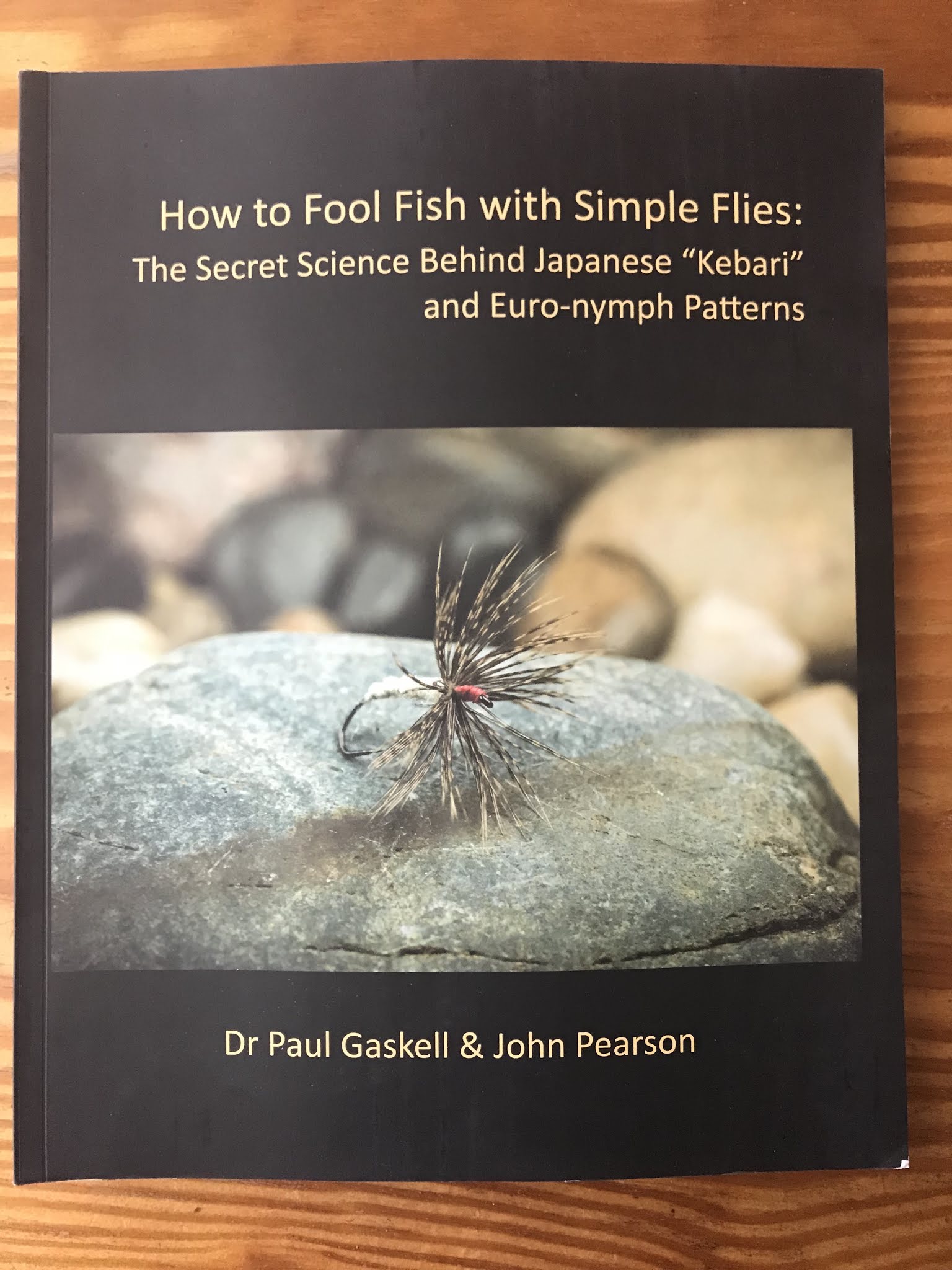
For me, those stark differences in knowledge, skills and culture of people in Japanese mountains represent the greatest opportunities for us to learn, improve and understand how to appreciate what we are passionate about in life. All those factors combine to produce branches of tenkara that have strong philosophical and practical foundations. Because each branch has been shaped within a similar range of those cultural and physical conditions, they tend to be fundamentally similar to each other. That also makes them very different from what people tend to invent for themselves in the absence of those same foundations outside of Japan.

The reason I’m (selfishly) most interested in the things that I don’t know is that is where the greatest opportunity for my own growth is.

You can’t get to where you want to go by staying where you are.

At the same time, things that are very well established and that stand up to “cross-examination” from other related disciplines (particularly biology) are likely to be worthwhile directions to pursue. I can understand that people may feel much more comfortable sticking with what they know, but I also think that it would be a waste if nobody took advantage of what has been developed already – but which is new to the west because of the language and cultural barriers. If you never stand on the shoulders of others who have worked on stuff before you, there is almost no scope for development over generations. You only get a single lifetime’s-worth of progress each time over.

So that was a very long way of saying that there are different “flavors” of tenkara, but the ones that I find most valuable and effective are the ones with robust and long-established foundations.

Adam: For a long time, I was a skateboarder, a surfer and I eventually learned to hang glide and paraglide, to ascend up into the sky using the energy in the atmosphere. I was flying around near the clouds on wings that I could put on the top of my car or on my back and drive or hike up to the top of the mountain, spread out and glide off into the sky.

As I grew older, married, kids, I used my fly fishing to distract myself from flying because my family demanded my attention far more than the next foot launched flight. I already was a fisherman, a fly fisherman first but in the end, I quit flying to really learn to fly fish and quit that to learn tenkara. I can go back to any of it, anytime I want. The reality of it is I think fly fishing and tenkara go hand in hand and I think it is an advantage to have a working level of fly fishing before learning tenkara. You don’t have to learn to fly fish first, although that helps in all aspects of tenkara.

I don’t see fly fishing as a foe of tenkara, nothing like that, if anything, it is a positive attribute to tenkara.

“Paul before we go farther down that road, please tell us about your fly fishing and how that relates to your tenkara.”

Paul Gaskell: I started “fishing” at age 6 and, being basically obsessed, I ended up working hard at as many disciplines as possible (from bait, freshwater, marine, fly and even finesse worms/plastics). That obsession is what led me to a career in freshwater biology - first in research and more recently in trout habitat conservation work for the Wild Trout Trust (a similar organization to Trout Unlimited). So, my work and my passions have always been tangled up together.

I first came across tenkara when I’d been practicing French leader/competition nymphing tactics for around 7 or 8 years. That (along with a biology background) helped me understand some of the mechanics that made tenkara effective. However, I luckily soon accepted that there were important differences from nymphing. That let me realize there were a ton of things that I just did not know or understand about tenkara. Uncovering ignorance like that is always an amazing gift – even if your ego doesn’t like it at first. Again, moving towards that ignorance is the most reliable and rewarding path to improvement.

Adam: We are so different but we are similar in our friendship with our brothers in Japan.

“You have been to the bansho, can you tell us about your experiences there.”

Paul Gaskell: It’s very difficult to capture the atmosphere of that centuries-old building (rebuilt around 350 years ago after a fire destroyed the previous building), the shiny black carbon-coating on the rafters from the open fires – the dedication of Kozue Sanbe (caretaker) and Tomotada Sakamoto (owner) and just the weight of history surrounding the place. Of course, and although it feels like name-dropping, there is an undeniable force about the presence of Yuzo Sebata and the way that he gathers people around him. Hearing stories and information from the heart of tenkara’s development from him, translated by Go Ishii, was very powerful.

Having Sebata-san cook foraged “sansai” wild edibles as well as his signature noodles and broth from his days as the owner of “Mukago” restaurant for us (myself and John Pearson) was also remarkable.

As well as some personal gifts, probably the most impactful thing I took from it was Sebata san’s statement that he feels incredibly concerned and sad that tenkara tackle has been introduced to a wider audience outside Japan – but that the important attitudes to nature, the techniques of tenkara and especially the key features of Japanese mountain culture have been left behind and not introduced alongside the tackle.


“What did you think of the top floor? I was simply amazed and those crystals?”

Paul Gaskell: The whole place is amazing and the mixture of the current practices of giant batches of home-fermented miso paste sitting comfortably alongside the ancient straw-woven snow-shoes and farmers winter clothing. Then there’s the silkworm farming space in the loft and more – it’s all a wonderful blend of preserved history and the practicalities of a living, inhabited building.

Adam: I’ve researched tenkara quite a bit, when I found out about it, I wasn’t completely happy with the explanation I was getting, I wanted more and I wanted it straight from the Japanese. I think the way Tenkara USA was promoting tenkara was good, the quiet gentle form of Japanese mountain stream fishing. The experts and their early lessons was excellent but I personally wanted more so I started to reach further back into the history purchasing old books on tenkara, specifically from a famous keiryu author there. I’m assuming you did some book search as well.

“Do you have any favorite old Japanese tenkara books?”

Paul Gaskell: Although I’ve been learning to speak Japanese to help with my understanding (and to an extent making myself understood), I don’t read or write kanji, so I can’t claim to use those books directly as primary sources – just the elements and portions that I’m able to ask questions about. One book which I’d very much like to get translated is one that profiles several genuine “Shokuryoshi” (professional/survival tenkara anglers). Kazuyuki Yamada showed us his family entry – including his father Shigeo Yamada’s profile in that book over a couple of visits we have made to him in Akiyamago and I’d really like to read that in translation.

Adam: Satoshi Miwa translated two excellent books by Soseki Yamamoto for us here, Yamamoto-san is my favorite Japanese journalist. In my interview with Masami Sakakibara, Masami wrote something to the effect that he knew many authentic professional tenkara fishermen and tenkara journalists were not his favorite. I still have more to look into including more of your material on our subject.

But regarding Japanese tenkara, I understand that is your focus.


“Do you have knowledge of a good portion of the of the experts in modern Japanese tenkara?”

Paul Gaskell: That’s difficult to answer, because there are likely to be incredibly expert practitioners who just don’t tell anyone what they’re up to! However, myself and JP have been very fortunate to be introduced (through Go Ishii and his network-building efforts) to a very large number of extremely high-level anglers. So far we’ve only been able to scratch the surface in conveying the breadth and depth of knowledge displayed across all those anglers.

Adam: I’ve made it a point to research as many different schools of tenkara, all over Japan. I was lucky to have found Kazuya Shimoda’s videos online when searching out tenkara in 2009. It was early on in my timeline and Shimoda-san suggested the use of a cut piece of fly line.

“I have not read that much anywhere, anyone reporting on that, your thoughts?”

Paul Gaskell: I think that early on in tenkara’s transition from survival method to sporting pastime, sporting anglers would have to make rods from the blanks of multiple separate fiberglass “mainstream” fishing rods (because no companies were making “tenkara” rods). That seems to be a natural carry-over from the “Shokuryoshi” tradition of using what was available to get the job done – and I’m sure applies to casting lines too.

Along with that, there has been the introduction of catch and release ethics which really came into Japan from the USA via Touru Ishiyama (who brought back western fly fishing and also bass spin fishing to Japan after visits to America). Following his introduction, western fly fishing has developed a certain prestige which it retains to this day in Japan.

Throw into the mix that genryu fishers are usually much more interested in the quest to hike and camp in the most challenging and inaccessible fishing areas – more-so than the actual fishing aspect…This means the total time spent fishing during genryu expeditions can be a relatively small proportion of the whole activity and a major attraction is to find unpressured fish. As a result, you’re just as likely to find ultralight spin fishing rigs, fly fishing and also hybrids between tenkara and “western” fly fishing approaches on those genryu expeditions.

In contrast, the much more pressured honryu (and more easily accessed keiryu) river fishing venues often requires a WAY more technical tenkara skillset (and in modern times perhaps even a European nymphing) fishing focus. The difficulty of the fish in those settings demands that from the angler.

So taking all that into account (along with the need for Japanese fishing tackle companies to cater as much or more to beginner tenkara anglers than experts), there is a very complicated picture if someone looking in from the outside is searching for “benchmarks” of what tenkara is among all the out-lying examples.

While there’s no doubt that there’s a high level of skill that can be developed when using heavier casting lines (such as cut-down fly line), it is probably also true to say that a lot of those potential techniques are already well described within western fly fishing literature. Of course, some interesting combinations of the two approaches can be developed; but the weight of the casting line immediately takes away many of the characteristics/advantages that shape a large proportion of “tenkara” techniques.

I suspect that one of the reasons that Shimoda san’s cut-down fly line approaches have less coverage is a result of it being a niche, within a niche within a niche. Tenkara, although one of the only forms of angling to be growing in Japan, is practiced by only a very small proportion of the angling public. That means “niche-ing down” further automatically reduces the awareness of those more outlying examples – particularly when their boundaries to other types of fly fishing are a lot more blurred.

Adam: I’m 58 and I don’t see myself quitting tenkara anytime soon. I see myself doing the same thing that I’m doing now, writing, chronicling my fishing, my adventures, just having fun fishing with a few friends and reporting on it at my web site.

“You have a tenkara business, will you tell us about your own personal tenkara? Not the business end or is your fishing all business?”

Paul Gaskell: It is kind of the other way around – the stuff that fascinates us in our personal fishing is exactly what we then want to share. In order to dedicate the necessary time and resources to that sharing process, we need to work out ways to create revenue. So, really the business side of things is found in developing our film-making, story-telling and digital marketing skillset. The fishing side of things - going to the source and using biology to interpret what works - is exactly what our personal fishing centers on.

The major difference is, contrary to common belief, instead of fishing films making you “look good”, the process of filming actually slows down your catch rate and effectiveness by around three to five-fold. So if you want to show 10 good captures using a particular technique, you better be confident you could take 30 to 50 fish consecutively. That encounter rate makes up for the additional time you need to allow for the cameras to re-position (and if necessary go back to capture more establishing shot details of the environment that the capture took place in). You also need to be willing to walk past great fishing spots if there is no “shot” available.

In that sense, my personal/hobby fishing without cameras is generally restricted to half hour or hour-long sessions that often function as reconnaissance for future filming venues. However, the spirit, tactics and overall experience that we value is what we feature in our content.

Sticking to that is deeply personal and you need to develop a thick skin when exposing those vulnerable/personal feelings to the public. At the same time, staying true to that process is probably the best way to end up with great respect and common ground with our customers – since it’s our authentic fishing, authentic passions and authentic selves that goes out there.

I get the feeling that many business owners who end up resenting or disliking their customers (and who become dissatisfied with their business) probably concentrated on finding anything they could sell – rather than drilling down to what about themselves would create value for like-minded people if they put it out there.

Adam: My friends in Japan have taken me all over Tokyo and in many areas, eating, drinking, fishing, hiking and everything else. I don’t know how many restaurants and onsen that I’ve patronized in Tokyo and out in the country. Quite a few in the time I’ve spent there.

I love sushi and have had the fantastic opportunity to have visited some of the finest sushi places as well as the local bars, friends of friends cutting fish and presenting it to us.

I learned about saba no heshiko or fermented mackerel sushi, a very pungent form that has a cheesy smelly taste. I have met only a couple of people in America that have heard of it. Saba sushi is sort of a mark of a person that really likes sushi.


“Do you have any favorite dish that is out of the ordinary?”

Paul Gaskell: Erm, it took me a few tries to get into “natto” (fermented soy beans). I was always OK with the taste, but that “spider’s web” stringy slime that develops around the beans was pretty challenging the first three or four times I tried it. However, like most acquired tastes, I eventually began to really crave it and now enjoy it whenever I get the chance. I also really like the “umeboshi” sour plums…In fact, Japanese breakfasts in rural accommodation settings are one of the things that are something I really cherish about my experiences in Japan. It’s always the little details that best capture the essence of an experience.

“Paul, I have started to do this in my once piece interviews? Any question(s) for me?”

Paul: Ah, that put me on the spot – I guess I wonder what contribution you’d most like to be remembered for (particularly in the tenkara community)? 

Adam: I'm not trying to be remembered. I'm just having fun writing about tenkara and sharing what I find. It's really none of my business what people think of me and the last thing I want to do is to put my own spin on tenkara. It is what it is and I am a part of it.

“Can you tell us a little about your domestic life? Your family, your work, what do you do for fun besides tenkara?” 

Paul Gaskell: So my partner Josephine is an academic currently carrying out research in the area of science education and together we have two sons (age 4 and 8 as I’m writing this). My eldest son is on the autistic spectrum and also really enjoys the sensations and experience of being in the outdoors (in fact that’s something that the whole family enjoys). As I mentioned earlier I currently work 3 days a week for the Wild Trout Trust as their “Trout in the Town” urban rivers project manager (and I’ve recently been joined in that role by Theo Pike when I reduced by days from full time). 

I spend almost all of my remaining time working on Discover Tenkara projects. I typically work an average of around 60hrs per week all-told, but because I work from home I’m also able do the school run and spend time with the kids. Over the years I’ve done many kinds of sport (from tennis to several kinds of martial arts including Judo, Aikido, BJJ and a little boxing) and I particularly like the bouldering aspect of rock climbing. I enjoyed trips to the bouldering meccas of Hueco Tanks in Texas and also Fontainbleau in France back in the day.

After about a 15-year break my kids are now giving me a good excuse to join them at the bouldering wall. I enjoy cooking when I get the chance and there’s also a LOT of books in our house between copies collected by both Jo and myself. The first time I went to Japan was actually before I got into tenkara and was as a member of the British Universities team for the World Shodokan Aikido championships in Kyoto. On that trip I also got to train at the Kodokan (the headquarters of Judo, founded by Jigaro Kano, the father of Judo). I guess I believe that if something is worth doing, it’s worth over-doing – a philosophy that JP also shares.

Adam: I am a cardiovascular technician by trade. I do not see my work as my identity. Many people I know do, I think that is normal, I simply prefer to leave my work and when I am at home, I am not at work. Work enables my home life etc.

“Does your work integrate into your tenkara?”

Paul Gaskell: Yes, in one way or another it is really all the same thing to me, which makes it “challenging” to set boundaries.

Adam: I must admit, I do not remember reading if you were full time professional angler or producing Discover Tenkara is an additional line of your work. It is my understanding that you have a doctorate degree and are classically educated. I did not graduate from a university although I do respect education and have assisted in the start up of a college within a university. I know it is not necessary for everyone to have a degree, especially in today’s world. In your case, your skill in writing and organization, quality of your projects shows and I appreciate that.

“What do you have planned in the future for Discover Tenkara?”

Paul Gaskell: We’re working on continuing to rebuild and expand our media resources/publications as well as keeping pace with the ways that we can deliver that material to people who get the most value out of it. I guess “watch this space” 😊

Adam: With all due respect, I think you have outgrown your name.

Let me explain.

The level that we learned about tenkara was quite elementary. It took a long time for tenkara to grow out of its cane pole description, we still are there in a sense, anyway. From my perspective, there is very little in the way of advanced instruction available to the masses. The Tenkara Guides in Utah are bringing the Oni School to the Southwest which is very cool but not readily available to the masses.

I look to the Japanese for advanced instruction but I’m running out. At about ten years now, the advanced instruction from the Japanese is more of just sharing what we do. The sawanobori groups are practicing a difficult hybrid form of steep and fluted valley stream / waterfall climbing with some fishing. From the Japanese, there is little in the way of advanced casting, the only thing that I have seen is purely utilitarian. I could be very wrong about that but I have not seen it.

I’m not a person that goes for the shadow cast or fancy line twirling. I can do it but it’s not fishing. Controlling the loop, tucking the fly under, casting left and right, forehand, backhand, high and low backcasting and casting for accuracy are just about it for me. There are experts in Japan that do far less than that and are recognized as the best in tenkara.

I guess what constitutes your own tenkara skills is what determines “advanced techniques.”

But I crack open your book and I look at your videos and what I see are advanced skills for learning.

Maybe you haven’t outgrown your name after all… (insert friendly wink)

More than anything, I guess this section is rhetorical.

Paul Gaskell: Perhaps I’ll risk indulging in one of my pet quotes “It is impossible for a man to learn what he thinks he already knows”.

In my experience, I feel there are just so many layers of subtlety and excellence possessed by the very best of the Japanese anglers. I feel it is probably similar to high level horse-riding; the less you can see outwardly what the rider is doing (the more they can reduce their physical “aids”) the more it APPEARS as if they’re not doing anything – then the higher their level of skill.

Yet, at the same time, the more difficult it is to see and understand exactly what they are doing.

I think I need a specific example of this to make it useful…The one I would choose is the observation that high level tenkara anglers can recognize surface patterns on the water that tell them what vertical (as well as lateral) angle/plane the fish will be holding station at. Working backwards from that, they know exactly where they need to stand to allow them to present the fly so that it enters the fish’s field of vision in the best way to induce a strike (while at the same time knowing they will not spook a fish that may be riding that sub-surface current).

At the same time, waiting for the correct current feature to “bloom” so that you can exploit it with your fly is a matter of timing as well as positional sense. All that also bleeds over into an overall innate sense of the specific sequence of perfect positions that you’ll need to take to make each cast perfectly with the highest percentage chance of success (best fly movement, lowest spooking potential). Taking that in at a glance is a high level, but invisible skill.

The problem with watching the outward details of a great angler making a cast and hooking a fish is that you’ve likely already missed the 90% of the battle which takes place before they even started their back-cast. That is also the problem with just reporting and reproducing completely faithfully the visible (and often self-reported) isolated facts or mechanics displayed by a great angler. They very often don’t realize that you (as an observer) don’t already know all the skills that they are automatically integrating into their approach. Without another filter (such as competition angling and behavioral biology background), you can’t ask the questions that expose the unconscious expertise that really great anglers have.

I’m just lucky that my personal obsessions landed that specific background in my lap through my accidental lifetime experiences and career. Without those filters, though, it’s all too easy to forget that in Japan there are beginner, intermediate and top-flight tenkara anglers (and companies catering to each demographic), just like anywhere else.

That’s why most folks miss the point and gloss over the critical details if they see a tenkara technique covered somewhere that they already know the name of.

They assume because they recognize that last 10% of the bare mechanics that there’s no more detail to learn. But just like in BJJ, there’s really no new locks or chokes (there’s only so many ways a human arm can twist) – the mastery is in perfectly drilling the systems around setting up those moves that are the visible final few percent at the completion point.

That process is also why someone can seize on a particular out-lying example that supports their case for almost any agenda “See, even Japanese rod companies do X, Y or Z” (which may be something aimed at lowering a barrier to entry – and so not appropriate to view as a valid endpoint where skill development stops).

Pigeon-holing and seeking to reduce activities to exactly what is already within our comfort zone is the path to stagnation and lack of growth. Over time, that leads to boredom and abandonment in favor of the next new shiny thing.

Adam: For quite a while I was alone here in Arizona. Yes we have fly fishing clubs and we used to have a dozen fly shops but we have none now, or what I would consider a fly shop… I started writing web sites on small stream fly fishing in the mid 90’s to reach out to people that have similar interests in their fishing so that I could be with like minds.

Social media had not developed at that time.

This will be a little difficult to explain, I hope you get it.

I’m not so sure that social media actually is a good reflection of tenkara. There seems to be a collective consciousness in reference to social media that tries to interject itself on to the definition of tenkara.

I use my tenkara equipment and techniques for trout and warm water species in the desert in winter. I personally call it tenkara knowing it isn’t mountain stream fishing for trout.

So I just use #untenkara when describing this type of fishing and that seems to help.

Getting back to my point, social media has helped tenkara grow by leaps and bounds but I think we are now in a period of seeing what this online arguing about the definition of tenkara has done.

I generally don’t care what people what people argue about online, I’m still going to do what I do because I enjoy doing what ever it is I do, the best I can.

“What do you think of using tenkara equipment and techniques outside of the mountain valley streams?”

Paul Gaskell: I think it’s useful to make the distinction “tenkara rodding” for using a tenkara rod to fish newer, improvised or adapted techniques. In the same way you can say “fly rodding for carp” and folks get a decent mental picture of what you’re up to. Other times it is easier to say “French nymphing with a tenkara rod”. A good label for the actual techniques (over and above the specific rod-type) is the most useful thing to aim for. That way it makes it much easier to apply tenkara techniques to other branches of your fly fishing – while retaining a good understanding of the disciplines that you are blending.

In the same way that Inuit have hundreds of words for different types of snow, to accurately communicate ideas that help us grow as anglers it helps to have specific terms to capture those ideas. I’m not sure at what point we, as a society, became afraid of that and treat it as a personal attack/implied inferiority.

I don’t have a problem with anyone using any kind of tackle however they want – what I do find worrying is the “Don’t tread on me!” tendency when trying to discuss the features and benefits of relevant cultural details or incredibly effective/well developed techniques from the dudes who actually invented a particular style of fishing. That’s true whether I’m talking about our experiences studying Czech nymphing in the Czech Republic – or tenkara in Japan.

The other thing that I think is negative overall is the willful denial that Japanese tenkara is valid and worth respecting alongside whatever folks do with their own time on stream. I think it’s a sad symptom of our times in the era of binary identity politics. The idea that there is no room for nuance and “if you’re not with us then you’re against us” is a wider social disease – and it will be hard to tackle within fishing.

Finally – I think that most folks outside Japan don’t realize that Japanese tenkara anglers typically drive an average of 5 to 7 hours to their weekend fishing destinations. Kura-san frequently has 10 to 14 hour drives because he avoids the expensive toll roads/highways. Taka-san drives many hours to fish for a day before driving for a few more hours to meet up with his tenkara crew at night… just so that he can make his famous hand-made soba noodles for his friends before driving home at around 2am to be back for his family for the rest of the weekend.

That’s an interesting contrast to note alongside the idea in the West that “I don’t have trout streams near me”. I’m guessing that most folks have a trout stream within 5 to 12 hours’ drive and that’s the level of dedication it takes for those Japanese glossy fishing magazines to feature photos of amazing wild iwana, yamame and amago.

Adam: Paul, for many years, I did not study or read much of the work that Discover Tenkara produced. This is no reflection on you, it is more about me and how I wanted to study. I wanted a good history and lesson from the Japanese first and foremost. I hope that you understand that. It seems that you do because a big part of your focus is on Japan. But now that I have a good understanding of what Japanese tenkara is and all of the other types of Japanese fishing and culture is, I have started to read your book, watch your videos and enjoy the content you are producing.

You guys do a great job.

I appreciate the quality goods that you guys are producing, your book augments the library of books that I have, most are old Japanese books that my friends in Japan have given to me, some after after writing them or I have purchased to study.

Your book is nested right next to those old Japanese books, that’s about the highest compliment that I can give you.

I’ve used one of your rods to catch fish in my home streams.

“Can you tell us about the development of the Karasu rods?”

Paul Gaskell: Really there is relatively little to tell. It is a rare story of something that worked much quicker than we expected. Basically, we benefited hugely from the expertise of the manufacturers and also from a pool of top Japanese anglers who tested them and provided feedback. Having described what we were aiming for and tweaking one or two details on the balance of the two rods from their first prototypes, they then came out with pre-production models that were almost exactly as we’d hoped and asked. That is a real testament to Japanese manufacturing excellence (and also the long-established knowledge of tenkara and rod-building that exists within those manufacturers).

Adam: I remember on my last trip to Tadami with Keiichi Okushi and many others, we did a day trip and an overnight (tenba) trip on Akakazure-sawa. We hiked up and set camp and hiked up some more. On the way, we had navigated some small and minor waterfalls, one needed an assist rope. The consequence of falling would have been scrapes and maybe a broken arm or leg or worse if we weren’t paying attention, we were.

But that night in the tenba, it rained hard now and then but it rained nearly all night. At home in our own streams, every year, people are killed by flash flooding. We were camped close to the water’s edge and in a steep valley. I was a guest of experts but that did not help me from worrying just a little. I remained calm and in the morning, yes the stream had risen and I knew we would have some difficulty with wading the trail back.

I remember watching Go Ishii struggle a little on a steep wall of mud, precariously hanging on to a hand line, one slip and he would have fallen 30 or so feet onto rocks and swept downstream. When it was my turn to climb the same section, I almost had to stop and gather my thoughts but I had Keiji Ito by my side. He basically told me through his glance that I could do this and I did.

I am grateful to Ito-san. I needed a little help and with his kind smile in a sticky spot, he assisted me in a way that helped me be a part of the team rather than making a problem wanting more protection.


“Do you have any recall of a particular moment when you may have been over your head while fishing in Japan?”

Paul Gaskell: I’ve certainly found myself having to fight pretty hard to keep my feet when wading in what I’ve considered powerful flows (though folks like Kobayashi-san or Sebata-san in his prime would probably not think twice about). Remembering to not turn my back and have my legs swept out from under me, keeping braced with a narrow profile and just inching patiently along until reaching softer flow is pretty testing on nerves and patience.


Crossing a rapidly rising/coloring river with Isaac Tait in Gunma prefecture (which went from thigh deep to chest deep in the time it took us to cross) was a bit of a “buttock clenching” moment. I did set off up a rock face to climb out of that valley - but decided to back off and follow the less glamorous but much more effective scramble up the soil/rock bank that Isaac and John had found to be the easiest line of weakness.

I’ve generally felt OK when holding on to ropes for steep traverses or scrambling around under collapsed/rockfall damaged bridges, but strangely some of the times when I’ve got more spooked is on footpaths that get very narrow and are soft/crumbly soil high above the valley floor. I often find myself leaning a bit too far away from the edge, which ironically makes me more likely to slip (instead of pressing my weight straight down on the slope).

Adam: As I have said, I appreciate what you do.

Thank you for your contribution to tenkara, I really appreciate your (and John Pearson) efforts.

“Please use this opportunity to close the interview.

Thanks again and looking forward to more of your content.”


Paul Gaskell: Thank you. It was certainly an interesting experience given that we’ve “locked horns” in the past Adam. I hope that our upcoming content is of interest and use to you and many more folks in the tenkara community. If there’s one killer closing idea, I’d choose “Try to welcome progressive ignorance and walk towards stuff that you don’t know with a smile”.

Interview with David West Beale


David West Beale is a fishing artist that paints with his words. He has the ability to create pictures filled with feeling from a fishers perspective. The stories he builds are descriptions of his interests in tenkara and fly fishing. They evoke memories that I have had, complex memories of a fisherman that bring those skills to life even with the layman. The knack he has with his writing reaches deep, not just your everyday description of fishing, although he writes of that but things that we may not pay attention to, he writes about things that create moments of importance from things overlooked.

Without going on about his work, I hope we are able to share the magic of those moments here.

Adam: Thank you so much for accepting my invitation.

“Is there anything you want to say before we get into the conversation?”

David West Beale: Hello Adam. I want to say thank you for inviting me. I’m truly humbled and delighted to be asked to speak in such good company. I’ve been aware of Tenkara Fisher for quite a while and have enjoyed quietly dipping in and out of site. What strikes me is the generosity of spirit found in the pages here - both from your contributors and from your good self in gathering and curating what has become a wonderful resource. So thank you for including me, it really is my pleasure. I would also like, if I may, to ask a question of you.

Through your journey along the path of tenkara you have gathered much knowledge from classic sources in Japan.

“How has this influenced your emotional experience of fishing tenkara?”

Adam: Emotional experience… Let me think about that. I’m from Phoenix, Arizona, 5th largest city in America, busy, dusty, spread out, 100 miles across city and my city borders the Sonoran Desert. I go outside and the mountains are rock, brown, black, cactus and trees with tiny leaves. The flora and fauna of the desert is the exact opposite of the pine forest of my home streams. It’s a contrast to the desert, fishing those streams, dreaming of new experiences, planning, executing the plan, doing it again.

I go from a super big ugly city to quiet beautiful mountain streams filled with clean air and beautiful wildlife traveling through everything between.

I explore the mountain states around Arizona and share the enthusiasm for tenkara with a global community. My friends in South Africa, Russia, Canada, Europe and where tenkara developed in Japan and I travel there. I travel to Hawaii and catch fish there in Waimea canyon, tenkara is mountain stream fishing and there are mountain streams in Baja, Mexico. Sky islands surrounded by gnarly deserts. My fishing is a dream compared to where I live.

Emotions come from changing the scenery, meeting distant friends, realizing my dreams.

Back at you.

“How do you write so well?”

David West Beale: I’m not sure that I do - you should see what goes in the trash!.. but it’s very kind of you say so. I do write a little about tackle and techniques but above all I’m a story teller, and my stories are from the heart and as honest as I can make them. I think that’s what my readers at tenkara tales respond to.

This endeavour we call fishing is fertile ground for the story teller, and while we are all individuals, as anglers we share a common experience too. This is what I am trying to convey. Not the biggest fish or the most fish (although a few monsters do swim through the pages), but the magic that is waiting there for all of us if we have an open heart and eyes to see.

I try to bring the experience of being there to the page. Little cues can bring a scene to life with a resonance that feels familiar to the reader. Sounds, smells, textures, colours, changing atmospherics, all of these things are a part of how we experience the external environment. So I try to bring my own experience of these things into my writing. Psychologically, our ambitions and insecurities, our successes and our failures all play out on stream, so really the stories in this way write themselves.

Adam: I’m not classically read regarding fly fishing. My research into tenkara is historical. My interest in fishing is research and review of the experts and their techniques both fly fishing and tenkara. There are quite a few classic books on fly fishing yet I choose books by Gary Borger and his nymphing, Gary LaFontaine and his entomology. John Gierach and his stories, I’ve read a few but I prefer his story lessons on small stream fly fishing.

Soseki Yamamoto, a Japanese Keiryu writer and author of many fine books on our subject has written stories about fishing as well as books on technique. I’ve had a couple of books translated that were more about the people, equipment and techniques that were not well received. Sure, there were a few people that enjoyed them but for the most part, there are not that many people that study deeply into the rich history of tenkara and the tenkara secrets found within these books.

Here in the English reading world, we are thin on books about tenkara. There are a few and in those books are vignettes, short stories about tenkara but this type of story lesson writing is practically non existent.

For me, it is enjoyable to read your stories. You do both western fly and tenkara which I find desirable.


“In your view, how does the two go together, tenkara and fly fishing?”

David West Beale: The one is seasoning of the other. When I discovered tenkara I learned that now I could do all of the things I’d wanted to do with western fly fishing but couldn’t, at least not as easily or effectively. I’m talking about ultra-finesse presentations and fly manipulations. These things unlocked for me the secrets of the river which until that moment had remained hidden and unknown.

But it isn't just the tenkara method of fly delivery that has opened up my fishing, just as important is the Japanese philosophy of kebari design. Form defined by function. An escape from Victorian entomology-based fly design, codified into the ‘matching the hatch’ approach. I believe that we seldom if ever really match the hatch. Those types of flies are an aesthetic conceit of the fly tier. Don't get me wrong, I love the craft involved, but I’m something of a heretic because I believe most if not all takes are induced. Dr Ishigaki’s work on the limits of trout vision gave me 20/20. A revelation.

So more than anything, kebari design has been the biggest influence that’s crossed over into my western fly fishing. That and the understanding of previously overlooked places - tiny places - where it turns out that fish can be. It’s been said before and it’s true - tenkara makes you a better western fly fisher.

On the reverse of the coin, tenkara has made me appreciate the joy of fly line casting and the simple pleasure of feeling a rod load and laying out long tight loops with a western fly rod. The biggest contrast is the way I now have to revise down my catch expectations for those I times when I’m not with my tenkara rod and kebari. But I believe in matching the right tool to the right job. I love all forms of fly fishing, so if for example I’m chasing pike then it’s an eight or nine weight western fly rod with big streamers. I must admit I’m a sucker too for good design and engineering, so I love a nicely machined reel and a finely made rod. These things bring me pleasure whether I’m catching or not.

Adam: My fly fishing small streams before tenkara consisted of long rods and lite lines. When I found tenkara, the rods got longer and the lines lighter, steps I enjoyed in a direction that I liked. I initially learned Japanese tenkara from Kazuya Shimoda. He promoted a method that the simple fly fishing of Yvon Chouinard follows now. History is not always kind, “Simple Fly Fishing” will be attributed to Yvon and Patagonia but the fact of the matter is, Shimoda-san was doing this type of tenkara long ago. For the most part, people do not know about the history of fly fishing in Japan. “Headwaters” magazine (Japanese) detailed the timeline by its content through the years starting in the mid 90’s. Sort of interesting, this type of tenkara is how I learned but many tenkara purist Americans would not call this tenkara!

I’ve always said since day one, “tenkara is easy to learn, hard to master” and the more I learn, I realize that there is still so much to learn from the Japanese.

As I gained a little knowledge, before I knew about the different schools in Japan, I thought the level line school of Hisao Ishigaki was it. That everything else just didn’t reach the level that Ishigaki sensei had developed. I was so naïve to think I had it figured out but I should have known, I knew just enough to be dangerous.

I think that is where we are at now in the general tenkara community outside of Japan, naïve. Arguments within our ranks of what is and what isn’t tenkara.


“What do you think about John and Paul’s direction with Discover Tenkara and the Japanese that help them tell the story?”

David West Beale: Discover Tenkara has undoubtedly brought a great deal of quality content out into the light of day here in the West. I love John and Paul’s passion for tenkara. Most interesting to me is Paul’s insight into fish behaviour and fly design from his perspective as a freshwater biologist. I do have some of the Discover Tenkara instructional material but I tend to stay away. That’s more a reflection on me than on Discover Tenkara. As my friends will attest, I’m something of a contrarian and like to figure things out for myself on stream. For me this sharpens the instinct and sweetens the taste of success. It is fun though to dip into their instructive texts once in a while and find out that the little wrinkle I just figured actually has a name!

Adam: I have not read the complete works of the Discover Tenkara guys. They enlist the help of the Japanese experts and I appreciate that. Daniel at Tenkara USA has exposed a couple of different schools, the level line of Hisao Ishigaki and Eiji Yamakawa that represents Harima Tenkara Club and the school of Hiromichi Fuji with his tapered multi strand lines. But both teachers (Tenkara USA and Discover Tenkara) outside of Japan have largely missed out on the excellent work of Shimoda-san. I don’t think anyone did anything wrong, I’m not pointing fingers, nothing like that. I just think the field of view in tenkara that the community places on it isn’t so small, it’s much more broad in scope. Patagonia and Yvon Chouinard are actually doing a good job with their methods. Although that is not my school, it is tenkara and Patagonia is very popular in Japan.

I believe as more and more people research the history of tenkara inside of Japan, we will find that tenkara, as small as it is, there is a much broader scope of practice.

“You are a talented fly angler and I enjoy your expertise in tenkara but does any of this matter?”

David West Beale: It matters if it matters. We all have different perspectives. For the practioners of those schools and those who study and celebrate them, I have the utmost respect. It is vitally important to celebrate the pure essence of our sport and keep its flame burning bright. At the same time, any cultural export is liable to local interpretation, evolution, dilution even. This will sound contradictory, but at this time I follow no school of tenkara but I’m so happy that others do. I’m completely in a bubble of my own making, but the bubble is permeable.

Adam: Fly fishing has roots in your area. I’m afraid I have only scratched the surface in researching its history. I’m a little embarrassed about it but I understand enough about it to be able to hang in there a little. My research is into the history of the fly fishing rod! I’ve had the wonderful opportunity to handle some of the oldest fly rods made. Beautiful, gorgeous wood and bamboo fly rods from your area.

“Do you have any interest in fly fishing history or bamboo fly rods?”

David West Beale: I’m no great collector but I do have a few cane fly rods, and I love fishing with them. They feel alive in a way that only an organic, artisan-made rod can. I have one old cane rod that I fly fish for pike with - there is something wonderfully earthy and gothic about that. When it comes to fly rods my taste is for a slow action, and cane, I think, does this best of all.

I am interested in the angling heritage of the British Isles, more so in fact as the years advance, and some of the foremost works on fly fishing originated here. In the 1600’s, in The Compleat Angler, Charles Cotton describes casting simple hackle wet flies to trout in upland streams, using long fine lines fixed to long flexible fishing rods. Sound familiar?

Earlier still, in 1496 a Treatyse of Fysshynge wyth an Angle was published containing fly recipes and advice on how to fish them using fixed line fly rods. I’m sure that if we could build a time machine and go back to visit these anglers, our tenkara gear wouldn't seem that unfamiliar to them. So for me, tenkara, as well as providing a wonderful window into a sublime Japanese fishing method, has also given me a means to explore the near lost tradition of fixed line fly fishing here in my homeland. Perhaps that’s why it felt, the first time that I fished with a tenkara rod, that I had reconnected with an old friend. Such resonance is important, I think, to our wellbeing, whether we know it or not.

I’m very fortunate to live close by to some of the rivers talked about in the works just mentioned. So for me, when I take my tenkara rod and fish the river this way, the river that Charles Cotton fished, the river is made of time and we are connected. Tenkara gives me chance, in modern terms, to fish as my forbears did and share something of their excitement and the challenges they conquered.

Adam: I’ve read about English chalk streams and gillies that take care of their beat. In your area, this is where fly fishing has really developed and moved outward from there.


“Can you tell us a little bit how tenkara is received in your area?”

I don't know about other countries outside of Japan, but I will say that in comparison to the U.S, tenkara here in the British Isles is very much a fringe pursuit. To put this in perspective, we have a population of around 66 million and angling fraternity of around 3 million. The last time I looked on the British Tenkara FB page there were just 286 members and many of those are from overseas! Similarly the UK Tenkara Forum has an online membership of just 180. So I believe it’s fair to say the British tenkara angler is a rare animal indeed, even possibly an endangered species.

Those putting themselves at the centre of our small stage could do more to remove the perceived barriers to participation in tenkara. I hope that, in small ways at least, my writings help, and I’m always delighted when a reader asks me for advice on getting started with tenkara. I have no skin in the game, no vested interest other than my hope that if I inspire others to enjoy and love their rivers as I do, then nature has more people on her side, and that those people will be happier anglers for it.

As to how tenkara is received by the wider angling community here, this is a double-edged sword. On the one hand I don't think we are a big enough blip on anyone’s radar for any prejudices against tenkara to have really taken hold. On the other hand, If you are a gregarious tenkara angler then it is a lonely existence. As to how my own tenkara has been received by other anglers, well it’s varied from being politely humoured, to being the subject of mild curiosity and even to outright ridicule. That is until I start to out-catch the doubters! However, personally I’ve never been received by any river keeper or other controlling authority with anything other than the warmest of welcomes and in many instances I have been positively encouraged to bring my tenkara along. So I’m saying that the low uptake of our sport in Britain has little to do with any lack of good rivers to fish, in fact we have an abundance.

Adam: It’s interesting, I have a friend that was fly fishing before we knew each other. I taught him tenkara and he really likes it. He reads social media and sees what I share with the community, he is acutely aware of my participation but he does not participate.

Not his gig.

But he does talk to me about it.

It’s funny, he teases me about the whole thing.

“David, do you have friends you fish with that read your work and know what you do?”

David West Beale: I fish a lot on my own but I have regular fishing buddies too. Yes, they read my work, some more than others..and yes like you I sometimes come in for a bit of good natured ribbing.. I can get my own back by writing about them though! I have also made one or two good friends amongst my readers, and we sometimes meet up and fish.

Adam: Over the years of fishing, writing, traveling and sharing common interests, I’ve found myself wondering, “Where am I going with this?” Even as I write the content for my book on tenkara, I still find myself wondering, “Why?” I read very few English language books or magazines any on headwater fishing. I think the renaissance period of small stream fly fishing is over. Yet tenkara is filling the void and it adds in a new dimension of badassery. Is that even a word? (laughing) The kind of climbing and fishing that Sebata-san, Kazuya-san, Okushi-san and many more people that I have not mentioned from history and the groups of people doing it now.

That’s the draw for me, there is a steady stream of this in social media. Those people, their groups, they want to share what they are doing yet the type of terrain they have is unique to their area.

On my last trip to Japan, I was taken on a pretty mellow adventure and there were a couple of times where I was thirty feet up on a vertical wall of dirt and mud held together by grass roots, shrubs and trees. On a thin path, starting to slip and everyone had to go up and up forever, might as well been forever and we all had heavy packs on… drenched. It was intense.

If I lived there, I would be in the thick of it with them pushing it but I was a visitor and nearly over my head on a pretty easy fishing adventure miles up a wild Japanese stream valley, all in possible self rescue mode if someone fell.

Only canyoneering in America approaches it and in all of my research into that here, I haven’t read any canyoneering people doing it to go fishing.

You have to go to Japan to understand that grade of adventure fishing.


“Any thoughts on genryu fishing? Do we have to do that in order to be good at tenkara?”

David West Beale: Yes and no, but there again my reality is just that - my reality, not someone elses. I have no experience of genryu fishing so I have to use my imagination here and a little experience I have from younger days when I climbed mountains in Cumbria and Scotland.

So, I think back to those times and think too about the adventures in Japan of Yuzo Sebata and others that I have read about, and what I imagine is this: the visceral experience and excitement of overcoming physical and psychological challenges to access new and remote places to fish must in some way heighten the experience of fishing and imbue those moments with a different meaning. Would I be doing the extreme stuff if I were younger and physically there? Yes I would if I could.

But do these things make you a better tenkara fisher? Well ‘better’ is a subjective, relative and qualitative description. So I’ll limit my answer purely to the technical aspect of fishing tenkara and on this level - yes and no.

Yes, in the sense that, if through genryu fishing you encounter unfamiliar fishing scenarios and/or different types of fish than are available to you lower downstream, then this new challenge will undoubtedly expand your technical repertoire, should you be open to that.

But qualifying that with a ‘No’, in that all rivers are different and the requisite skills that could be gained through genryu can doubtless be gained on some rivers in some places at lower elevation. But I see the attraction of genyru and I’m open to that seduction. Isn't it a natural impulse in the angler to be drawn ever upstream in search of enlightenment? It’s certainly something that’s been calling to me with a louder voice of late, and I have plans of my own here at home to address that.

Adam: I don’t think so. I do think that with anything we do, there are going to be people that push the limits of adventure. In mountain stream fishing, I think the Japanese are leaders by far. I think the guys I have mentioned, their friends and peers are the stand outs.

“David, I understand you are on point with the fishing you do in your area, can you describe a sporty fishing trip?”

David West Beale: For a variety of reasons time has been quite limited over the last year, but on the other hand I like best to fish tenkara on rocky, high energy rivers and streams. Living in a lowland area this means I have to drive to a different type of geology.

So a typical jaunt for me is mostly there-and-back-in-a-day road trips - up at 4.30am, drive three hours, to say for example the Peak District National Park, on the water by 9am and fish through to 5pm with hardly a break. Then back in the 4x4 and home by 8pm. It’s quite a gruelling schedule, especially as I’m usually so excited the night before that I stay up late and don't sleep!

But hopefully in the middle of all this will be some time wild brown trout, sometimes some rainbow trout (yes we do a have a few wild ‘bows over here) and maybe a few grayling. On the way home I’m already planning the next trip.

Adam: I’m in my late 50’s, a little overweight but still hike and enjoy a several mile jaunt up a steep mountain stream. I figure I have a few seasons left where I can feel comfortable in pushing it a little.

I’m taking it a season at a time trying to write checks with my head that my legs can cash.

I do a little pack rafting on rivers with some fly fishing thrown in. I have plans to visit a friend in New Mexico to do some bike packing to tenkara in the mountains.

“Do you have any other disciplines that you mix in with your fishing?”

David West Beale: I like the sound of all of that. I will be pushing my limits the next couple of years too, searching out mountain trout so I’m starting training for that. It will be hiking and scrambling and climbing and camping wild, with just bare essentials and of course a tenkara rod and a few kebari. So yes, genryu fishing in an English kind of way..

Adam: I’ve done quite a bit of fly fishing in streams, rivers, lakes and in the ocean.

“Do you do any salt water fly fishing?”

David West Beale: The short answer is no, I’ve never cast a fly into the salt. Which is strange for an island dweller who fly fishes. I can’t explain for sure why that is but it is definitely something I will get around to. Rivers though, wild rivers, that’s my passion and time is so limited that other types of fishing get pushed aside I guess.

Adam: My work is in cardiology, I do all kinds of testing on the heart for a group of cardiologists.

“What sort of work do you do to pay the bills?”

David West Beale: Well in comparison to that, maybe something less meaningful, but I design and build gardens for private clients - big, beautiful English country gardens. It’s something I’ve been involved with for almost twenty years, and last year I launched my new design business which is going really well. But it’s like an infant that needs constant feeding, so I’m still trying to get the work/life balance right.

Adam: David, I really appreciate what you do, your writing.

“What is next for you?”

David West Beale: Thank you, that’s very kind. I plan to take my tenkara to ever more remote and wilder places in the British isles, and rest assured I will be blogging about that! One project I have in mind is the pursuit of the highest altitude wild brown trout that I can find in England, possibly land-locked Arctic char too. They were stranded in some of the hill corries (mountain lakes) here after the last ice age retreated. That would be a tough gig but pretty cool with tenkara. I also have a couple of ideas for novels based around fly fishing if I can ever decide whether it’s two stories or three I have rattling around in my head.

Adam: Thank you so much for your participation. I appreciate who you are and what you do.

“Is there anything else you want to add in before we close?”

David West Beale: Well yes - thank you for having me over, Adam, it's been fun. Looking forward to your future posts here. Learning that you too may have a book in the pipeline, I’d like to wish you every success with your project and look forward to the fruits of your endeavour. Respect.
David West Beale web site, "Tenkara Tales"

Discover Tenkara Karasu 360cm


I've been curious about the rods Discover Tenkara have designed and offer to the tenkara community. Paul Gaskell and John Pearson regularly travel to Japan for research and study of the equipment and techniques found there. They spend a lot of time with expert Japanese tenkara anglers. It just so happens that some of the people they fish and work with in Japan are friends of mine. 

Because of that interest, I recently had the opportunity to use one of their rods.

Dr. Tom Davis offered to send a tenkara rod to me that I've been interested in for quite a while. He also offered to send the Karasu 360 along with that rod.

I have had it for a couple of weeks and I feel that I understand it a little more after using it and reading, watching videos about the design.

The Karasu 360 is definitely a quality tenkara rod that has a unique balance and feel that is light and desirable for all day, precise casting.

I fished it today with a 5m #3 Oni fluorocarbon line and used a Jun kebari that I tied and really enjoyed the experience.

The rod is comparable to many top tier rods of equal price and similar construction. It exhibits a nice balance, is light in the hand, cast precisely and is delicately sensitive.

It is an excellent example of a performance minded tenkara rod with a great background and a experienced team of developers.

I asked Go Ishii for a quote on the Karasu 360.
"I’d say it was a great collaboration work between some of the top anglers in Japan and DT. I like the way it sets hook too."
I asked Paul Gaskell for a quote as well.
"Bringing the Karasu to life has been an exhilarating – often scary – ride. We owe so much to the incredible expertise and professionalism of the Japanese manufacturing team as well as the top Japanese anglers who have been kind enough to test the rods alongside us. Trying to make the highest quality rod possible was a big risk – but when the final version of each model landed with us we were just blown away by what the manufacturers had managed to deliver. Put simply, the results blew past what we'd dared to hope for and we are hugely grateful to the whole team who made it happen. 
Discover Tenkara supports their customers with a forum for the user and full spectrum tuition of videos, electronic media and printed material for further education and entertainment on tenkara. 

I really enjoyed my time with the Karasu 360

If you are interested in purchasing a performance minded tenkara rod with a great background and tuition to go along with it, consider a Karasu 360.

Thank you Dr. Davis for your kind offer.


Colours of the Tenkara Rainbow


Discover Tenkara Guides and Dr. Ishigaki

Colours of the Tenkara Rainbow

“Everything Comes Back to Kihon”

Since its relatively recent broad-scale introduction to the world outside of Japan, tenkara has begun to offer a whole new audience of anglers a rich canon of techniques for presenting flies to fish. This has provided a particularly absorbing opportunity to discover either totally novel techniques – or perhaps appreciate a subtle or radical shift in emphasis on particular details of familiar approaches. On top of the “new to the rest of the world” aspects of tenkara technique, it is fascinating to recognise solutions to stream fishing challenges that have independently-evolved multiple times in different cultures. This phenomenon is particularly striking when solutions arise in separate fly fishing “cultures of necessity”. By this we mean either fishing for survival (as in tenkara’s originators) or perhaps representing your country at the highest level of international competition. For instance, in a number of European countries, gaining a place on their national World Championship team is one of the few realistic ways that young men (typically) would be able to travel widely. Without Governmental sponsorship for international team practice sessions and competitions, there would be scant opportunity to gather the required independent wealth for travel – whilst at the same time as honing top-flight fly fishing skills that are the true passion of those young master-anglers.

In common with the mountain angler using tenkara for survival, competition team members cannot simply afford to talk a good fight… Whilst there are a great variety of different tactical approaches that could be used to effectively fish even a single stretch of river – those tactics all share a common factor. Put simply, they have all passed through the filter that rejects methods that are not sufficiently effective. This is hugely different from those skills or anglers that, on the right day, will produce a couple of dozen fish that may make a good story in the bar that night. Don’t get us wrong, those are highly respectable catches – and there is far (FAR!) more to fishing than simply reducing enjoyment and success down to mere numbers. In fact, we would go as far to say that – truthfully – we feel that the best angler in the world is the one who is having the most fun. Period.


Paul Gaskell

It is a rather more subtle point that is being made here; and there is an undeniable fascination with what, precisely, makes the difference between a hard-won, ten-fish day when someone has, simultaneously, experienced an 80 or 90 fish day on the same water. Is it some kind of black magic? Or perhaps their approach is so complex that it falls beyond the comprehension of mere mortals? Rather wonderfully, it is just as likely to be due to perfection of certain basic fundamentals. Granted, there will have been years of extensive and focussed practice to engrain those perfect fundamentals; but most of the individual elements will be very simple to understand.

There is a great saying favoured by gnarly old boxing trainers “If you don’t take care of your fundamentals, you will soon run into someone else’s”. In the case of fighters, this usually means being on the wrong end of a punch that is just a little bit straighter than the blow that was 95% of the way towards landing on their opponent… Another closely related saying I have heard from Japan is “Everything comes back to Kihon”. The concept of Kihon translates roughly as “basics” or “fundamentals” or - perhaps most revealing – “foundations”. Mastery, it seems, can be found in being able to perform the basics…flawlessly! This is true whether it is tenkara, concert piano-playing, archery, boxing or ten pin bowling - and a host of other things.

That ground-truthing of each building-block of technique is an important aspect that may not be apparent to newcomers to any given skill-based activity. Being met with a great variety of existing alternate approaches and solutions could give the impression that any approach that you invent would be equally effective. This risks missing the alternate history of all those tactics that have been weeded out during the long development of the established fundamentals. In other words, it takes a long time and a lot of trials by absolutely top-flight practitioners to recognise those invisible missed opportunities that a less-than-perfect new technique suffers from (i.e. successfully counting the fish that you did not catch!).

In addition to the difficulty of quantifying the relative efficacy of different methods, there is a huge potential for confusion over the intent of sharing the results of such an exercise! Significant differences exist between the individual aims of each written or recorded piece of angling media. For instance, one broad division separates:

1 Pieces that excel at conveying the profound joy of angling

2 Material that is designed to instruct on good technique

In the “joy of experience” genre, probably the (undisputed?) reigning heavyweight champion of the fly-fishing world might be John Gierach. Along with a deep and abiding admiration for the way Gierach captures what gets our motor running about fishing of all stripes (whether it is fly or bait or whatever), we also fully endorse the great amount of experimentation and fun that is being had with tenkara tackle all over the world right now. This is all highly valid content!

On the same theme of recognising great validity, the broad variety of approaches to tenkara by established masters in Japan has sometimes been captured as part of a concept referred to as “The Ten Colours of Tenkara”. It hints at what a wonderful richness and diversity of technique is being practiced (and continually developed) in Japan. A basic evolutionary principle will still tend to apply to this rich canvas though. Those approaches adopted and retained by the master tenkara anglers will be the ones that, as well as aesthetically pleasing, are also highly effective when practiced with sufficient skill. The Ten Colours concept currently refers to the range of approaches adopted by anglers who are fully conversant with the legacy of previous Japanese practitioners. There are very interesting times ahead; what with tenkara going global. More and more people are out there enjoying the gear - both under their own steam as well as informed by Japanese practitioners.

But what of the person who, for their own personal satisfaction, feels they would enjoy increasing their technical skills with tenkara gear? From our own perspective, we arrived at a point where long apprenticeships in “European River Competition-influenced Fishing” styles meant that we were absolutely primed to absorb the skills central to traditional Japanese tenkara. Our fly selections had already been reduced to a small selection of impressionistic patterns (definitely not close-copy), we had established the efficacy of long-light rods and holding all line and leader off the water and the power of stream craft and presentation – as well as many other core aspects shared by tenkara. Additionally, we found that ruthless practical experimentation on stream was invaluable. In fact, the most informative experiments come from days of high catch-rates when the angler systematically changes factors to see what needed to be done to stop fish from taking the fly…

Of equal importance (for the “improver”) to the pre-requisite of long hours on stream is to seek out the best practitioners for any given method. This is true of Czech-nymphing, streamer fishing, French nymphing, stalking specimen trout with the dry fly, fishing the “duo” or anything else. As well as learning great fundamental skills, fishing with the very best also provides an honest benchmark for your performance against what is actually possible. In fact, if you are curious to see what is possible and also work on improving skills; always “go to the source”. However great your own personal practice has been – it is too narrow an experience to know definitively that no better alternative exists. Even if you turned out to be the best in the world, you’d need to compare yourself with others at the top of their game to confirm that fact! This is a fundamental requirement for “due diligence” before it is sensible to take on the responsibility for the learning and development of other people who are interested in learning strong skills. That way, you can both teach strong fundamentals AND acknowledge when students should seek particular input from other sources (i.e. when you know that they need something that you cannot provide to the required level!).

So at Discover Tenkara, we are very, very far from wanting to police the way that people enjoy any fly fishing methods. For instance, keep an eye out for some upcoming “road trip” video material of us on the loose in the Czech Republic fishing European dry fly methods on our tenkara gear. On the other hand, what we do strive for, with those people who want to improve their skills, is to obtain and pass on the very best available information. This is true for Japanese tenkara fundamentals – but it also applies to an array of European competition methods that are very well suited to being fished using tenkara gear. There are very simple errors that will prevent you from catching as easily or as many as you otherwise would. On the flip side there are equally simple, good, fundamental practices that enhance your understanding along with your catch rate. Many such guidelines have been formalised - and even named for convenience - in Japanese tenkara circles.

In other words; don’t tell any angler how they must fish – but do tell professionals what to teach (especially if they are doing it badly!). Anyone asking or paying for advice is trusting that the information they receive has been tried and tested against alternatives…

In just the same way that we have invested time with what you might call luminaries of technical fly fishing (like the coach of the Czech world team, Czech gold-medal-winning competitors, UK Commonwealth and World team members etc.) to gain insights on European comp methods; we will be indulging in an immersive trip to Japan in May and June this year. This will be a great augmentation to what we began to learn and compare notes on when Dr. Ishigaki visited us in the UK during 2013. These wonderful learning experiences are just fantastically good fun and deeply rewarding. They also provide the basis for forging priceless friendships with fellow fishing nuts around the globe. As ever, we will be set to “receive mode” and not “transmit mode” because there is so much to learn. We are really aware that master practitioners have to ration the information that they pass on – so that it is matched to what the audience is capable of absorbing and putting into practice. There are many more layers of subtlety to be discovered and discussed and, frankly, we can’t wait to get into it all!

We realise what a privilege these opportunities are, and we are definitely not going out to Japan to trivialise the lessons that are as yet undiscovered to the rest of the world. It would be too easy, and totally wrong, to assume that we already know all there is to learn in tenkara. We feel so fortunate to indulge our passion for the pure social, cultural and recreational joy of tenkara around the globe whilst at the same time gaining insights into tenkara’s techniques and practice. How wonderful that it is possible to experience the best of all possible “pure experience” and “technical workshop” worlds! Especially since, in the process, we can establish the most important building blocks to teach people a rich and enjoyable progression in their passion. The rest of the fly fishing world is extremely lucky to have such a welcoming community as the (totally voluntary and hugely passionate!) Japanese tenkara “establishment”. One of their major desires is to share as much of their hard-won knowledge as they possibly can. Something that is perhaps not always as easy to find in the world of highly competitive angling! What more can I say? I suppose, in the end, everything really does come back to Kihon… even the pure aesthetic joy of just being on stream and elegantly casting a simple fly to wild fish.


John Pearson

Words: Paul Gaskell

Photos: John Pearson