Showing posts with label #untenkara. Show all posts

Tenkara Techniques for Slack Water Trout


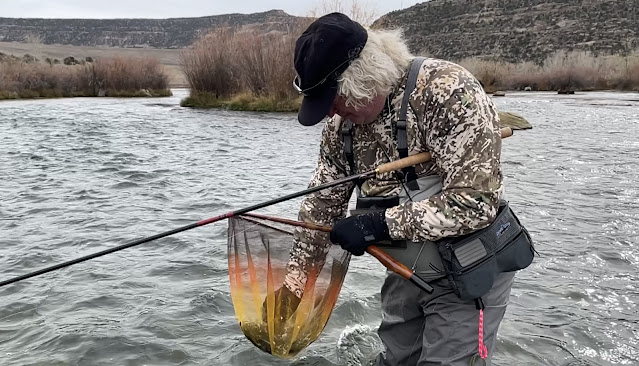
There are many techniques in fishing for still water trout that directly transfer to pools and slack water on rivers and streams. In my area, I am fishing tenkara in a variety of water from one foot wide 3 cfs streams to a hundred yard wide river and 14,000 cfs flow. I also fish winter stocked urban ponds close to my home. I’ve fished these urban ponds for trout over the years and the knowledge that I have gained along with fishing for trout in lakes directly relate to trout in pools and slack water in rivers and streams. 

The trout are the same however the approach in catching them needs a little adjustment. 

Trout in still water feed on the move and their behavior is based on finding and consuming food in a static environment while trout in streams and rivers find and take food in a dynamic moving environment. 

The key to approaching and catching trout in a static environment is to find them first.

I live in the desert southwest. I have to travel by car for ninety minutes to get to my closest watershed. In the winter, the cooler daytime temperatures allow for stocking of trout in city ponds and urban lakes. My long travel to go fishing now becomes a ten minute drive. During the winter, I primarily fish still water using tenkara techniques for a couple of months. I continue to hone my tenkara techniques based on those many days of fishing for still water trout. I call this type of urban fishing #untenkara.

What I have found is this type of fishing directly transfers to fishing for wild trout in pools and slack water found on streams and rivers. This convenient urban setting relates and actually helps me catch the most difficult trout in gin clear and shallow pool water in the wild.

When I fish a stream, I approach a section with care and look for structure. The flow state in a stream indicates to me where the fish are. I look at the gradient, the depth of water and the structure, how it creates the flow or I look at the flow itself and find the fish by knowing where they will hold to feed in relation to rocks, bends and structure. Trout will use the flow like soaring birds to stay in one place as the food source “flys” by in the current. The trout use very little energy in intercepting bugs to eat and fill up the tank that fuels their engine. If I do not actually see the fish, I imagine where they should be in a feeding lane or in a spot in front of a rock or behind it holding in the pressure wave. Or I will imagine them under a root ball in the flow. I will present my kebari in a methodical approach based on many years of tenkara fishing in relation to the structure and flow. I’m actually fishing structure prioritizing where I place my first casts.

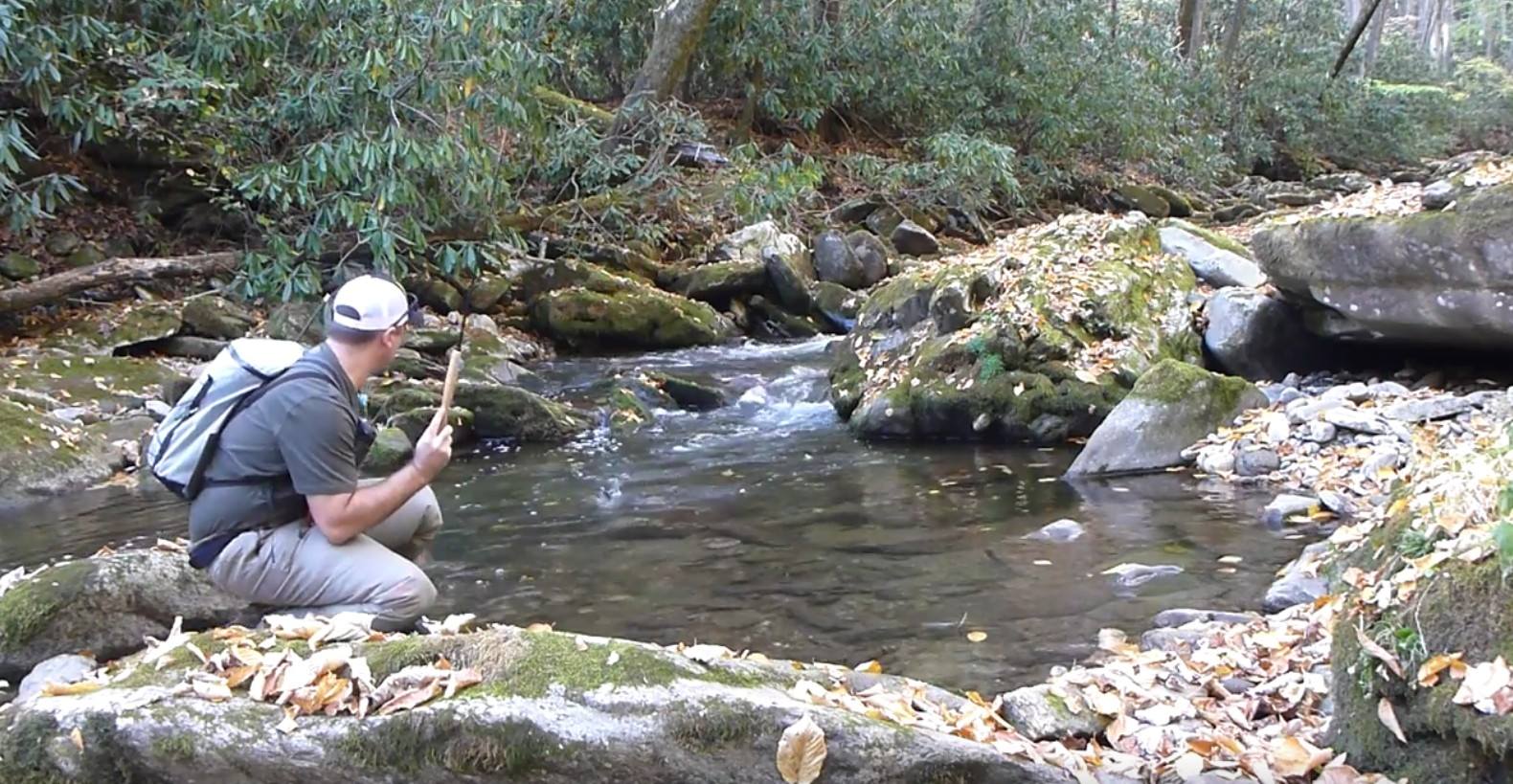
When I fish a pool, I begin with a completely different mind set. Ever before I approach a pool in the wild, I’m using stealth, viewing the pool from far away, I’m looking for any signs of current and or the relation of the pool in the stream or river. I want to know where the pool is filled and where is the outflow. How deep it is, where is the deepest spot and what is the temperature. Where is the sun in relation to the pool? Is there any cover or shade?

Do I see fish actively feeding?

I assess the pool ever before I reach it, I find the fish and decide my method of approach.

Just as I fish a stream, I move upstream and approach pools from the outflow. In big rivers, I approach perpendicular from the bank.

Trout in pools typically have three types of behavior. They sometimes move in pods or groups from one place to another feeding here and there. Other times they will be dispersed through out the pool feeding selectively on their own. The will also hold to structure in the pool. If there is a varying temperature or gradient, trout will often seek the depth where cooler water is during the middle of the day.

Before I approach a pool a glade or slack water, I observe from as far away as I can, where the fish are, I find them first and then I cast to individual fish or if I see evidence of where they are, I will cast to rise rings or swirls. Pools, slow moving or still water in rivers are typically in an open environment. On a stream, a still water pool, a slick or a glade often is lined with vegetation and or trees with overhanging limbs. For all my tenkara, I use the longest rods and lines as possible. For still water where trout often have time to inspect what they eat, I will use clear fluorocarbon lines and finer tippets down to 7x. Stealth is key and even approaching the pool I will move slowly and pay attention to my foot steps not clacking rocks together or splashing as I move. The long tenkara rod and light line allows me to present to the trout in more of a vertical orientation with very little line disturbing the surface. Tenkara presentations are often “fly first” the line at an acute angler going in to the water with no line slap disturbance on the meniscus.

To review, asses the pool, quietly move into position and make your tenkara presentation in a super stealthy method with no distractions to alert the trout. This is key to successfully fishing this difficult water. 

When you catch trout in a nearly invisible pool of still water, you know you are doing well.

So I approach the pool after figuring out where the fish are and work from the closest trout to me outward. If I know the trout are nervous, as in if I scare one single trout, it will run and put the pool down, I will approach very slowly and deliberately and cast lightly. Precise pin point casting puts the fly close to the trout and often the take is immediate in pools. If I am able to see trout rising, I will cast a little beyond them and depending on the type of fly I have, I'll let it sink for a second or so before beginning to pulse the fly. 

Even in very selective water, I am not matching the hatch. I use a favorite fly that I'm confident in. The fly doesn't seem to matter, it's the stealth that matters with tenkara presentations, not matching the hatch or dead drifting. It's the fact that the trout are not alerted to your presence first. Your fly is an opportunistic meal and their attention is fully focused on feeding.

Fishing a 4-5 meter rod and a 7 to 10 meter line is in the neighborhood of 40 feet of reach. Casting at that length, I am not able to see my fly, let alone a clear fluorocarbon line. Much of what I am doing with the fly is by feel. All of my still water fishing is sub surface and most of the takes are felt or indicated by the line movement. There are times where I am so in the moment that I feel like I imagine fish. From those many days of watching my line and feeling my fly rub along the bottom, I am indicating subtle un-familiar line movements and or tiny telegraphed rattles of the lines as fish taking my fly and turning. 

I'm so in the zone and comfortable with my equipment that it seems as if I am imagining the takes that catch fish.

I am. 

That imagination of what my fly is doing gives me the cutting edge to set the hook on even the slightest change in the way that the line is behaving or in the feel of the rod. You learn to let go of thinking and start being mindful and in the moment. 

I don't think of fishing, I imagine catching.

Fishing in an urban environment allows me to inspect each and every aspect of my casting, presentation and pick up and cast again. While retrieving the fly, I am concentrating on my casting hand, what it feels as the rod tip loads, how that feeling changes, how the line drape changes as I tighten the line and pause. I have time and repetition, over and over. I keep my body in the same position, I am a machine, my body in the same position, everything the same, methodically, over and over making the same movements. Through this methodical and repetitive movement, I am able to discern the line movement and more importantly, any different movement in the line, SET!

It's this methodical approach, this repetition of casting and moving the fly, over and over the same way that I believe is the success to my understanding when to set the hook in difficult still water.

I would say that there is no magic in it but the truth of it but there is. 

How do you explain to someone this magic?

The above is the best that I can do.

Set yourself up with a method that is the same every time. Remember this method, do it the same way every single time. 

A methodical approach promotes a sixth sense for catching.

I used to wonder why watching a successful Japanese honryu angler was robot like. He moves from one area to another sampling holes, runs and holds with the same cast, the same rod angle, everything the same. It appears that he is mechanical in his cast, retrieve moving on, doing it again and again in the same fashion.

The whole rod line and fly is the indicator, the system to tell you that the fish, beyond your sight has taken the fly. The fish's mouth is small, the fly even smaller but the line is big, the rod is too, put it all together and you have a system of indication of when to set the hook.

I've written it before, it's the software of tenkara fishing that catches fish. You can stack the odds in your favor but if you aren't keeping touch with the fly, you will miss the opportunity to observe the subtle facts of the take, the feel of the line and the fluttering of the fish's tail.


Interview with Karin Miller


The personal letter in the box of rods read, “I’ve opened my soul to you and barred it all. I just ask that you have an open mind, remember the joy of fishing when you first learned, and play.” There is a lot in that sentence and I’m doing my best to share it with you here.

I live in Arizona, far from any big fly fishing opportunities like the famous western rivers or lakes famous for cold water trout. Although we do have many warm water lakes filled with many species of fish, I don’t target them but Zen Tenkara and Karin Miller offers rods that you CAN go after those fish.

I requested a sample of Zen Tenkara rods to familiarize myself with. Soon after, a big box of rods was sitting in the field of view of my video doorbell. I waited till I had an hour to go through the box and open the rods as I would open one of my own upon first receipt. I was sent six rods, the Suzume, Zako, Sagi, Suimenka, Taka and the Kyojin II. In the kitchen I sat as I inspected each aspect of the rod, shaking it, reading the corresponding material on it and closing it and moving on to the next rod. All exhibited the same attention to detail, uniformity in components and storage but each with a personality, uniquely designed by Karin and her team.

In that humble box of rods is a lot of experience and work. As I read this, Karin is in Costa Rica targeting exotic species with the several different rods from the Zen line up including the Zako and the new Dual Action 2 Tip/4 Length Suimenka for machaca, the Suzume for Tico trout and the redesigned Kyojin II for surfcasting for trevally, milkfish and a number of other saltwater species.


Adam: Karin, thanks for sending the rods. I appreciate what you do.

Karin Miller: You’re very welcome Adam. I hope you can appreciate both the diversity and innovation that came packaged inside that box.

Adam: As I write this, you are in Costa Rica and have sent me a message about the rods and fish you are targeting and catching.

“Can you tell us about your equipment and catch?”

Karin Miller: Certainly. Costa Rica is such a diverse country. It offers a plethora of fish species and experiences both fresh water and salt. We were collaborating with a great team there, Release Fly Travels, with the intent to scout locations, species and various fishing opportunities for future tenkara focused destination trips. Since we really wanted to experience Costa Rica and all it’s tenkara possibilities, we covered a broad range of water, climates and fish species. This meant packing a variety of rods and lines, so we’d be prepared for most anything. When you’ve never fished a place or country before, it can be tricky to choose gear. We got into everything from small, robust trout, high in the cool-water, mountain streams of the cloud forest, to primitive, aggressive, teeth baring, machaca in crocodile filled low-land rivers near the border of Nicaragua. We even got to surf cast for crevalle, milk fish, jacks and several other saltwater varieties from rocks and cliffs on the southern pacific side just to round the trip out. Different rods and setups were used in each situation but with tenkara gear packing down so compactly, it’s still lightweight and minimal compared to traditional fly fishing gear and equipment. Basically, we focused on 4 rods during this trip: the Zako and our new Suimenka for machaca and guapote, the Suzume for Tico trout and the redesigned Kyojin II for surfcasting and what I like to call “saltwater surprise”. 

 
During our machaca quest we paired the rod with heavier lines as a result of the presentation we were striving for – a shorted cast with an aggressive, hard hitting popper to the surface of the water that resulted in a “plunk” sound. For this species we were attempting to mimic fruits and seeds dropping into trees that hung over the river banks. The results were fantastic.

When we were in the Talamanca Mountains fishing for trout in the cloud forest, we fished more traditional tenkara with ultra-light tenkara lines, 6x or 7x tippet and dry flies, Sakasa kebari and small nymphs patterns. Pools, pockets and edges… The plunge pools were exquisite, the water – some of the cleanest on the planet. All this, while surrounded by colorful birds singing, lush greenery and beautiful bromeliads. This location was tenkara nirvana…. truly tenkara heaven on earth. Just perfect for that delicate, pure, tenkara experience.

Lastly, we had a chance to get salty. We spent an entire day casting off of rocks and cliffs into the ocean for, well, whatever came up. Jack crevalle, ladyfish, leatherjacks and milk fish were plentiful. I used the Kyojin II paired with a 12wt fly line and a Skagit head, plus leader. Using a reverse and double reverse spey cast, it was pretty easy getting line out to where it needed to be. I was casting big clousers and minnow-type patterns. Those saltwater guys are ravenous carnivores. They want protein!

It was just such a special trip because each fishing scenario was so unique and different from the next. And it all worked so well on our tenkara rods. At no point did I wish I had a reel or feel like the job would have been better suited for a traditional rod and reel set up. Costa Rica really is a great tenkara destination. Who knew?

Adam: That is awesome!

I really enjoy picking out a place to fish, studying it and going after the target species. To date, I have done pretty well with my own adventures.

I’ve always travelled quite a way for the places I love to fish. At home it’s either two or four hours’ drive. Pushed out farther, it’s eight to twelve hours drive and beyond that, I get on a plane and go. At my destination, I either meet friends or I’m literally bushwhacking and figuring it out myself which leads me to my next question.

I rarely hire a guide. I don’t believe in missing the lesson. I have hired a guide less than the fingers on one hand in forty years of travel and fly fishing. I’m not against guides, I personally believe in figuring it out on my own, I find value in that.

“What do you think about guides?”

Karin Miller: I’m a problem solver as well. I enjoy figuring the puzzle out myself. Often there’s great reward in doing it on your own. However, when you’re fishing in a completely new location or country, and targeting species you’ve never gone after before, and you have limited time and limited opportunity, a guide is indispensable in my opinion. It’s always a collaborative effort. They know their water and their fish. I know my rods. We work together to figure out the best approach to be successful. I get to learn about a new species, and they get to learn about tenkara, fixed-line fly fishing and how to fly fish with out a reel. When we land fish, it’s a joint celebration and victory! I like the partnership that develops during the process. During these trips and particularly during the scouting adventures and training trips, we’re both learning and sharing knowledge and our experience. That often leads to new discoveries and lots of excitement – and of course, lots of laughs and stories. I’m very, very competitive, but I never forget how to laugh at myself because I continually make mistakes, goof up, behave like a child and am a dork. We can’t take ourselves too seriously while fishing. If you can’t laugh, something’s gotta change.

Adam: When I travel to a new area, if I am meeting someone, they usually act as my guide so as much as I don’t use guides, I end up fishing with friends in a new area which is like having a guide.


“When you travel, what goes through your mind to go fishing there?”

Karin Miller: Usually it’s the species that drives me. I become fascinated with a fish, its habitat and environment which it lives and the challenge of landing it. As I mentioned before, I’m competitive. I’m drawn to the challenge, to difficult species that are respected for their power, their strength and their beauty. The location is the cherry on top. I was inspired by Costa Rica. The Maldives Islands blew my mind…. That’s a saltwater destination that’s barely touched as a fly fishing destination but is an incredible, breath taking beautiful fishery. It’s just takes a real commitment to get there because it’s so far away. Costa Rica, easy peasy. Alaska, easy peasy. Mexico, easy peasy.

Adam: I often travel to a spot for family or vacation and I hear about trout there so I start to study and figure it out.

“Where is your next destination after Costa Rica? Where is the place you really want to fish and haven’t been?”

Karin Miller: My next destination as this article was being prepared is/was the Maldives Islands in the Indian Ocean east of Madagascar, south of Sri Lanka and west of Australia, just below the equator. It was simply the most beautiful place I have ever been. I thought the water in the Bahamas was incredible. The Maldives blows their water away. Plus, the climate is mild, minimal wind, no bugs or mosquitos and no other anglers (except for the occasional commercial fisherman on the ocean side)! The Maldives are untouched and may not be there in the future with rising ocean levels. The highest point in all the Maldives Islands is 2 meters above sea level. I am thankful to have experienced such an incredible place on this planet. Even better, I got to fish there with the best “extreme tenkara” guide ever, @Guidedfly. “Geordie” also guides in Alaska at Rapids Camp Lodge which is Zen Tenkara Endorsed. He’s landed huge chum, sockeyes, silver and king salmon with me on tenkara. So, to fish with him for salt in the Maldives was just wonderful. He knows Zen rods, he knows me and we fish hard together.

As lucky as I am to have fished both Costa Rica and the Maldives, I do have a bucket list fish/destination (head and eyes lowered, hands crossed in lap, feet tapping, I’m a 4 year old at heart). I really, really, really, want to go after Golden Dorado in Bolivia. I have wanted and dreamed about casting to that fish for several years now…. of landing it and just having it there beside me for just a moment to admire it. Golden Dorado are magnificent. That is the fish I dream of and want on tenkara.

Adam: Wow, that’s cool. I love travelling and fishing. I carry a minimal tenkara kit with me where ever I go. I have found that a lot of my fishing is opportunistic. I meet someone at a destination, they are a fisherman, the next thing you know, “Hey, I have my stuff with me!” and we are off on a fishing side trip.

“Do you do anything like this?”

Karin Miller: I’m kinda at both ends of the fishing spectrum Adam. I love the collaboration of fishing with someone when on an expedition, targeting a specific species or venturing into unknown countries and places. But at home, I’m kinda a loner. I’m usually on hyper drive. When I fish at home I do it for the solitude, for the quiet focus it brings to my brain and for the grounding and centering it provides. When I fish with friends we often separate on the river and fish together, separately – if that makes sense?

Adam: Karin, you fly fish and use your telescoping rods on the same trip, I sometimes do that too. The Japanese experts that I have come to understand do that too. That’s cool that you do it that way. We have spoken on the side about my using one of your rods to target carp. You suggested a 10-weight line cut for the rod.

“Can you tell us the way you line your Zen rods? How do you transfer fly line weight to your telescoping rods?”

Karin Miller: Adam that’s a big homework assignment! It’s not a simple one-fits-all recipe. You have to take into consideration multiple things: what you’re targeting, where you’re fishing the ideal cast distance for the species, the environment or conditions where you’re fishing, the rod your’re using and what type and size of patterns you’re throwing. What I can say is Zen is unique in that we talk about our rods using similar language as regular fly anglers. We have assigned a FRAE Rating to each of our rods for the convenience of anglers and fly fishermen/women alike. FRAE stands for “Fly Rod Approximate Equivalency”. It’s our olive branch to the fly fishing community and it gives anglers a better idea of the rod’s capability and capacity and helps them make a more informed decision when choosing a tenkara rod. We’ve had great feedback and anglers really seem to appreciate the FRAE Rating.

Zen small tenkara rods which include the Suzume and the Zako can be lined with traditional furled or braided tenkara lines, tenkara level line or my favorite, the Zen Floating Lines which I use with kebari, dry and nymph patterns. The Sagi rod is very versatile. It can be paired with any of those lines and will cast delicate presentations, but it can also cast heavier weighted fly lines anywhere in the range of 3wt up to a 6wt/7wt. My favorite line weight for casting long 30+ft lines is a 6wt level fly line on that rod.

The new Suimenka is extremely versatile too, particularly because it has dual tips. A nymphing Tip and a Dry Tip. Change the tip and completely change the feel and action of this rod. The Nymphing Tip handles a heavier setup and can cast a heavier line. I like the furled or braided lines including the Kevlar lines with this tip as well as a 5wt up to a 7wt fly line. When you’re using the Dry Tip, the rods casts braided or furled lines, Zen Floating Lines or 4wt - 5wt fly line really well. Length depends on location and species. In tenkara and fixed-line fly fishing, the line and its length is what the game is all about, and of course having a rod that can handle the situation without breaking.

The Taka pairs well with a 6-8wt fly line and the Kyojin II needs at least an 8wt fly line to perform. In some situation, I cast up to a 12wt fly line on that rod. It just depends on a number of factors. Zen is in the process of making lines for these bigger rods, grain weight matched for optimal performance and rod load, complete with connection loops. Think about a 30ft, weight forward, 10wt tenkara line! LOL! Crazy, I’m talking craaaazy. Makes my heart pound just thinking about it.

Hopefully I answered your questions. I’m certainly willing to talk more about it and answer specific questions but what you asked is a mouthful.

Adam: I am packrafting my favorite river, the Colorado in Glen Canyon below the dam. We are backhauled up and camp, then we blow up and float back the 9 or so miles back to the put in and drive home. Upriver, I use a 5m single hand rod with a 7m clear line to catch nice river rainbows. I like the direct connection to the fly, sasoi, dead drifting, midges, all kinds of tenkara techniques as well as known fly line type presentations. I do a hybrid fly fishing and tenkara for my honryu fishing.


“How do you like to fish big rivers with tenkara techniques? What rod and type lines? What techniques? What’s your favorite way to take river trout?”

Karin Miller: More are big questions! I prefer long rods on big rivers, 13+ft. I usually take my Sagi Rod for Colorado big rivers…it’s my favorite rod. The Sagi is 13.6’ and I’ll put on either a 15ft, 18ft or 22ft Zen Floating Line plus some tippet. Depending on the season and river, I’m either doing a dry dropper or doing a straight nymph pattern with either mono or fluorocarbon tippet. Since our line has built-in hi-vis line at the end, I don’t use any kind of indicator. Depending on where I’m fishing, and what I think will hit, I choose tippet size accordingly. If I know I’m getting into big cutbows, 22” and up, thick and beefy, I’ll up my tippet so I can land quickly and efficiently without breaking off. I dissect the water starting with what’s closest and working my way out. I have a bad habit of overworking a section, particularly if I know there’s a fish there that hasn’t hit me. I’m bad at moving on. I love fishing dries like everyone else because its so fun to see the take, to see the fish smash the fly on the surface. But I’ve come to love nymphing and setting the hook by feel alone. Tenkara rods are so sensitive. I like to put my index finger on the base of the rod blank and feel every little tic. Big rivers add excitement because you really have to manage your fish - they have so many places to run and can scream downstream. I enjoy the challenge of steering the fish, guiding it to calm water and not just pulling a 5” brookie across a stream bed.

Adam: When you are on the river, are you thinking of your company or is it the other way around or is it both?

“What drives your company?”

Karin Miller: I think that’s two separate questions. When I’m on the river am I thinking of my company? Yes. And no. When I was fishing in Costa Rica I was absolutely thinking about my rods and the circumstances and how it all transfers to the customer’s experience. Are the rods effective? Would others enjoy this? Is this practical? Its is fun? Can people be successful at this? Does it offer a gratifying and enjoyable experience? Can my rod handle this? But at a certain point, (particularly when my rods are handling it and I think others would enjoy it and be successful, I forget about my company and I’m just fishing…in a beautiful location with fantastic people and I feel so very thankful for being right there at that very moment. On my home water, I’m there for the quiet, to escape the office, social media, emails, phone calls, fears, self-doubts, all that stuff. That’s when I’m outside, on a river, just being me, not Zen.

What drives my company? Probably the shortest response to that question is me, or rather, my passion. I hear that often from people….that I’m passionate. Maybe it’s just a nice way of saying something else, but people often comment on my passion. I’m a believer in “if you’re going to spend the time doing something, do it well.” I ventured into uncharted waters with Zen. Some days its like a drug that provides the most incredible high ever. Other days it is down right hard. Like really, really, really, freak’en hard. It exposes you. Puts you up in front of the world for scrutiny and criticism. The business of tenkara is tough. I’ve learned to always listen to people and hear them out, hear their thoughts, but believe in yourself… and listen to your own gut. True, real friends are precious. They’re the people who really want you to succeed, want Zen to succeed. I respect competition as long as it’s respectful competition. I believe in giving credit where credit is due. I want to treat people, my competitors and my customers the way I’d like to be treated. Bottom line, no one needs our products. No one needs fishing gear. We’re offering an indulgence and we should be grateful for every sale. We’re not selling air or water. I want to feel proud of my products and proud of our company. I always try to take the perspective of the customer and if I was buying this, how would I feel.

“Can you tell us how Zen Tenkara came to be?”

Karin Miller: Zen Tenkara is a rebirth of Zen Fly Fishing Gear, a company I cofounded with my ex-husband about 10 years ago. I drew the Zen logo out on a cocktail napkin while drinking martinis. We actually took a vote in the bar for the name of the company because there was one other name that really spoke to me (I can’t disclose it because I love it and can still see it as an entire line). I drove sales, did all the marketing and slowly became the face of the company. I took over the company completely when we separated and then eventually divorced. It was like a phoenix rising from the ashes…sappy analogy but accurate. The Sagi was the first rod I did completely on my own. Maybe that’s why it’s my favorite. It was a passion project. (There’s that word again.) The Sagi is strong, lean, elegant, yet can fight fish like nobody’s business. I just love that rod. It’s cool too - I may be the only 100% female owned fly rod company in the world. I’m pretty sure I was the first, but as a tenkara fly rod company, your status it’s quite the same as other traditional rod companies. Regardless, it’s an exciting time to be in the industry, as a tenkara company and as a female.

Adam: I met you online like many of the people that I do. I met my wife at eHarmony and many great relationships, life-long friends from social media but I’ll be honest, I get really burned out on it at times. I don’t want to reflect on the negative, but it is there.

“Can you tell us about some of the positives that you have meet with your online or social media contacts? Any cool stories?”

Karin Miller: Oh gosh, lots of positives, lots of contacts and several very cool stories. Let’s just say that Costa Rica happened after the owner Tom Ederlin and I connected on Facebook. We talked and played with ideas for over a year before making that trip happen. Many connections have been born through introductions on different social media venues. There will always be people who talk smack – it’s just life. I try to stay out of it. Occasionally I let a little loose and give my opinion, but I try to respect everyone’s view and experience and hope they will do the same for me. I just hope for open minds….on the subject of tenkara or anything else. Rarely in life is anything black or white. Most of the world is in the gray tones and extremists on any end of the spectrum can be hard to swallow. But here again, that’s just my opinion and may not be any one else’s. There can still be a lot of negative stuff flying around about tenkara. The fly fishing community is much more accepting of the method than it used to be. I’d like to think I had some very small part in that. A lot of what has driven me to target these big species like shark, permit and bonefish is to show the fishing world that tenkara isn’t “fly fishing for dummies”. It takes a skill set, knowledge, and experience to fish without a reel. And its highly effective. I absolutely love meeting people at fly fishing shows and events that I’ve connected with on Facebook or Instagram. I also get tons of emails from people asking questions. I really enjoy that personal connection and always take the time to respond directly. I get to share in their experiences. It’s very special to become a part of someone’s life and I get to do that through Zen. It’s not just about selling a product, it’s about offering experiences and becoming a part of someone’s leisure time and life.

Adam: Most of my cool stories involve friends I’ve meet online. I travel somewhere to meet them and then in my travel, I am invited to meet other friends and the friends I’m with meet friends and become friends. Or something like that…

“Any interest in going to Japan?”

Karin Miller: I would love to go to Japan! Some time ago I was being interviewed and quoted as saying I had no interest. That shocked me and was extracted from a comment and taken out of context. Frustrating. Yes, I would thoroughly enjoy fishing in Japan and fishing with traditional Japanese tenkara anglers. There is always something new to learn and discover. I can’t image anyone who wouldn’t love that experience.

Adam: I used to think it was necessary to go to Japan to learn a a high level of tenkara. At the time I thought this, it was but now that there is so much good information outside of Japan, techniques, history, good equipment, it’s not necessary now. That does not mean someone should go or not go. Everything about tenkara is now outside of Japan except Japan. When I went, my trip was to go to Japan to learn about it but it was more about experiencing the country, the people. Japan in of itself is the reason to go. Tenkara? Yes, but only if you want that experience.

Now Colorado? Where you live? I think the Japanese need to go there. I’m not an angler without regular trips to Colorado.


“Karin, tell us what you love about fishing in salt water so much. I know, but maybe other people that don’t fish the salt, don’t know why we love fishing the sea so much.”

Karin Miller: Well if you know anything about me it’s that I’m a native Floridian. My father lived on a boat and one of my two best childhood friends had a home on Long Key. I was born of the salt. The ocean is my home, and when I moved to Colorado, as beautiful as it was, I missed water. My need to be near and on it brought me to fly fishing. No oceans in Colorado and lakes lacked motion, movement, and sounds. The rivers had those things. Saltwater will always course through my veins though. Rivers are predictable. Water flows change up or down, different hatches happen throughout different seasons, but it’s predictable. When you really think about it, rivers flow with cyclical, minimal change each year. If I go to any number of rivers in Colorado I’m catching trout. Maybe a cutthroat, a brookie, a rainbow or cutbow. Maybe a brown. But generally, always a trout. I know what’ll be at the end of my line, attached to my hook everytime. What varies is size.

Saltwater fly fishing, saltwater tenkara is unpredictable. The species are countless. You might be casting to a trigger fish when a barracuda comes out of nowhere and slams your fly. On the Maldives trip we were targeting GT, Giant Trevally. Right at the end of the strip when we were pulling in the last of the line, disappointed that nothing rose, nothing moved, nothing hit, a shark hammered the fly and everything shot into hyper-speed in a matter of a micro second. You’re standing on the bow of a flats boat casting to bonefish when suddenly you see a permit coming in. Hyper-speed again! You’re tracking the fish, setting up your cast, trying to not get tangled. You have probably only one shot. The challenge is incredible and we’re talking about seconds, the opportunity is counted in seconds, not minutes. Nothing can be happening and then in the blink of an eye, everything is happening all at once and every moment, every movement, is critical. It’s like getting an EpiPen injection of adrenaline stuck in your thigh that keeps your heart pounding for 20 or 30 minutes after the incident is all over and the water is quiet again. I find saltwater addictive. The fish are predators. They’re fast. They’re powerful, they test everything you thought you knew about fishing and humble you. They’re incredibly beautiful and you’re vulnerable out there in the middle of what often feels like nowhere, standing on the bow of a boat possible facing off with a 20-80lb fish or wading on the flats, casting at blue fin while a tiger shark swims silently, stealthily by. That’s cools. You’re in their world. It makes landing something, in my opinion, that much more special. I guess saltwater is just BIGGER in every way. Don’t misunderstand me. I’m passionate about trout. But my love of the ocean and saltwater species is just an undeniable part of who I am.

Adam: I’m a fly fisherman first or, that’s how the story goes. I learned on a small stream as a child while fishing farm ponds with a cane pole. I’ve always fished a long rod and a fly rod. Before I grew older, fishing a cane pole stood for pure childhood memories. Super simple and fun yet too rudimentary for my interest to do in many other places besides our farm ponds. I wanted to make a split bamboo cane pole and started to ask around for the taper, the math, the numbers to set my planning form and was quickly answered to check out tenkara. There was no way that a graphite pole was going to upset the very core of my idea of fishing but that is just what it did.

Moving forward…
I’ve fished the mighty Colorado River in Glen Canyon for decades, hard core trips with many Simms guide type men that would have no part of fishing there with a cane pole. But now I prefer fishing there with one. It can do nearly everything a fly rod can and is much more like bow hunting for pigs than say with a semi automatic.

Once you know you know and unless you know, you don’t.

Again, I learned the techniques from the Japanese, but I hone them myself by doing. There are Japanese anglers that specialize in certain techniques, they are written about and they write about their techniques, one of them is Koken Sorimachi.

“You talk about one of your “tenkara rods” as being a two hand spey rod. Can you get into that a little?”

Karin Miller: I love the “ ” around the words “tenkara rods” that you typed. I’m not sure how to interpret that but I’m guessing there is skepticism and you’re affording me leeway with a raised eyebrow, because a tenkara spey rod is an oxymoron of sorts. I appreciate your open mindedness and I respect the care you’ve been taking during this interview when referring to my rods. It hasn’t gone unnoticed. LOL! What would you like to know about the Kyojin II Spey Tenkara Fly Rod? It is a redesign of one of our oldest designs and the second rod Zen produced. It’s unique and a first of its kind. It was the first “big fish tenkara rod“ on the market, casting to and landing 18lb carp back when tenkara folk thought a 12”-15” trout was a big fish to land on a tenkara rod….and when we were told you couldn’t use a tenkara rod on a lake. Ahhh, the good old days. I was laughed at a lot for that rod. But the Kyojin continues to sell, to land fish, to perform. I’ve never had a warranty claim on the rod in more than 6 years. It’s been referred to as the whale shark rod and called a baseball bat. But that rod has landed bonnet and hammerhead sharks, chum salmon, redfish, tarpon, bonefish, carp, etc. It’s awesome for surfcasting. Say what you will. It cast super accurately, even when throwing 25-30ft of line plus leader or even a Skagit head plus leader. Put in the right hands of a skilled angler and it performs magnificently. It casts between an 8wt and 12wt fly line and has been shipped all over the world to pursue all kinds of exotic fish in exotic locations. When I announced a redesign, I had a small uprising from people who objected to changing it because they loved it the way it was. It’s a badass, super strong, super lightweight fixed-line, tenkara style fly rod that I’m super proud of.

Adam: I choose only two rods for my fishing, one of them is a single hand 5m rod. I find it very versatile fishing rod.

“What do you think about long rods?”

Karin Miller: I like long rod and think they offer many benefits. But, in some places they simply don’t work. I had wanted to produce a short rod a few years before we came out with our tri-zoom Suzume which fishes at 7.7’, 9.3’ and 10.8’. Many people in the tenkara world talked me out of it, advised me against it, said tenkara was all about the length, the reach, the stealth factor, that was the advantage. I would lose all that with a short rod. I often fished Rocky Mountain National Park and Indian Peaks Wilderness Area in streams that were only 5ft across and shrouded in willows and trees. Casting in between the branches was difficult with a 12’ rod. There was nowhere to cast, no way to extends or maneuver your line. But I managed and dealt with it. When we finally produced the Suzume and I fished the pro-type up in the park I remember thinking, “Why the hell did I wait so long? Next time, I listen to my gut.” So, long rods are great, but so are short rods. It’s more about using the most practical tool for a particular job.

Adam: Karin, I often ask who ever I am interviewing if they have any questions for me.

Karin Miller: (Place your questions here)

Did you fish any of my rods? 

Adam: Not yet. I am not a fan of the spring blow out (it is the end of April as I write this) and we have had record snow fall and subsequent blown out streams. I primarily switch to Honryu and packrafting at this time.

If you did, which one/s did you use? 

Adam: The Kyojin II has got my attention.

How did you set it/them up? 

Adam: I think tenkara is an extremely personal form of fishing allowing us to use what we know to catch trout in the stream. That being said, it is my intent to use a rod as the designer made it. So I asked you for line advice for the Kyojin II which you sent. You suggested a 10-weight line which is a big line! I've caught many fish on a 10-weight in the ocean. I know what it is like to see and feel the backing knot go "dit dit dit dit dit dit..." through the guides and on out the tip top. So I searched out a 10-weight line in white, a double taper and cut 16 feet, rigged the tippet end with a braided loop, made a clear intermediate head with loops on the end for loop to loop and fixed a backing loop on the other end to attach to the lillian. I can cast this 20' line (sans tippet) one handed pretty accurately and well. As soon as I get some time with casting this line and the rod, I'll go longer with the other end of the fly line. At this time, I'm using it one handed.

Where did you use it/them and what were you targeting? 

Adam: We have a big canal system in Phoenix, hundreds of miles and they are stocked with big carp, 1 meter carp to eat the aquatic vegetation. I've been wanting to catch one for so long. I bought a giant net and I'm finally ready. The problem is, they empty the canals for a month or so for maintenance, to clear out any shopping carts, dead bodies and such. The canals are silted out but clearing. My fishing for these guys will be sight fishing.

Did you land any fish? 

Adam: At the time of this writing, I am about to start fishing the Kyojin II. I will fish it for several days till I catch a bunch of these guys and know what I'm doing.

How did you feel when you used it/them? 

Adam: I haven't fished them yet. But I do have about an hour of yard casting with different rods and line set ups with my target system. It wasn't hard to figure out your rods. They are nice and do what you say they do.

Do you think my rods are tenkara rods? 

Adam: If I'm using them in a mountain stream or even down in the mainstream for trout? 

Yes. 

Is the Kyojin II a tenkara rod? I don't think so but I'm excited to use tenkara techniques with it.

How did you come up with the questions you asked me? 

Adam: I continue to read your contribution to the tenkara community, profiled you (not judging) and thought of questions that would flow together that might show a little more of what you are about.

What, if any, insights have you gained from this interview? 

Adam: That you are a far more gifted angler than I imagined.

Adam: I try to live in the moment while having a plan. I’ve always said, “Plan your work and work your plan.” and that has served me well. I like structure but I also enjoy living in the moment.

“Where do you see yourself in 10 years?”

Karin Miller: Throughout my life I’ve been asked that question several times and I’ve concluded that I’m rarely where I thought I’d be. I’m not sure if that’s good or bad. What I can say is, I want to continue learning and improving both personally and professionally. I hope that Zen and tenkara continue to gain respect in the fly fishing industry. I want to continue to make strides with our products and positively impact the industry. I hope that I am lucky enough to continue traveling and exploring this glorious planet and experience fishing in amazing locations. I hope I finally get to chase a Golden Dorado, and land one, at least one (maybe two) on a Zen Tenkara rod. Like many people, I hope to somehow, someway contribute and be respected for what Zen has done and accomplished in this industry and to the lives we’ve touched and the anglers we’ve sometimes helped created.

Adam: I’m pretty content with who I am and the life I have lived. Besides going fishing in Colorado, I just want to travel more with my family and steal away to do a little fishing on my family trip. I want everything, friends, family and fishing. That’s what I like to do.

“What is your recipe?”

Karin Miller: Hmmm. My recipe? Live life. Love my family and friends. Work hard. Play hard. Be nice. Take chances. Face fears. Be sincere. Whatever I do, do it well. Embrace my passion. Appreciate small moments. Occasionally, pause. Be my best. Nurture and love myself. Stay connected with the 4yr old inside me.

Adam: I really enjoy who you are, I like what you do. I appreciate your contribution to tenkara. I wish you all the success in the world with Zen Tenkara and your own fishing

“Please use this opportunity to say anything you would like”

Karin Miller: Thank you very much Adam. It’s been a pleasure getting acquainted with you through this interview and our communications. I’m truly flattered by your desire to interview me and your real curiosity about who I am, what my company is about, and my quite nontraditional approach to and interpretation of, tenkara. Thank you again for your open mindedness and interest in Zen Tenkara. We are humbled and appreciative of it all. I wish you many happy days of fishing (how ever you want) and hope you always remember to laugh, play and occasionally be that little kid, catching a fish any which way.

Gamakatsu Multiflex Suimu EX 500


Part of developing good tenkara skills is making your own equipment. Of course you can purchase nearly all of what you need from the many vendors available however, there is not a lot available that is marketed to this genre of tenkara. So I make my own lines, clear lines which go against the marketing of "lines that you can see" in pink, orange and fluorescent green or bright and muted colors. The fish I am after are pressured and wince at a large pink moving thing above them in the ultra clear water against a sky that has no direct sunlight, the river I am making these lines for is in a thousand foot canyon. Currently, there are no lines for this application so I make my own.

Seaguar INVIZ X .330mm which equates to #3.5 Valcan
I do use a Fujino Soft Tenkara 7m line for big fish in still water, not in the river.

I use a fly line for specialized honryu situations. There are dry fly midge hatches that a fluorocarbon line at length will pull down a tiny size #22 midge dry. So I use a floating line. In the summer, there is a cicada hatch that is incredible to behold and using a fly line for plopping down a large bulky fly works really well. A fly line has demanded it's way into my quiver and I have no problem using it. It even fits into the definition of tenkara in Japan.

I use card spools as they are flat and you can stack them

I use my Suimu for larger fish. There is a very special pond that has a single bass in it and a 1m carp. It is a challenge to catch the bass and I have caught this guy three times in three weeks, each on a Saturday, my fishing partner can not believe it but he has seen me do it.


I can tell you this, the Suimu EX 500 casts excellently and feels good at it's 4.2m length. If I need some reach while manipulating the kebari or fly, I can lengthen the rod. I cast it almost exclusively at the 4.2m length. I have spent many days now on the Colorado river in Glen Canyon catching fish up to 22" in fast river flow and this rod has the ability to subdue and move those fish on 5 - 6x and I have even pressured big fish with 7x.

In the San Juan river below Navajo Dam, I am able to do the same thing. Large fish can be handled with this rod. 

This rod is quickly becoming my favorite goto river rod for big fish fighting skills.

Interview with Michael Agneta


I’ll just cut to the chase, Michael has been practicing tenkara as long as anyone here in the states. He has been following along tenkara-fisher since day one and for anyone that has been doing that, you know quite a bit about the rich history of Japan and all about the American tenkara experience. Early on, I helped him one of the first Japanese tenkara rods imported at the start of the first wave of interest, the Sakura Kongo, and it has quite a Japanese pedigree. 

Collectively, our entry into tenkara is nearly the same. We found out about it from Tenkara USA and quickly gravitated to open our approach to the Japanese and all that they offered but I want to be clear, although we are both Americans, we are individuals and our tenkara experiences are individual. In no way is this negative, it is what it is and I think that’s what makes the world of tenkara go round.

Diversity.

When I asked Michael to sit for this interview, he said something to the effect of yes, but,”I am a vanilla flavor of tenkara.” I’m not sure what he was thinking when he said that. Now that he has been producing “TENKARA ANGLER” online magazine, I am happy to expose his vanilla flavor of tenkara through my lens.


Adam: Michael, I’ve made enough mistakes with these “one piece” interviews to know, getting straight to a question isn’t the way to go. I’ve tried that and nearly all the responses have been, “Thank you for asking me to…” so instead of getting right to the questions…

“Is there something you want to say first?

Michael: I suppose like those before me, I’d like to thank you for considering me for an interview. As you’ve mentioned, I’ve been following along with the content on Tenkara-Fisher for quite some time, I always find the interviews interesting. I hope I live up to that precedent.

Adam: I’m still hung up on the vanilla comment you made to me. Let me explain. Being an editor is not easy if you are putting out a quality publication.

You are doing a great job and I appreciate what you do.

It’s important to remain grounded, be free from the politics of whatever you are reporting on, know your subject and understand the direction and current trends. I’ve always questioned “marketing” since day one in my fly fishing, part of the reason I enjoyed tenkara so much in the beginning. There were no magazines, nobody tilting at me for my money., That forced me to research what it was in the country of origin. Marketing seems to be such a big part of a selling point. I don’t see “TENKARA ANGLER” “marketing” anything.

I see it as a sampling of the community.

Anyway, I think you have done well with TENKARA ANGLER.

I see you aren’t forcing an editorial direction. If you are focused on one aspect, specializing in it, you will miss the other flavors. Tenkara is comprised of many colors, sorry for the cliché yet for the lack of a better term, it is wide open for interpretation. I read the “experts” and how they know what it is but they miss the mark every time. This is in short because they missed the many different experts along the way In Japan. Tenkara teachers that have come and gone and their students that are still practicing. Tenkara is a little more than what all the experts outside of Japan say and a lot more. The sport of tenkara in Japan encompasses the common man too and there is a lot more people that practice it than there are tenkara masters, the few that are in the Japanese media now.

Michael, having a Western, vanilla view, its a positive attribute for an editor in my opinion.

Hopefully my point will get across here, in the long run, it doesn’t matter.


“Can you help us to understand your position on presenting TENKARA ANGLER, your online magazine?”

Michael: Sure, I’ll try my best. I may meander a bit, so bear with me.

First, let’s address “vanilla.” When I mentioned that I view myself as a “vanilla” subject for an interview, it was because I’m just a normal guy who works a 9 to 5 and gets out fishing a few times a month. I’m not a guide, I don’t design tenkara rods, I don’t have a ton of great fishing stories, I don’t consider myself even an above-average angler, and I’m not particularly outspoken in social media. There are a lot of vocal, Type A personalities in our sport, I’m more of a Type B. I suppose if I have a “hook” that people might find interesting, it would be my long-running fishing blog, and of course Tenkara Angler magazine. So let’s touch on those now...

Going back quite a few years (2011) on my blog, Troutrageous!, I wanted to begin to create a place where I could tell the stories of my fellow early adopters, the “American & European tenkara anglers” in their own words; what they were up to, where they were fishing, what they were learning about, that sort of thing.

I reached out to several “personalities” in our fledgling tenkara community and surprisingly received quite a few replies. Responses from many names you’d still easily recognize today. Jason Klass, Anthony Naples, yourself... and those posts became the first installments of what I coined “Tenkara Tuesday.”

I was hoping those guest posts would gain momentum and I would need to do less solicitation of content in the future, but they never really caught on. I subsequently repurposed the “Tenkara Tuesday” moniker for semi-regular posts I’d personally make on the topic, timed to (almost) every Tuesday.

Fast-forward to Fall of 2015 and I was playing around with some self-publishing software on my computer I had downloaded for my daughter, and the thought popped into my head about trying to revive the original concept I had for my blog, but more in an online magazine format. At the time Tenkara USA was publishing an annual, physical “Tenkara” magazine, but in doing so I felt there was a bit of a content gap, not only in frequency of publication, but also in the need for the content to be non-brand centric.

From there, Tenkara Angler took shape. The first issue was a simple repurpose of “Tenkara Tuesday” posts previously published on Troutrageous!, but at the same time I put out a call to action for independent, “crowd-sourced” content. There’s so much good information and storytelling out there, but it’s all very spread out across (mostly) the internet. Facebook, Instagram, blogs, forums, it’s not the easiest thing to consistently or conveniently consume.

I was hoping by providing a common platform for the community to express themselves freely about whatever topics they wanted, (given they were tenkara or conservation themed), I’d be able to harness many of those loose ends in one place. Both seasoned and new tenkara anglers, (along with competing retailers and brands), would have the opportunity to share their experiences with an equal voice, with the side-effect being the general documentation of what was going on in the evolving tenkara community both inside, but primarily outside of Japan.

It must have struck a chord, because Tenkara Angler is now a quarterly publication with fairly large reach and is on issue #14 of 100% tenkara community-submitted content. I’m also proud that can all be consumed for free by our readers online. It’s the community’s magazine, I try not to impose my personal views on the selection of any of the material.


Adam: We are about 10 years into it. I’m a “plan your work and work your plan” sort of guy. I quit fly fishing to learn tenkara. I did that until recently, after nearly ten years, I’ve decided to pick up fly fishing again. It’s really my time to get back to what I am, a fly fisherman with a specialty in tenkara.

My perspective in anything I do, pick out the best teachers that I can and go from there. To that effect, I have done well.

But what I have learned in tenkara is that it is varied in equipment, a broad scope but still quite limited in numbers of people that are doing it. It’s small, tenkara at its best is a niche of fly fishing in Japan.

Without going any farther in that direction, “what do you think?”

Michael: I’m not certain I fully understand the question. I’ll assume you’re asking me about my thoughts on tenkara in general, so I’ll go there.

I really enjoy tenkara as a small-stream fly fishing tool. I think any water you’d normally fish with a 3-weight fly rod or lighter also excels with a tenkara rod. Over the last nine and a half years it’s been fun to grow as a tenkara angler in all senses of the definition. Fortunately, I’ve been documenting a lot of those experiences on my Troutrageous! blog, so it’s easy (and sometimes cringe-worthy) to look back in time.

For the first 2 or 3 years of fishing with my tenkara rod (my first was an 11’ Tenkara USA Iwana) I used a furled line, some sort of beadhead nymph, sometimes in tandem with an elk-hair caddis that served as a top-water indicator. I lived in Pennsylvania, and was able to fish for wild trout regularly. It was a blast.

Over the years, as tenkara grew and information exchange did as well, I’ve been able to learn both online and in person from many different people. Each one of them - from Daniel Galhardo to Paul Gaskell to Yuzo Sebata to Robert Worthing - have had an influence on growing my knowledge base and subsequently, the way I fish.

It could be small things like swapping out that furled line for a level line, or perhaps the Copper John nymph for a Takayama sakasa kebari, to bigger concepts such as learning casting or fly manipulation techniques and the situations when it might be best to use them.

Tenkara has presented a whole new world of opportunities to my fly fishing, not to mention enriching the quality and quantity of my life spent in the outdoors. It’s taken me places I had never been and created new friendships I intend on maintaining over the long haul. I’ll be forever in debt to Daniel Galhardo for introducing tenkara to the United States in 2009, I have a feeling my life would be very different without it.


Adam: I have a book of Sebata-san that is about fly fishing. Many tenkara books have fly fishing in them. I could write about how tenkara in Japan is practiced along with fly fishing.

I’ve started reading some of the Discover Tenkara material. The fact that these guys are fly fishers and have studied Japanese tenkara is enjoyable for me. Fly fishing and tenkara go together well and I hope to see more of the two co-exist together.

Already I’ve seen Sage, a prominent American fly fishing rod manufacture use simplistic tenkara wording in their advertising, “rod, line and fly.”

Anyway, I’m so excited to be fly fishing again!


“Do you do any (western) fly angling?”

Michael: Absolutely! I live in northeast Florida and quite honestly prefer using my tenkara rods to chase trout in the mountains of Georgia, North Carolina, (and when I’m lucky) Colorado. So when I’m not doing that, I have a collection of “western” fly rods I use to locally pursue bass, bream, and on occasion saltwater species such as sea trout and redfish.

One of my favorite local trips each year is the annual shad run that takes place in central Florida in late January and early February. The shad travel up the St. John’s River, and there’s an excellent place to catch them (somewhat) near Orlando. I suppose you could try to fish the run with a really heavyweight fixed-line rod, but between the frisky shad and the occasional (and powerful) Sunshine bass bycatch, it’s best to have (at minimum) a 6-weight rod and reel with a solid drag. It’s simply the right tool for the job.

Plus, I’m not going to lie, the things I miss while fishing tenkara are the tactile actions of peeling off line, stripping in streamers, hearing the audible “tick, tick, tick” of a nice click & pawl reel… I’d go batty if I didn’t break out that sort of tackle every now and then just to scratch those itches.

Adam: In Key West, I’ve caught juvenile tarpon under the lights of a dock after drinking, deep into the night. It was an amazing adventure, my wife and I were not married at the time and she was just excited to watch me fly fish in the ocean, at night, after drinking at Sloppy Joe’s. I love Florida for other species too. I forget where it was but somewhere near the “Mosquito River” where I caught my first Redfish. Florida is the bomb for SWFF.

In Colorado, we meet for the first time. I’ll have to apologize, we did not get to spend much time together. I was overwhelmed by the proceedings at the Tenkara USA summit. 


“What do you think about this type of gathering?”

Michael: I really enjoy gatherings such as the Tenkara Summit, and I’ve been fortunate to attend quite a few over the years. I’ve attended four Tenkara Summits - Colorado twice, Utah, Virginia, three Midwest Tenkara Fests in Wisconsin, two Tenkara Jams in North Carolina, and the first Tenkara Bug Out in Oregon. Not to mention a few informal get togethers thrown in there for good measure.

While the scheduled programs are really well executed at these gatherings, and all of the organizers deserve a ton of credit and respect, I really don’t go for the presentations or “classroom” style lectures anymore. The real reason I enjoy attending these events is to put faces to names and spend a little bit of real time with all the people I’ve “met” virtually online over the years. Online friendships are great, but there’s no replacement for shaking someone’s hand, exchanging a few flies or stories, perhaps sharing a drink or meal, or even better… time on the stream.

While the turnouts to these events are typically good, our community is fortunately still relatively small and very approachable, helpful, and friendly in person. It’s just too easy to meet and chat up just about anybody you’d like. “Hey, there's Jason Sparks… is that Matt Sment… can you introduce me to Karin Miller… what's Adam Klags like in real life…” All of those questions are easily answered if you’re outgoing enough at these events.

Plus, they give me an excuse to travel to fish waters I know I never would under normal circumstances. I mean how often does somebody fly from Jacksonville, FL to Coon Valley, WI or Oakridge, OR?

Tenkara gatherings of any size are a win-win in my opinion and so many positive and lasting relationships have resulted from attending.

Adam: I’m seriously considering attending the Oni School. I want to practice with a Japanese expert that will critique, talk about and spend time with up close and in a personal setting without having all the hassle of communicating for months, expensive tickets and lodging, time off from work, all things that must be done in order to get the instruction over in Japan.

Masami Sakakibara and the Tenkara Guides are really doing us a service and I appreciate that.


“What do you think about the Oni school?”

Michael: The Oni School is probably the only major U.S. tenkara event I haven’t attended, and I would like to get to one in the future (if time allows). It’s one of those things I’ve shamefully taken for granted, thinking, “oh, I’ll go next year,” and still haven’t. I really need to smarten up, because who knows how many more years Oni will be making the trip to the United States.

When you really think about it, it is such a rare opportunity to get personalized, one-on-one teaching from a Japanese tenkara “Master” such as Masami Sakakibara without traveling to Japan. If you take being a student of tenkara seriously, you have to strongly consider attending one these sessions.

Not that it’s anywhere near the same, but back in 2012 at the Tenkara Summit in Utah (also hosted by the Tenkara Guides) I got to spend about 10 minutes fishing alone alongside Dr. Hisao Ishigaki. (I actually got to net a fish he caught too). I simply thought watching somebody of his casting and fly manipulation skill for even that short amount of time was an amazing learning experience, I can’t imagine what spending a day or two interacting with Oni & the Tenkara Guides might be like in a setting with like-minded anglers. 

 
Adam: There is nothing like having all that experience guiding your cast, it’s amazing.

“Michael, what do you do? Can you tell us about your day job?”

Michael: I’ve worked in e-commerce for almost twenty years and it’s been a wild ride to watch the industry grow & change so rapidly. Besides Amazon.com, it’d be difficult to name too many popular websites that are still around from when my career started in 1999. Back then Netscape was still a widely-used browser and Alta Vista was a popular search engine… that is if you weren’t on AOL or checking out Lycos.

For the last 10 years, I’ve been the Divisional Merchandise Manager for a company called Fanatics, who is the largest retailer of licensed sports merchandise in the world. (Think t-shirts, hats, and jerseys of your favorite sports teams). I oversee our NFL & NASCAR businesses. I’m in charge of the buyers who create the apparel assortments you see and shop on prominent websites such as NFLShop.com, Fanatics.com, or FansEdge.com.


Being in the licensed sports business can be very interesting because much of your sales success is at least partially dependant on the on-field/court/ice performance of the various teams, which can be extremely unpredictable. As such, you find yourself watching games differently than most; rooting for teams you’d never traditionally pull for, or for that rookie to win the starting job over the veteran player (so you can being selling his jersey). When a player or team emerges out of seemingly nowhere (like the pre-season trade of Khalil Mack to the Bears which took them from 5-11 in 2017 to 12-4 and Division Champs in 2018), you have to be extremely quick and agile to try and maximize the opportunity and make the fans (our customers) happy. There’s always that “super fan” who wants that new piece of merchandise first, and fortunately, one of Fanatics’ major strengths is speed-to-market.

Being somebody who grew up loving sports and goofing around on computers on the early internet, I consider myself fortunate to have landed in the place I did professionally.


Adam: Hey, you have been following the “tribes” since day one. I think that’s a good way to look at it. Being an editor, receiving content from all the different people, the tribe members.

“Do you have any interesting stories in making the magazine? Something interesting or funny?”

Michael: I can’t say that I have a ton of funny stories producing the magazine, it’s usually just me pecking away on my computer when I have spare time at night or on the weekends. A lot of people call me “Mr. Agneta” when they turn in their articles via email. I know it is just folks being polite and a type of formality, but I still find that sort of funny. Little do they know I’m probably sitting on my couch in sweatpants and an old t-shirt reading their email.

I will say it has been an absolute joy working with the various contributors over the past few years. The tenkara community is one that is extremely talented both on and off the water and I really look forward to reviewing the yield of each quarter’s “call to action” for material. They honestly make my job as (amateur) editor really easy, as the quality is typically high as-is, I don’t have to really change much or turn many submissions away.

One of the things I didn’t expect when I started the magazine was the inherent responsibility related to how the articles and information within were presented to the reader. As the issues went by, I noticed that more and more of the content being submitted was centered around fly fishing with tenkara rods rather than tenkara fishing. There’s a small, but noteworthy distinction there if you pay close attention to the semantics.

I only mention this because as the editor of what might be the only independent, regularly published tenkara-themed magazine in the United States, I need to make sure that I’m presenting the differences between what would be recognized as tenkara the sport (fixed-line fly fishing for trout and char in high-gradient mountain streams) and “tenkara” the homogenized marketing term used in the West, which has evolved to represent basically anything and everything someone can do with a fixed-line rod.

Before I ruffle any feathers and re-ignite the “definition of tenkara” debate, I have absolutely no issues with how anybody uses their tenkara rods. They can toss streamers for smallies, cast foam bugs for panfish, or even take them into the salt and target bonefish if they’d prefer. Today, I live in Florida and use my tenkara rods to catch largemouth bass in warm water ponds and it’s a blast. Tenkara Angler has featured articles about all of those subjects in past issues and definitely wants to be inclusive and celebrate everything taking place in the larger fixed-line fly fishing community.

As such, I’ve started dividing the magazine up into segments so “Fixed-Line Fly Fishing” has its own spotlight aside from the traditional trout & mountain fly fishing techniques that would be recognized as “tenkara” in Japan. Based on this, I will also commonly make small edits to articles when an author turns in copy that reads, “...using tenkara to catch bass...” I’ll change it to say “...using a tenkara rod to catch bass...”

When you’re publishing a magazine called Tenkara Angler, one that you hope people take seriously, you owe it to the readers, especially those that might be new to the sport, to portray what people are doing, and what your magazine is championing accurately. There’s no judgment taking place, it’s not snobbery, just simply a distinction to help educate and inform the readers. I truly hope nobody takes offense, because in the end, we’re all part of the same larger tribe, even if we use our tenkara rods in different ways.

Adam: As I said, I enjoy what you do, Tenkara Angler is a neat thing to look forward to.

I’ve spent so much time and effort collecting Japanese “Headwaters” magazine. It took so much money and time collecting, researching, buying, but I always look forward to each issue.

“Do you think you will ever break out farther with the magazine that what it is now?”


Michael: Oh man I love Headwaters magazine. I have my own collection of issues sourced through Keiichi Okushi (tenkaraya.com) and only wish I could read Japanese to get their full benefit. Even without that ability, the photography is stunning and you can learn so much by studying some of the simple diagrams within. Headwaters was one of the inspirations for Tenkara Angler, hence the quarterly format.

I think there are two directions I’d eventually like to take Tenkara Angler. The first relates to content, the second is more commercial in basis.

Ideally, I’d love if Tenkara Angler evolved to be a little less trip report, gear, and “how-to” focused, and more of a lifestyle based, story-telling magazine. There’s nothing wrong with the occasional instructional article about “How to Catch Big Fish With Your Tenkara Rod,” but I really get excited when people turn in essays about their experiences out on the water while fixed-line fishing. If you’ve ever consumed content from The Flyfish Journal, you’ll understand what I mean.

Read any essay from regular contributors such as Melissa Alcorn, Brittany Aäe, Isaac Tait, Adam Klagsbrun, Sam Larson, or Brad Trumbo and it will become clear that great storytellers can romance the sport like no other. They take you along with them, to familiar yet foreign locations, and while they write a little bit about the actual act of fishing, the articles are mostly about their thoughts, surroundings, and the overall context of the experience. Heck, even the “Ratskin Canoe” guys turn in great short stories and photos about their group campouts... and of course, brookies & beer.

Commercially, I’d eventually like get to a place where I can make a profit on the magazine and pay the contributors for content, even if it’s only a small sum. It kills me that Tenkara Angler is built on the back of uncompensated content.

I currently make a little bit of money (about $3) for every on-demand print issue sold or PDF copy downloaded through Tenkara Angler’s Blurb.com store, but that all goes to offset the costs of web hosting and publication. Since the preferred method of quarterly delivery will always be via the free online flipbook on Issuu.com, selling advertising is really the primary opportunity to create a revenue stream under this business model.

The main issue I’m running into is that the tenkara industry is still relatively small. I could attempt to charge all of the tenkara brands for ad space in the magazine, but let’s face it, they are all already well known within our community. Does Chris Stewart (TenkaraBum) really need to pay for advertising in Tenkara Angler to create awareness for his retail site? What would be his return on investment?

I think the next step might be to craft a proposal with a clear value proposition and reach out to some of the companies from the larger fly-fishing industry to see if they have any interest in advertising with Tenkara Angler. Everybody in our community may already be buying their rods from Tenkara USA, TenkaraBum, Badger, etc… but who are they buying their fly tying supplies from, or wading boots? What lodges or guide services are they using when they travel? I figure if I could get a dozen paid advertisers an issue to chip in a nominal fee I would have enough critical mass to begin compensating contributors in some fashion. I’d really enjoy being able to do that someday.

Oh, and I’ve been thinking of extending the magazine to a podcast. Seems to be the trendy thing to do these days...

Adam: Michael, I have so many other interests besides fishing and tenkara. I really enjoy when I get to mix two of them together. I think my favorite is “travel and tenkara.” That would be, picking out a destination, researching it, creating a plan, getting on the plane, and executing the plan. After that, I really like packrafting and biking.


“Do you do anything else with tenkara like I have mentioned?”

Michael: As previously discussed, I do a ton of traveling with my tenkara rod. Living in Florida, there are no real local opportunities to fish for trout. There is simply no appropriate cold water sources and no mountains in the Sunshine State; the closest wild trout habitat in Georgia is about 6 hours away by car. It takes real effort and scheduling to find time to fish for trout, so I make it a point to set aside time to travel about a dozen times a year to cold water locales. Plus, it’s just too easy to bring a tenkara rod and a small fly box along on a business trip if I know I’ll have some downtime.

One of the good things about where I live in Florida is that it’s relatively flat and it’s extremely easy to get around (via bike lanes) for cyclists. As such, I keep a tenkara rod tube tethered to by hybrid bicycle at all times. It’s a fun activity to take a morning or afternoon and just ride around from retention pond to retention pond looking for bass and bluegill and getting in a little bit of exercise at the same time. It’s far from the hardcore fishing I do when I go on a dedicated trip, just a bit of fun and a different way to get a line wet.

Adam: Tenkara-Fisher in it’s last form was attacked by a malicious hacker. The site was run on software that was always having to be updated and patched. Finally, someone planted code and no one could fix or find it without spending a lot of money. For me, it was a money pit. The community took care of that but I don’t like asking for money…

You asked me if I wanted help.

What ended up happening was that you really streamlined the site, helped me put it back together.

I really appreciate your help with that, probably more than you know.

Thank you.

“What do you think about forum based sites, blogs and social media in the tenkara community?”

Michael: First off, you’re very welcome. I really enjoy playing around on the computer and building things. I think it sort of fills the creative gap in my life. Be it Tenkara Angler, Troutrageous!, the Tenkara Calendar, whatever, I’ve always found those projects very fulfilling. I built my first website back when I was in college in 1996, so by now it’s somewhat second nature. Plus, while I don’t really participate in forums much anymore, I really value the way they catalog and categorize content. When the opportunity popped up to help you preserve some of the compromised Tenkara-Fisher database, it was a no-brainer to get involved in some small way.

Back to your question… I don’t think there would be an awareness for tenkara today if there weren’t forums, blogs, and social media. Let’s face it, when larger media outlets occasionally pick up on tenkara, they all do the same page or two “introductory” story on roughly what it is and that it came from Japan, and that’s about it. I’ve yet to see a major fly fishing magazine or website, something that could influence anglers in a large way, do a deep dive into tenkara. In a vacuum, the closest thing to mainstream coverage was when Patagonia did PR rounds to introduce Yvon Chouinard’s “Simple Fly Fishing” book and TFO-built line of rods in 2014.

In my opinion, tenkara is successful in its niche solely because of social media. Tenkara USA started (and grew organically) on the back of self-produced YouTube videos and a website forum that was “the” destination for early discussion and discovery. Sales were initially e-commerce based only.

The initial excitement from the first rods in hand and forum chatter gave birth to the initial batch of tenkara-specific blogs such as Tenkara Talk and Tenkara on the Fly. Heck, even TenkaraBum started out as a blog that reviewed different rods before it became retail site, much like Tom Davis does on Teton Tenkara today.

While blogs and forums still exist, most have given way to the popular social media of the day, be it Facebook, Instagram, Twitter, you name it. No matter what the format, social media is extremely important because it’s the place where “we” can all gather and learn about tenkara. It’s where we “meet” the Japanese masters, it’s where we learn the history of the commercial fishermen that laid the foundation for our sport. It’s where we exchange kebari patterns that have become ubiquitous such as the Ishigaki kebari or the Utah Killer Bug, it’s where we discuss techniques and ask “do you even Tomizuri, bro?” It’s where Jason Klass can “invent” using EZ Keepers as on-rod line storage almost ten years ago and have it become commonplace. it’s where you can organize meet-ups, Summits, and Fests. Without social media, there’d be no efficient way to rapidly spread and exchange tenkara knowledge. Just the occasional magazine article or perhaps book.

The only peril, much like the one I face with Tenkara Angler, is social media content is all crowdsourced and unfiltered. People can just as easily spread bad information or unintentional mistruths and there’s nobody to play the role of editor or arbiter to keep us all honest. Those that try are usually met with aggression resulting in arguments, infighting, and all the ugliness that can come with social media exchanges gone awry. While it’s not the norm, the tenkara community is not immune to this, and has seen far too many unnecessary flare ups over the years.

I also wouldn’t discount that social media is also an inexpensive way for many of our smaller tenkara brands to effectively market their products and create a brand presence almost overnight. WIthout the ability to spread their messages socially, you probably wouldn’t have as many tenkara gear options to choose from as you do today.

Adam: “Do you have any questions for me?”

Michael: Yes, I have few questions for you.

You’ve been into tenkara as long as I have, just about ten years. We’ve followed somewhat similar paths in creating and curating content along the way. What do you think of the state of the tenkara today - be it the quality of the new products that brands are bringing to the market, or even the quality of discussions and information exchange that are taking place in our social media? And where does what you call #untenkara fit into the equation?

Adam: Tenkara outside of Japan grew because of Tenkara USA popularizing tenkara online. When Daniel started selling rods, we bought them, started using them, we shared our experiences together in this tight little community that had a really nice feel. It was fun and I enjoyed it.

But that changed.

The business of tenkara stepped in and we started to fragment and divide into the tenkara clans.

Depending on your perspective, tenkara could be many things, traditional Japanese fly fishing or simple fly fishing or it was an American guy standing in the river with a Japanese robe and hat in front of a video camera talking about tenkara and or everything in between. Tenkara grew into sub-communities and it divided.

Quite a few rod sellers followed the formula that Tenkara USA used to sell their own goods. Many of them replicated the best parts of different companies and created their own brand. People bought this equipment without knowing the timeline that you and I have watched unfold.

This type of growth is not unique to tenkara. It happens all the time in other sports, same thing, same nice people getting things started, same business people doing what they do.

From my perspective, the current state of tenkara isn't anything like what it started out. 

Do a search of "tenkara" on google and post your findings on social media and what do you get?

As I have said before, tenkara in of itself is this enjoyable way of fishing a mountain stream. The techniques work in other waters too and it's a lot of fun. 

Social media? 

#untenkara?

The term #untenkara was coined by a guy I know to differentiate mountain stream tenkara and fixed line fishing using tenkara equipment and techniques by tenkara anglers in non-tenkara water on tenkara social media.

Michael: The second question I have for you is probably a bit out of left field, but it has to do with your collection of Japanese tenkara books. I know you own or have owned quite a few over the years. I think there’s a wealth of information out there we still haven’t tapped into yet, just waiting for somebody to unlock with the ability of translation.

In particular, I’ve always heard a lot about Soseki Yamamoto being one of the primary people who popularized tenkara as a sport in Japan, sort of reintroducing the old techniques to a modern generation of anglers back in the 1970s & 80s (I hope I have that timing more or less correct). He did this through writing books and placing articles in popular magazines on the subject that not only explored the “how to” side of tenkara, but also romanticized it through tales of the outdoors, mountain life, and even (for those interested in cryptids) tsuchinoko.

While I’m certain a lot the information contained in his technique-based writings have been passed down to the modern “Masters” we learn from today, I’d still love to read his collection of stories and essays someday.

How many of your books have you had fully translated, and what do think about this concept in general, especially when it comes to the “rediscovering” of authors from the prior generation such as Yamamoto?

Adam: I've had two Soseki Yamamoto books summarized here. The books are historical Japanese tenkara interpreted by an expert Japanese angler. It takes an incredible amount of time for the interpreter. 
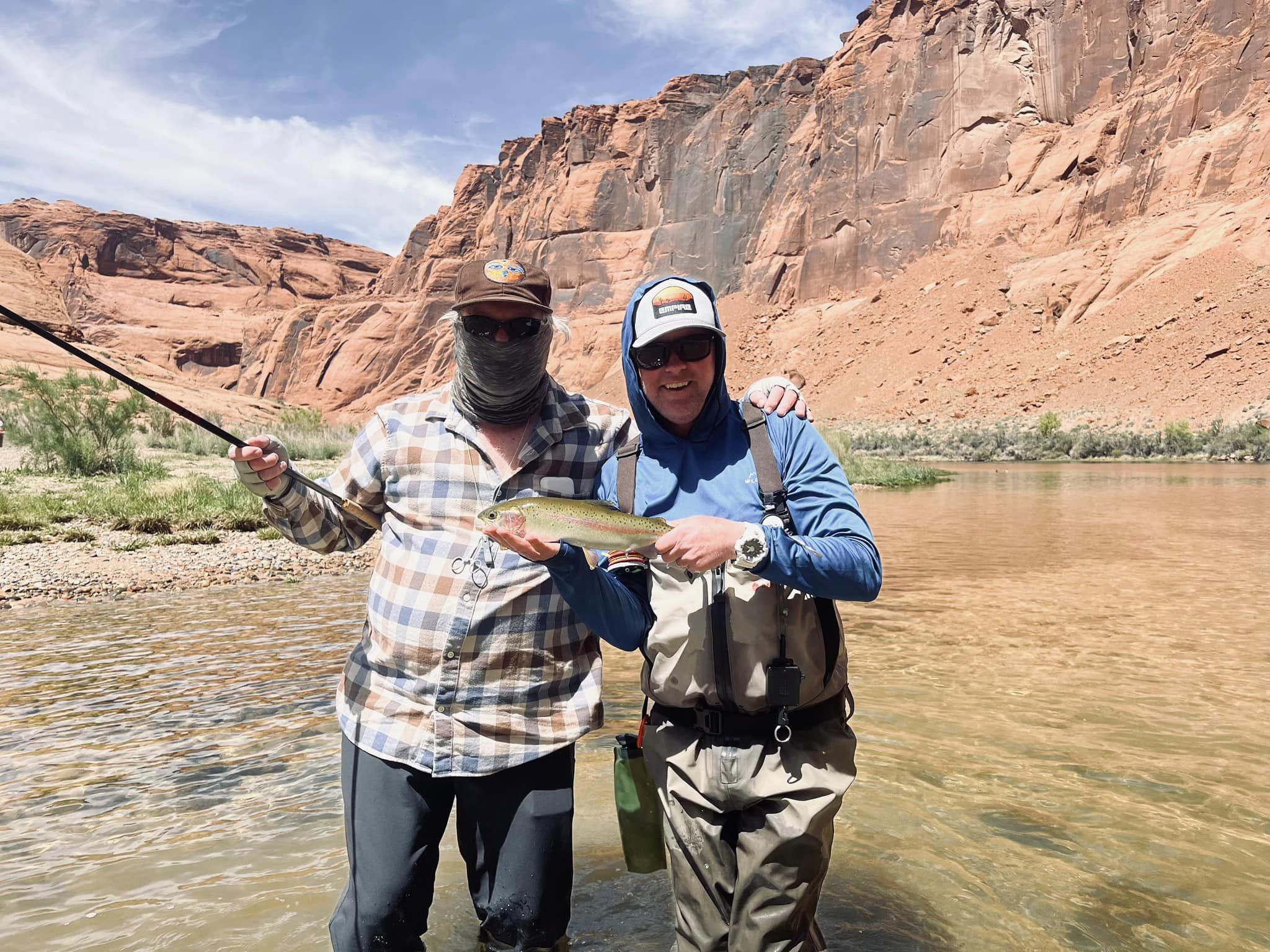
The summary translations were pretty much overlooked.

Moving on.

I know that my interview with Jason Sparks went long, I had a lot I wanted to discuss with him, the same goes for you but for your sake, lets wind this up.

“Michael, thank you for being who you are, I appreciate you. I dig Tenkara Angler and I wish you all the luck in the world with it.

Please use this opportunity to close the interview.”


Michael: I’d just like to close the interview by thanking you for finding my flavor of “vanilla” tasty enough to take a larger bite. This was really fun, hopefully I wasn’t too wordy, and I hope we’ll be able to share a little time together on a trout stream in the future.